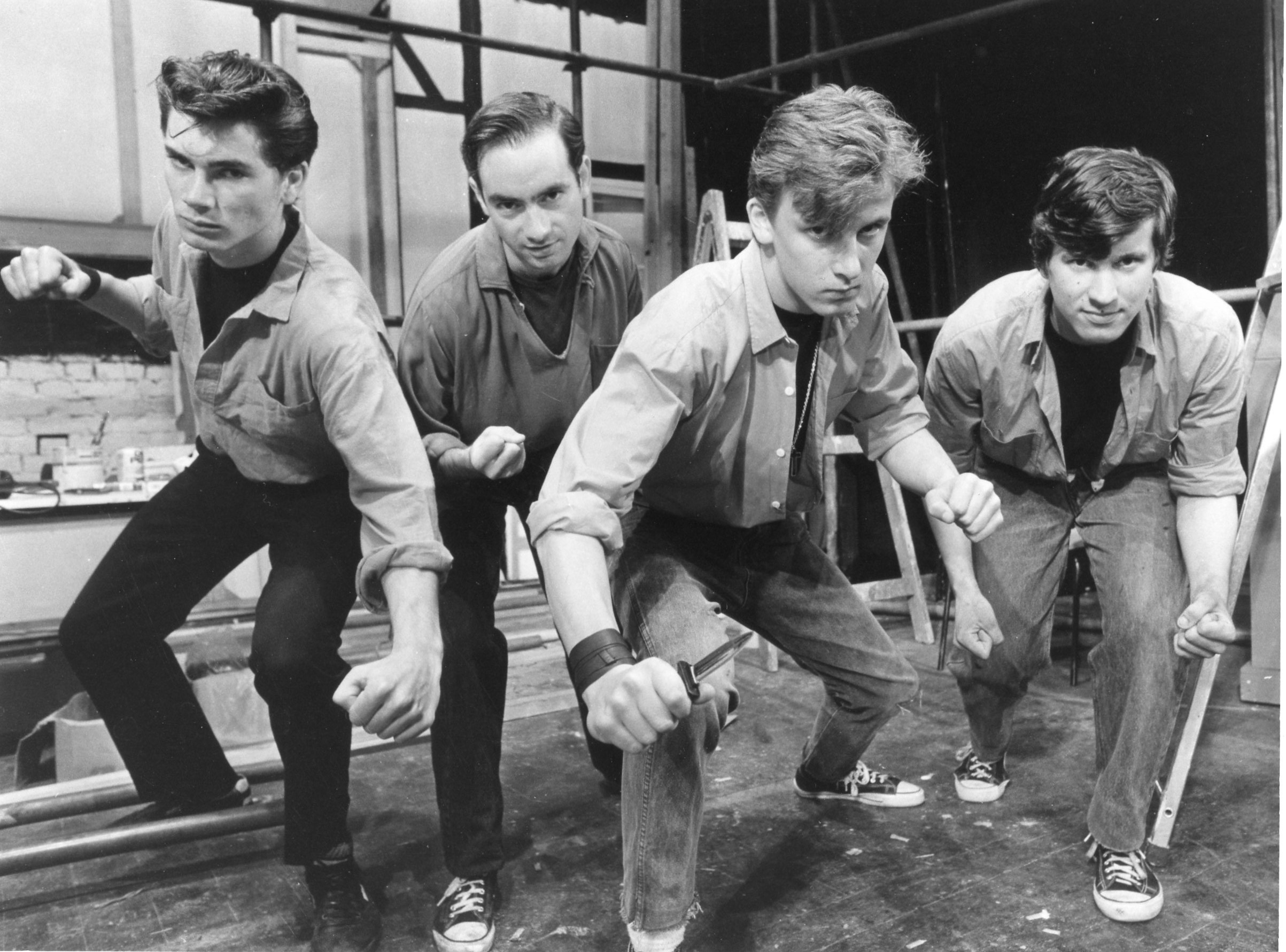
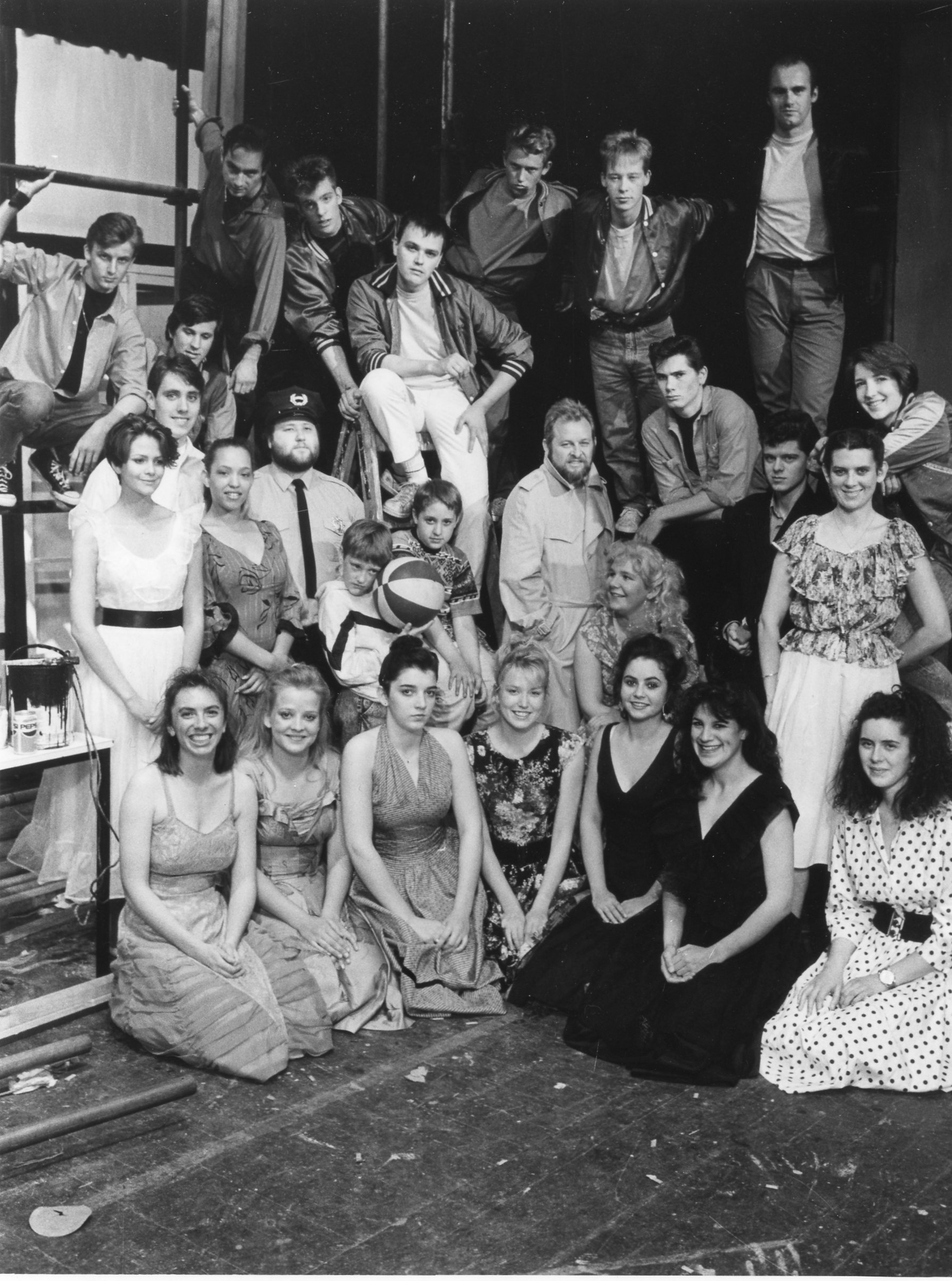
 We’ve been looking forward to the release of Steven Spielberg’s remake of West Side Story with a mixture of anticipation and trepidation. We’ve both loved the original film for many years. Sitting down to watch it for the first time with my Dad is one of my lasting memories; he and Mum had seen it on its original cinema release, as had Jane’s, and he and I had subsequently dissected it many times, from the lingering overhead pan and zoom shot over Manhattan, to the hidden career of Marnie Nixon, Natalie Wood’s ‘voice double’. Of course, a lifelong obsession with juvenile delinquency of the 1950s has only cemented the film as a cultural anchor; I’ve performed in it on stage as a member of the Sharks; I’ve danced through multi-storey car parks with mates on our way to clubs and, most recently, we’ve walked the streets of Manhattan and visited the tenements occupied by Puerto Rican arrivals to New York (ironically, while nothing remains of the West Side the film represents, areas of the East Side, where Jerome Robbins’ story began its life, have been preserved). Basically, the original is ingrained in my DNA and every word and note is like an old friend.
So what would Spielberg do with it? We had faith – he’s got deep respect for the classic movie canon, so we were confident he wouldn’t muck around with it just to show how ‘radical’ he was, and the headline that he’d be casting the Puerto Rican characters with Puerto Rican actors seemed entirely logical. The odd shot from the production confirmed he’d left the story where it belonged in 1950s New York (not as obvious as it sounds – the original production was at one point in danger of being translated to Los Angeles when the production team were working from Hollywood). Our pals from Timebomb Vintage beat us to the cinema when the new movie finally opened in the UK, enthusing not only about the film as a whole but also, from their expert perspective, on the costumes, so the runes were good.
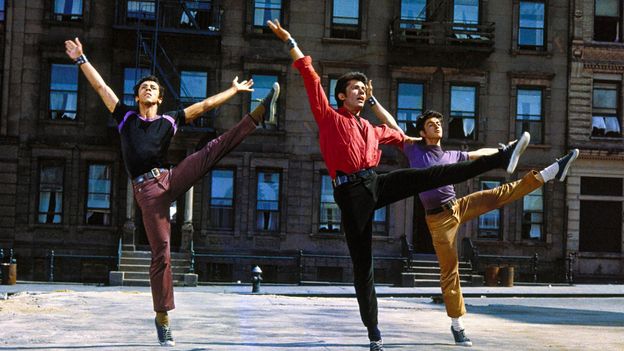
 Seeing it for ourselves took two attempts after a power cut in Cheltenham took down the showing after a promising first 20 minutes (oh, for the days when restarting the movie would just have been a case of setting the projector off again, rather than waiting interminably for various digital systems to be rebooted and eventually giving up), but it was all definitely worth it. The big difference in the 60 years between productions isn’t in the technology, but in the concept. Whereas the 1961 version was a close adaptation of the stage show (bar some sensible reordering of a couple of songs), with scenes very much reflecting the stage settings, Spielberg’s movie frees itself not only from the original book and choreography, but also opens up the story to tell it against a broader canvas of West Side New York. He’s clearly keen not to throw away the original, though, which was evident from the opening scene which combined a long panning shot, evoking its predecessor, with some subtle added contextualisation in highlighting that this is a West Side rapidly disappearing to make way for the Lincoln Cultural Centre. That added context is a theme throughout the movie which, for us, worked well. Much that just had to be taken for granted in the original, or was dealt with as a fleeting aside, is explored or explained without affecting the pace. We’re reminded that, rather than being engaged in some zero sum turf war over playgrounds, the Jets represent the lingering remnants of a wave of Polish, Italian and Irish immigrants who have moved onwards and upwards, to be replaced by a thriving and aspirational Puerto Rican community now taking their turn at the American Dream. They’re fighting for their disappearing streets as everything else has passed them by. Similarly, while the original made no attempt to explain why Tony’s left the Jets to work in Doc’s drug store (other than the fact that Richard Beymer, like the rest of the cast, had clearly reached his 20s), the new version drops in a backstory that he’s on parole after spending a year in jail having nearly killed a member of a rival gang.
 The casting is, all round, spot on. Quite apart from the ethnic authenticity of the Puerto Rican characters, everyone in it just looks and sounds right. Actors are the right age, and look appropriately grubby, smart, or beaten up as the storyline demands. Chunks of dialogue are left in Spanish, with the artifice of ‘we are in New York, now – we must speak American’ used to bring key bits of storyline back into English. There’s only one, well publicized, departure from the original character list, giving Rita Moreno – one of the few ethnically authentic members of the original cast – the chance to return as Doc’s widow, now running her late husband’s drug store and fuelling Tony’s growing understanding of multi-culturalism – not that the movie uses any such clunky modern overwriting. Indeed, where the media made much of the character of Anybody’s being rewritten as representing someone with gender identity issues, we found that it was very true to the original clearly androgynous character and sharpened up the vicious attitudes around them. It would seem that Jerome Robbins was ahead of his time and that it was the audience who comfortably pigeon-holed the character as a ‘tomboy’.
-
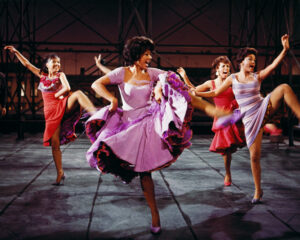
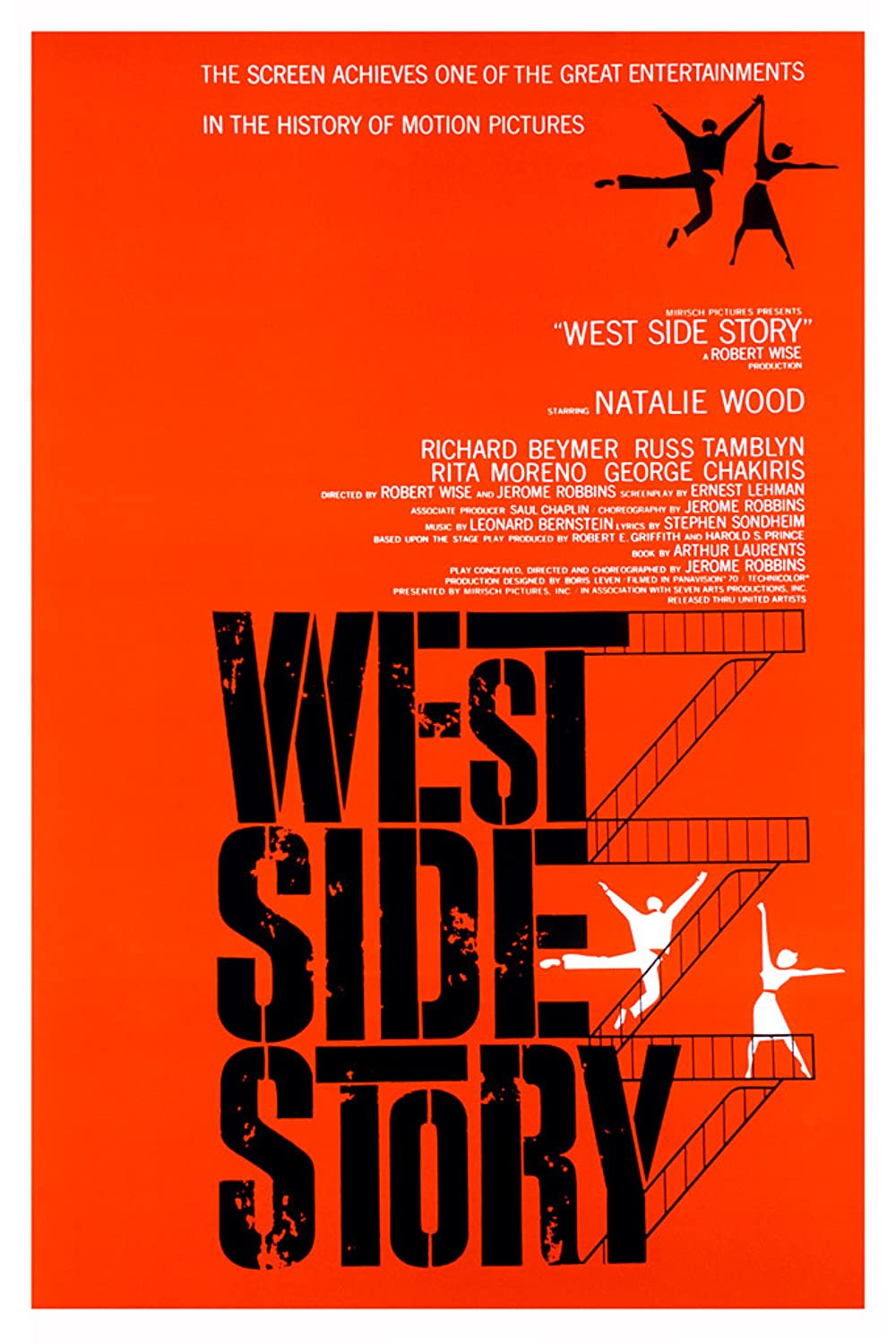
- The 1961 Original
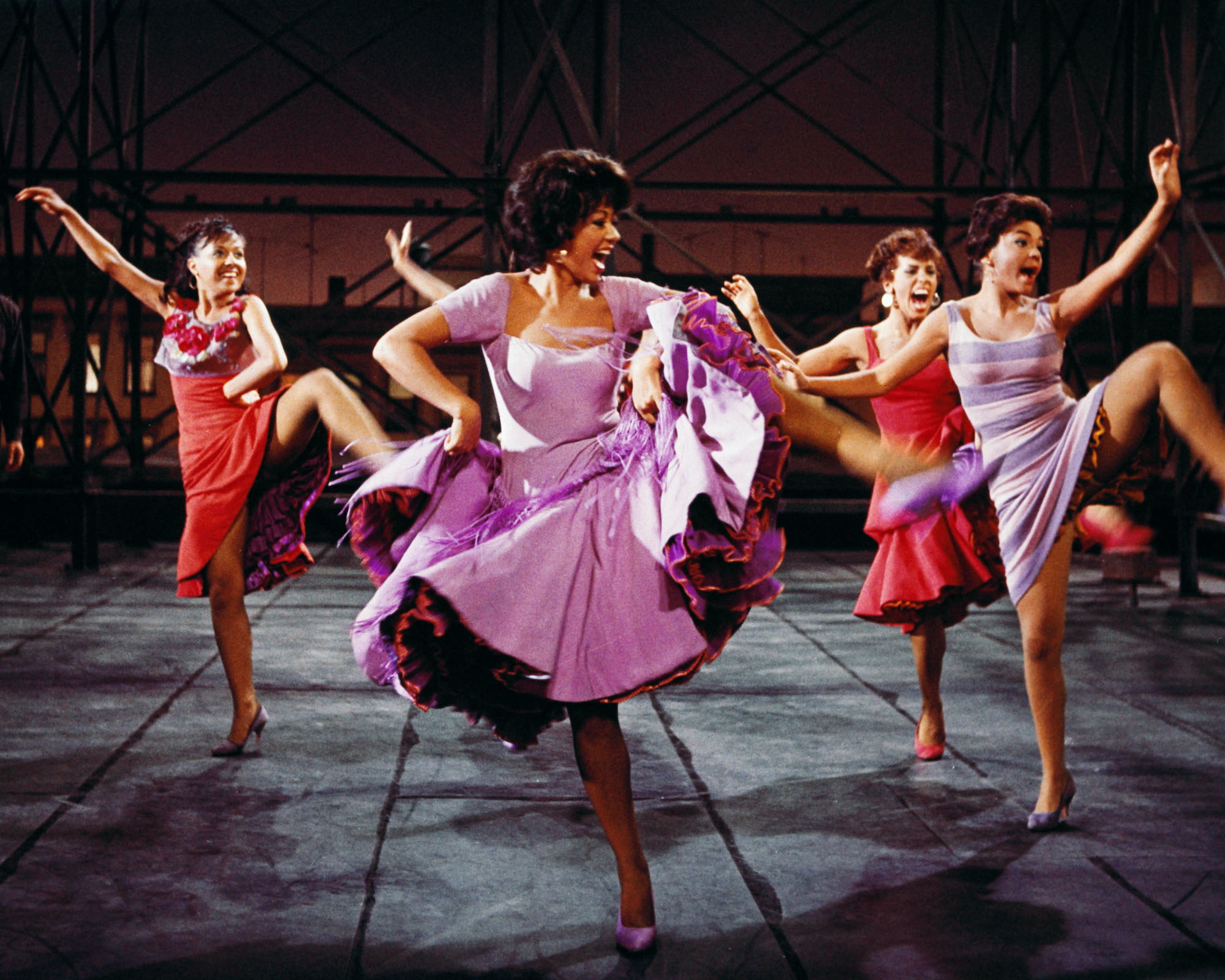

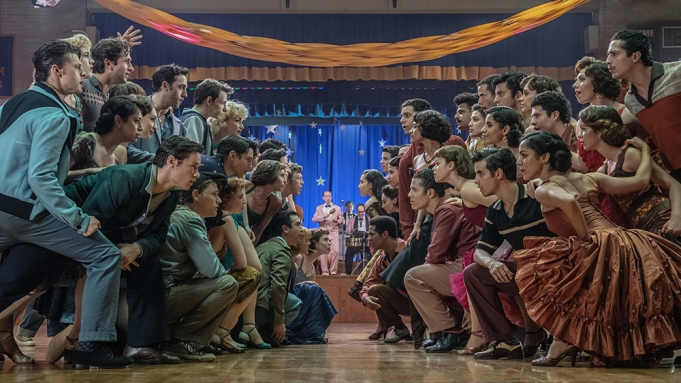
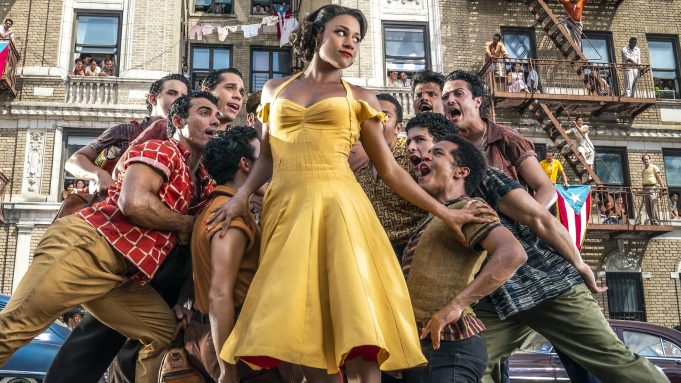
But let’s be clear, this new production isn’t about making West Side Story a culturally aware piece of social drama – or no more than the original did so successfully. It’s a romance (apparently based on something by some bloke from Stratford on Avon) with some belting songs and dancing. And, oh boy, do those songs and dances come across. The choreography pays homage to Jerome Robbins’ original work, but is altogether more muscular and visceral, moving the cursor from dancers dressed as a street gang to juvenile delinquents who can dance. Though never intrusive, digital technology allows the camera to pull away, meaning that the fixed stage sets of the original can be replaced by whole streetscapes – nowhere more effective than in ‘America’, where the 1961 version now looks drab and constrained in comparison. Likewise the dance at the gym, and both are set off by some fantastic clothes which wouldn’t look out of place on any high end original clothing stall (and I was never sure about the ’61 Jets’ outfit of Hi-de-Hi style yellow bumfreezer jackets). Putting the music across is helped by the presence of Gustavo Dudamel behind the baton; having burnished his reputation with exuberant performances of the West Side Story score by the Simon Bolivar National Youth Orchestra, made up of musicians tempted away from Venezuelan street gangs, we couldn’t imagine anyone better to ensure that Bernstein’s score leapt from the screen.
-
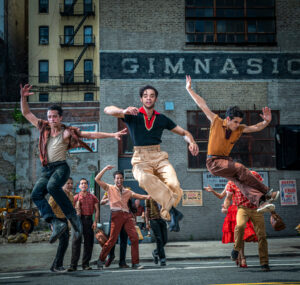
- And some fantastic shirts from the 2021 remake!
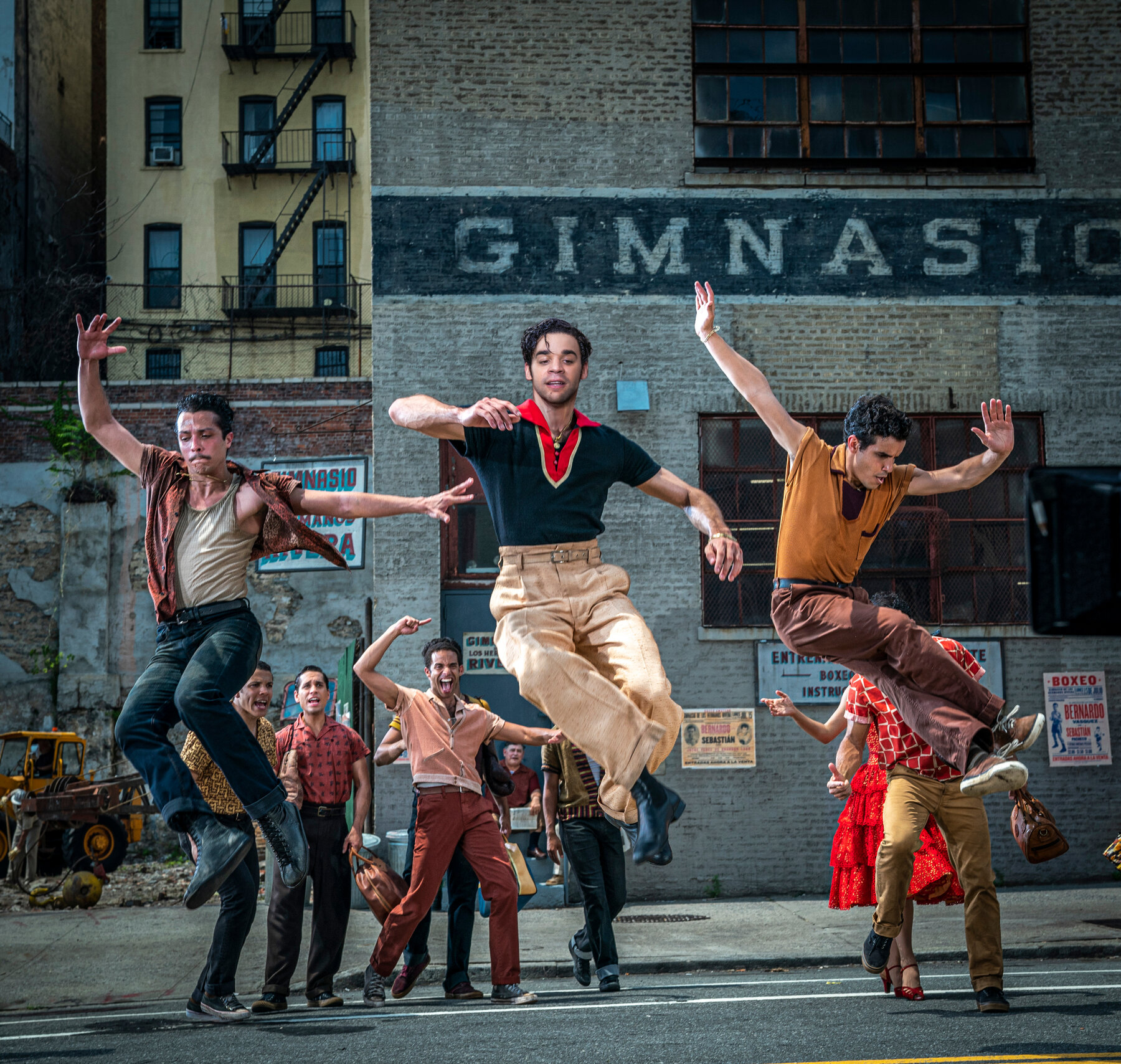
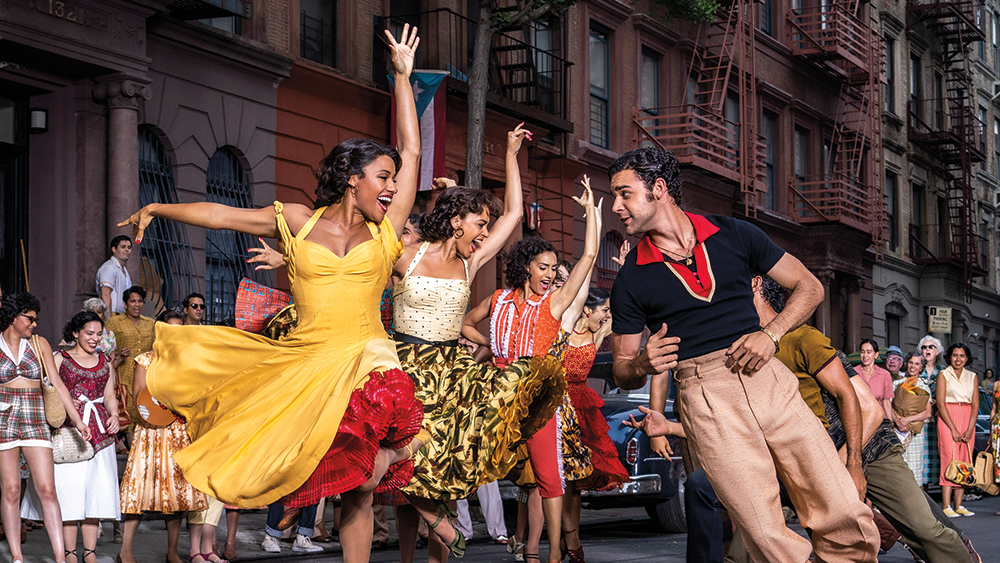
The duets similarly gain from having young actors singing with their own voices, rather than being magically replaced by over-dubbing; Tony and Maria’s signature songs are all the more powerful, and my one regret was that giving Rita Moreno the chance to sing ‘Somewhere’ denied the chance for Tony and Maria to perform it – and for it to be the underscore of the final scene as Maria sobs over Tony’s body (if that’s a plot spoiler for anyone, you probably shouldn’t be reading this article). Mind you, pondering the switch probably saved me from going into emotional overload – the power of the film, the memories it evokes, and thinking about how much my Dad would have enjoyed it made me rather glad we were in a dark cinema with a face mask to conceal a wobbly upper lip.
Did this need doing? Maybe – the original is starting to show its age and the casting, however much one excuses it as of its time, just looks clunky; the music is too good to be consigned to the category of a period piece where the lazy stereotyping has to be excused. Was it worth doing? Definitely. Spielberg has done things that weren’t culturally or technically possible in 1961 and, rather than just rerun the original script in a new performance, has given it enough of a new twist for the two films to sit alongside each other, without falling into the trap of awkward reinvention just to justify the effort. We’ve been back to see it twice and noticed new things each time, and I’m looking forward to getting hold of a DVD so I can slow down some of the scenes and look at what’s going on in the background. Now if only I could dance like that…
-
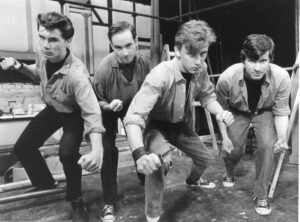
- Yes, I too was once a Shark…