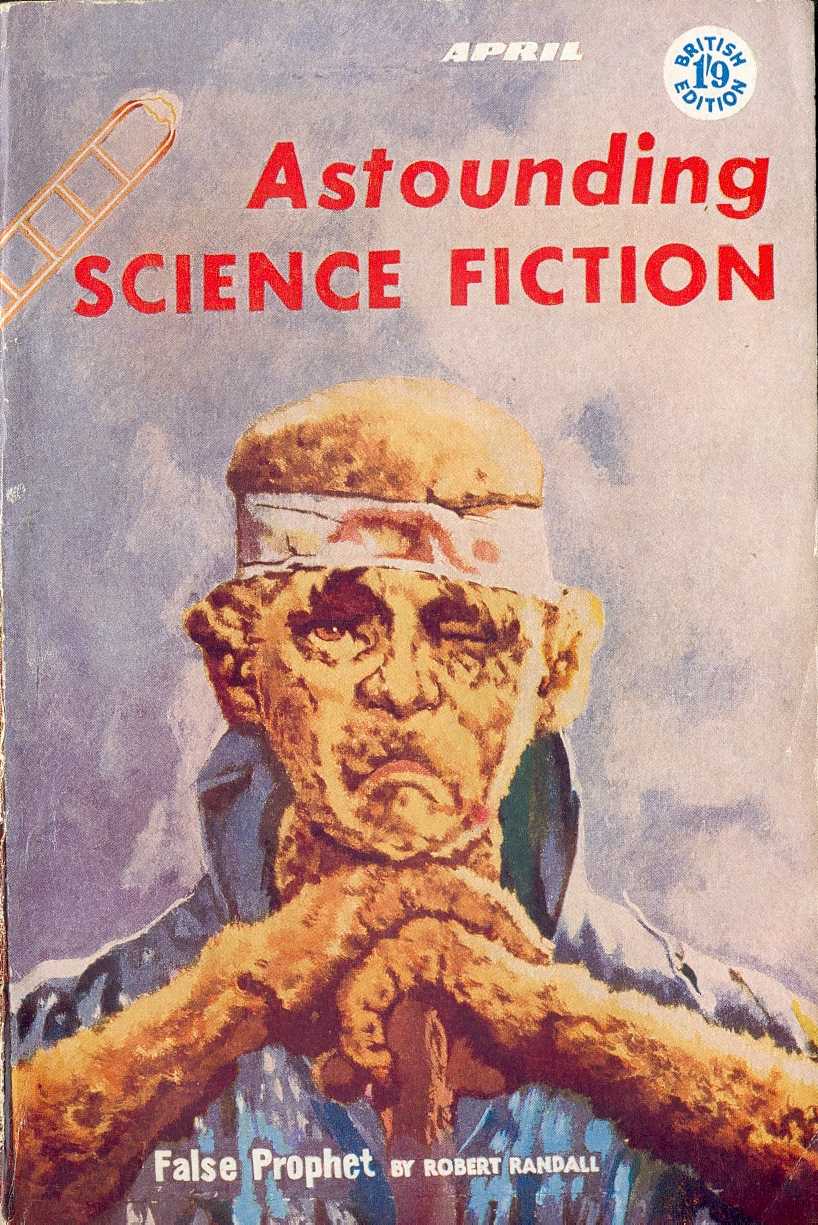
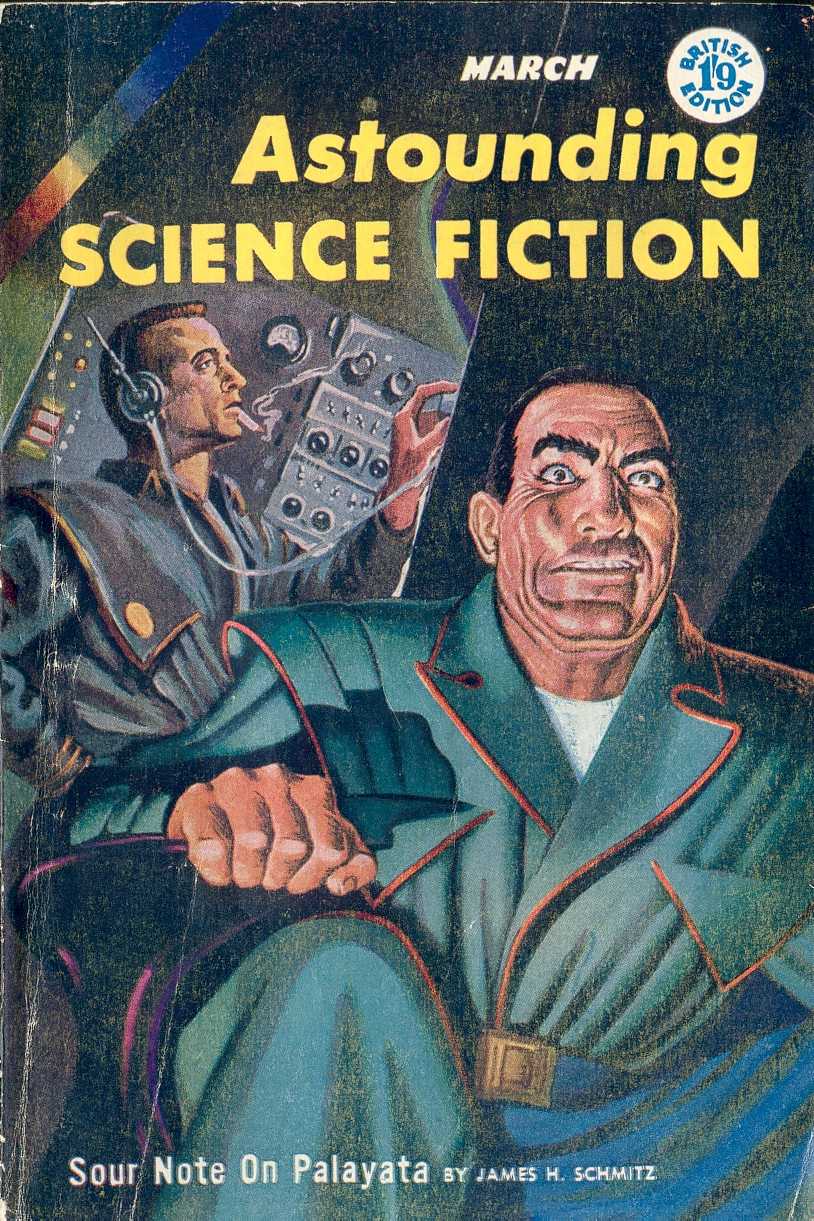
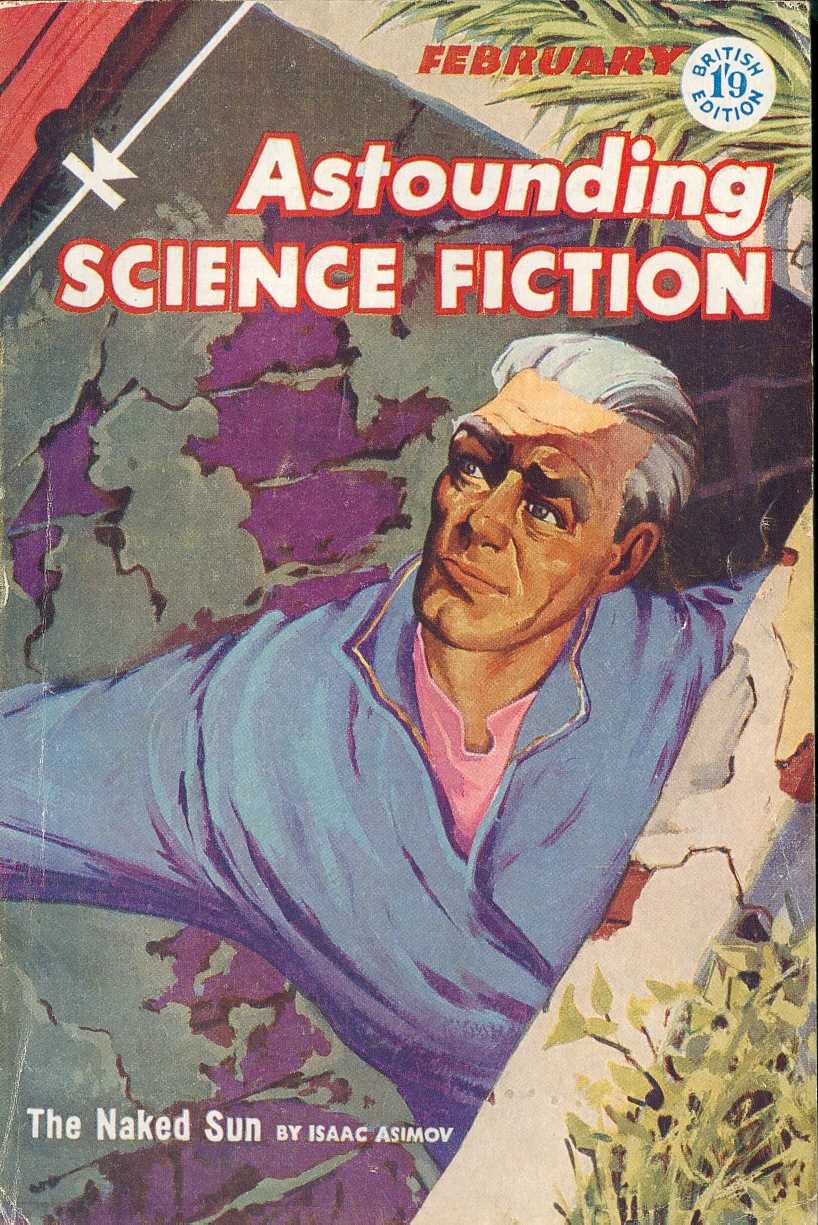
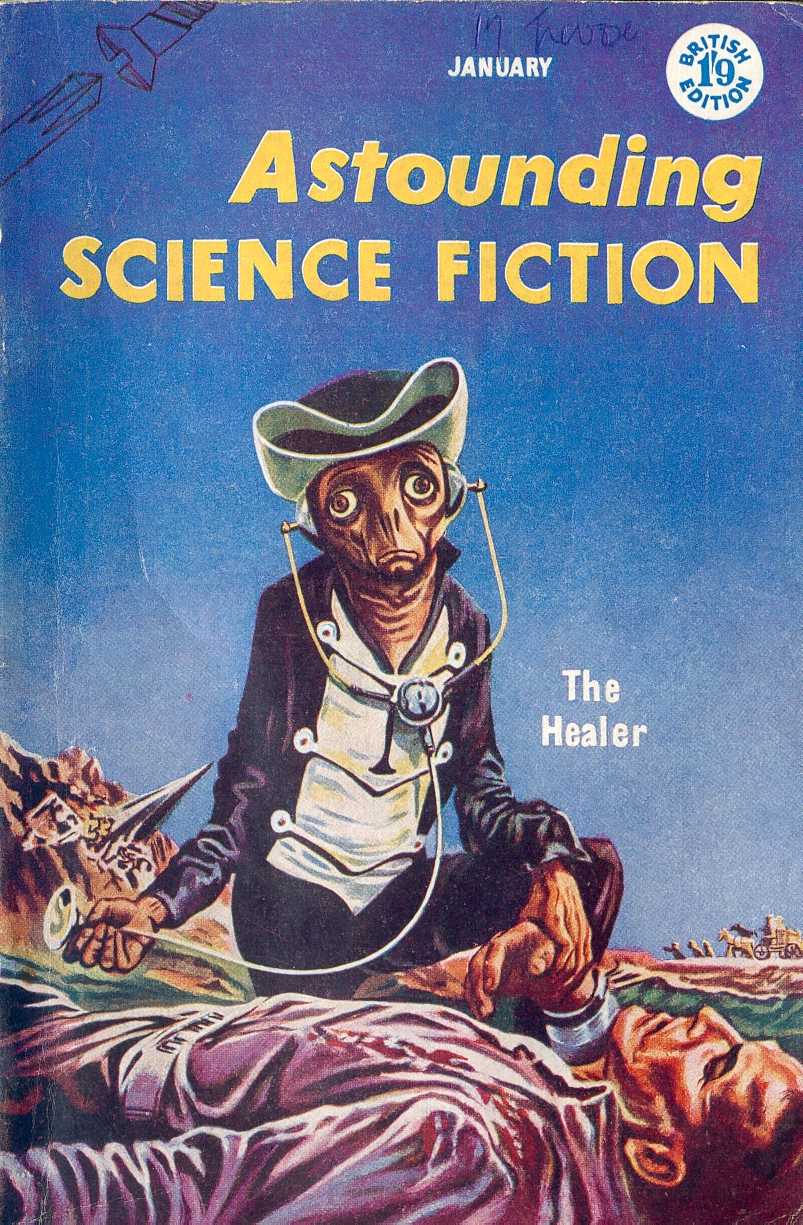
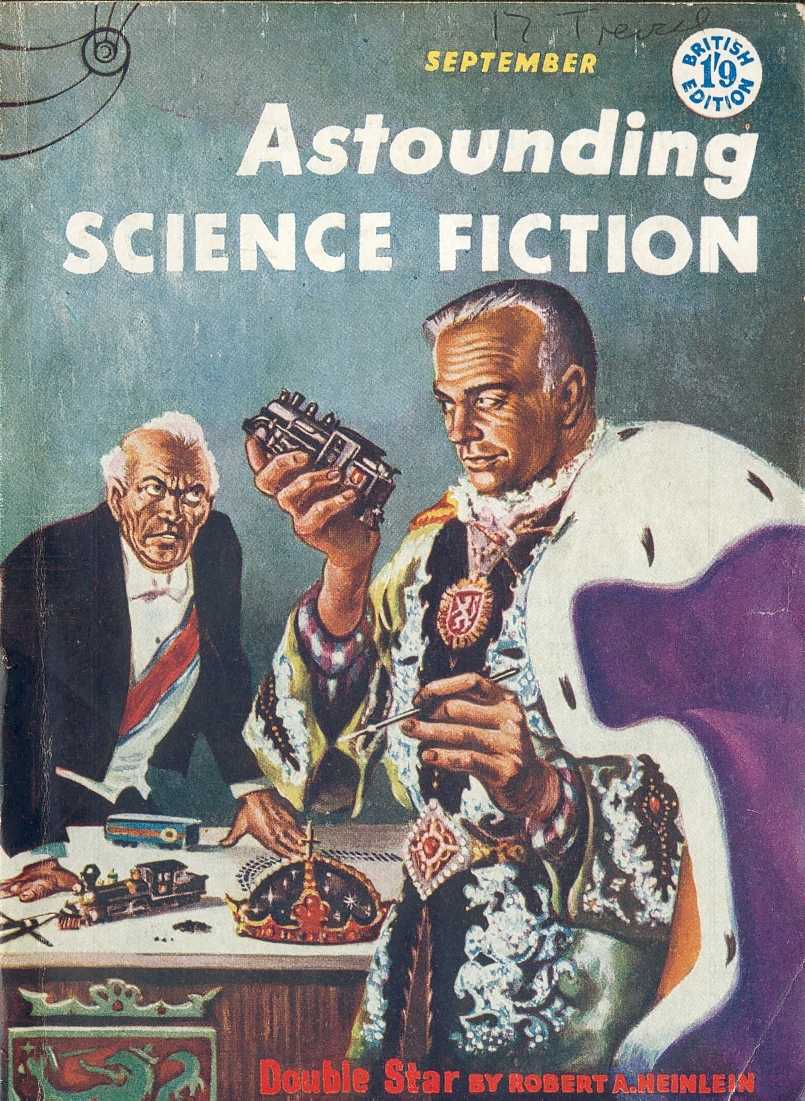
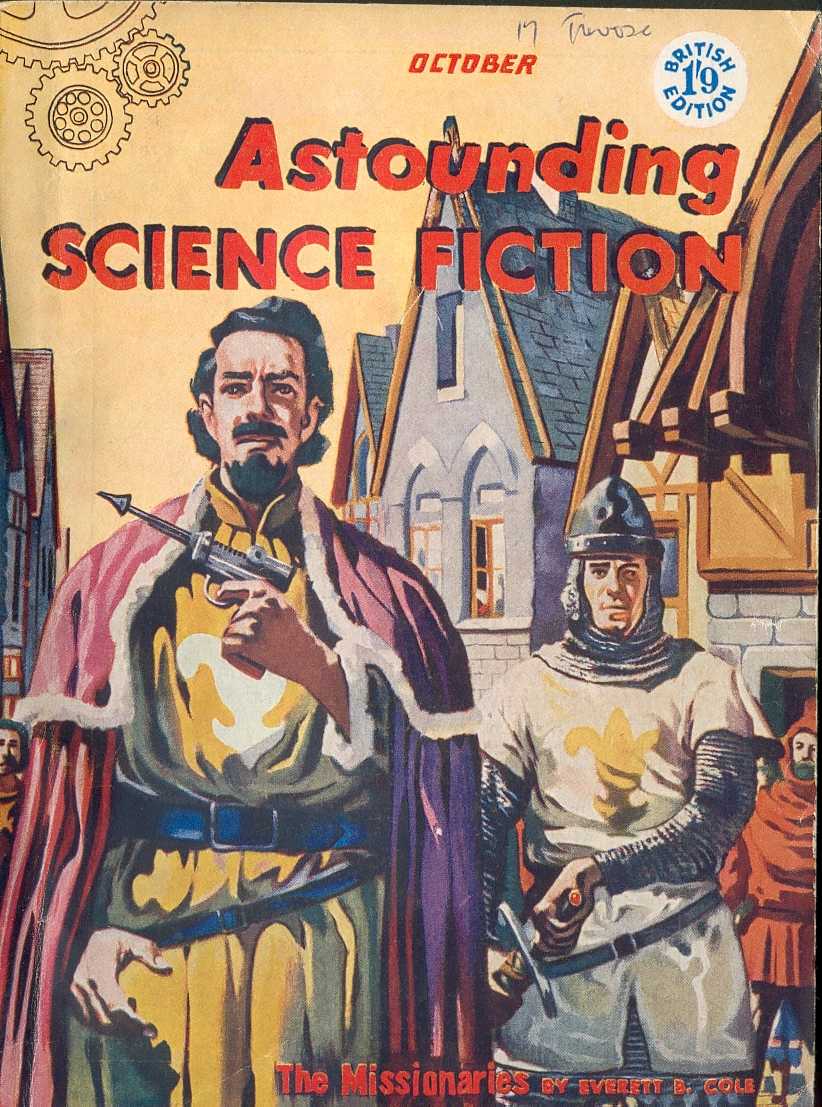
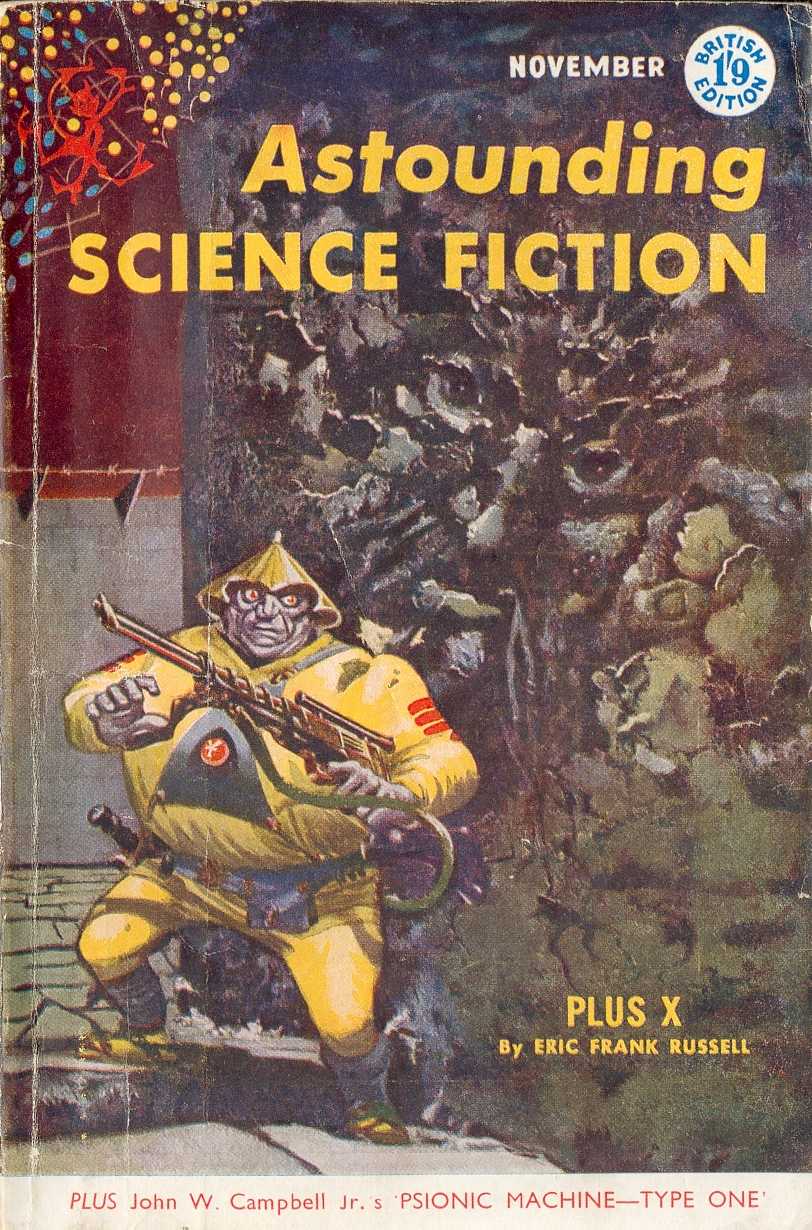
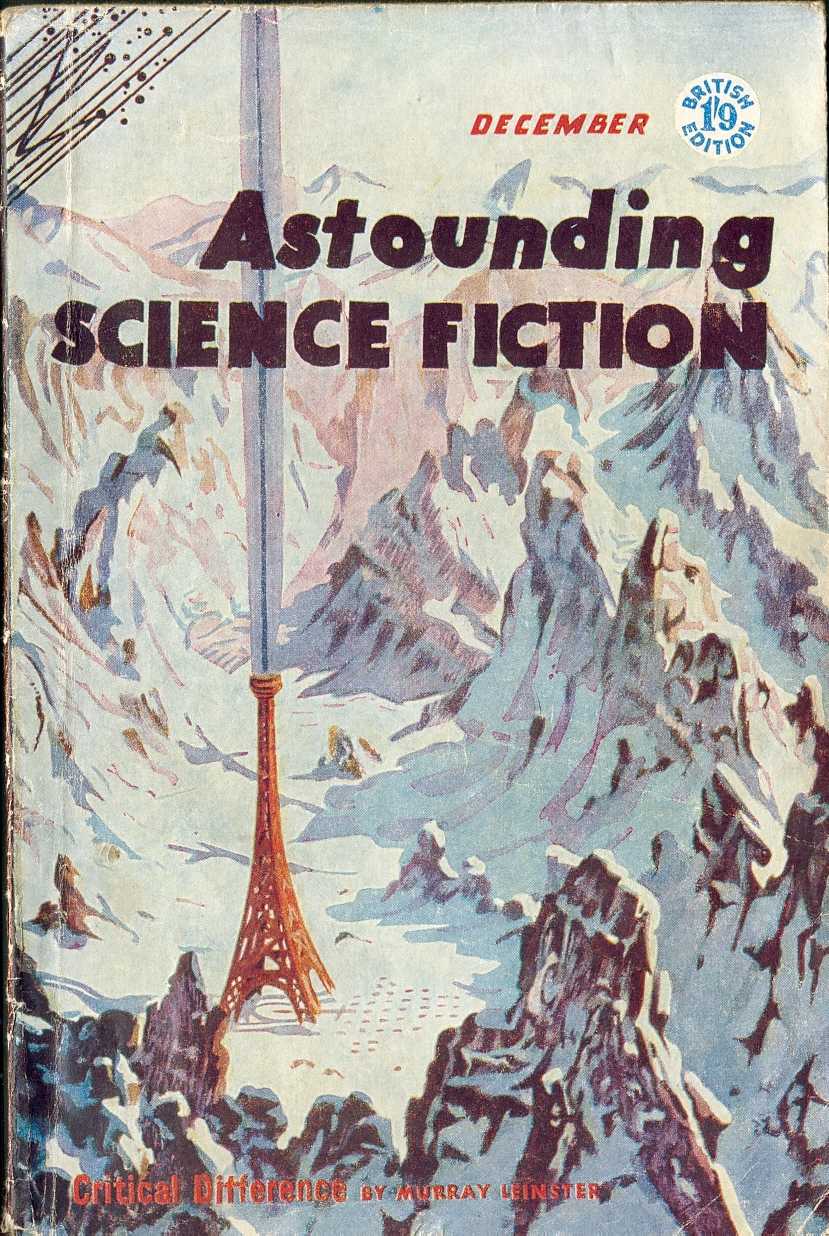
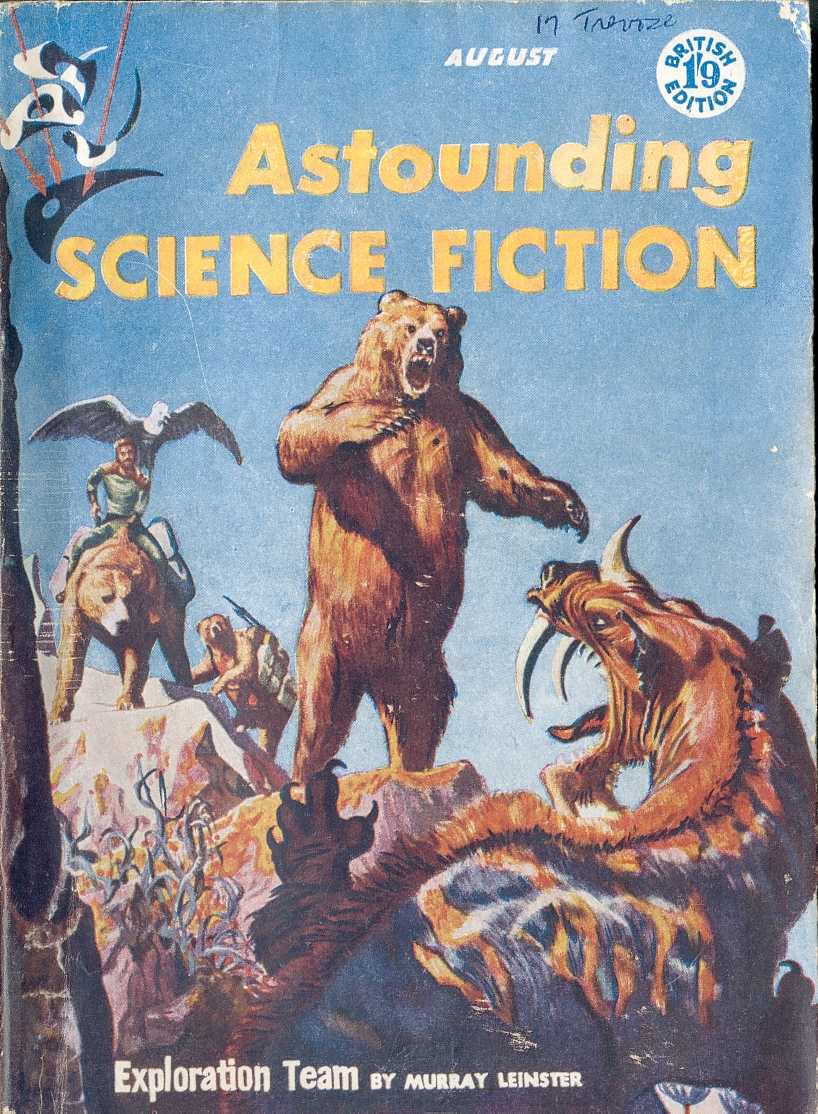
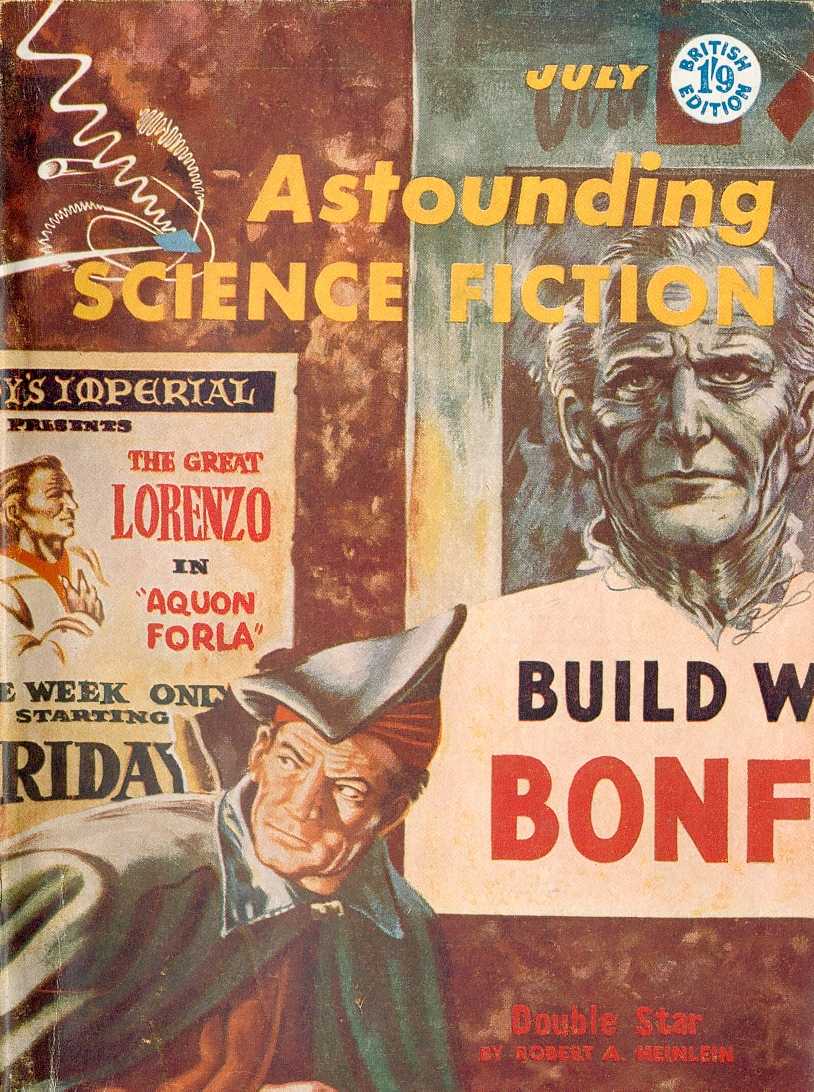
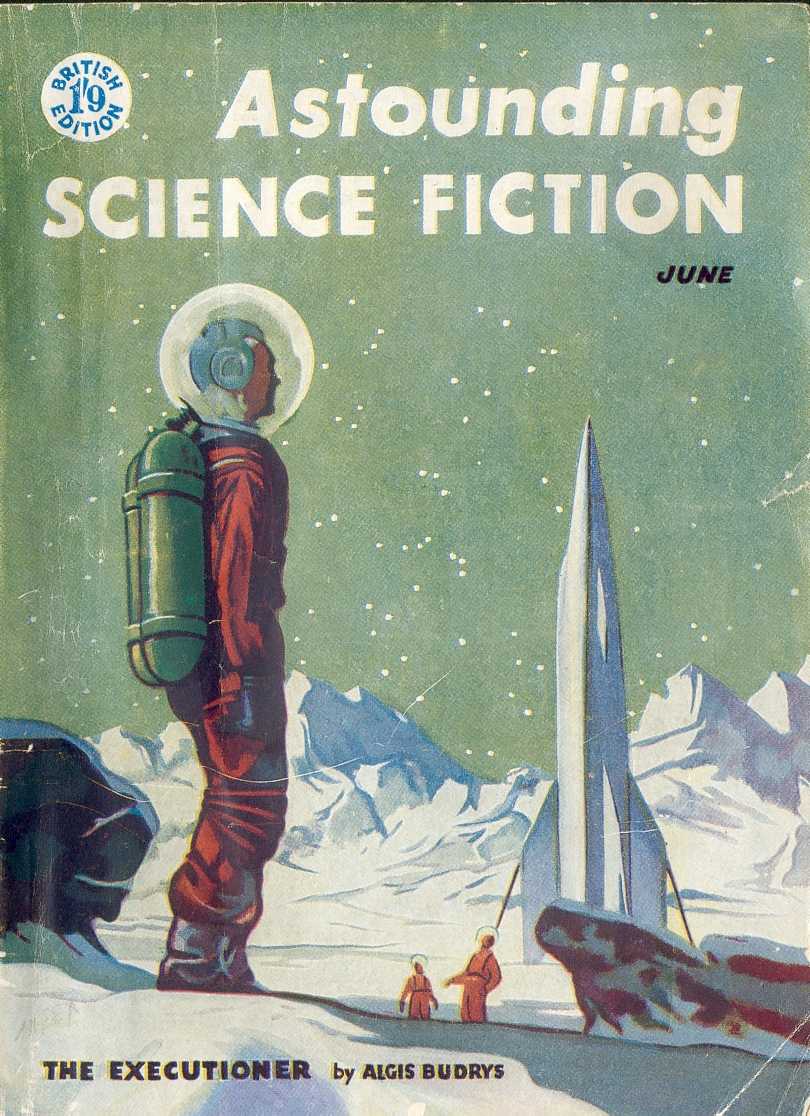
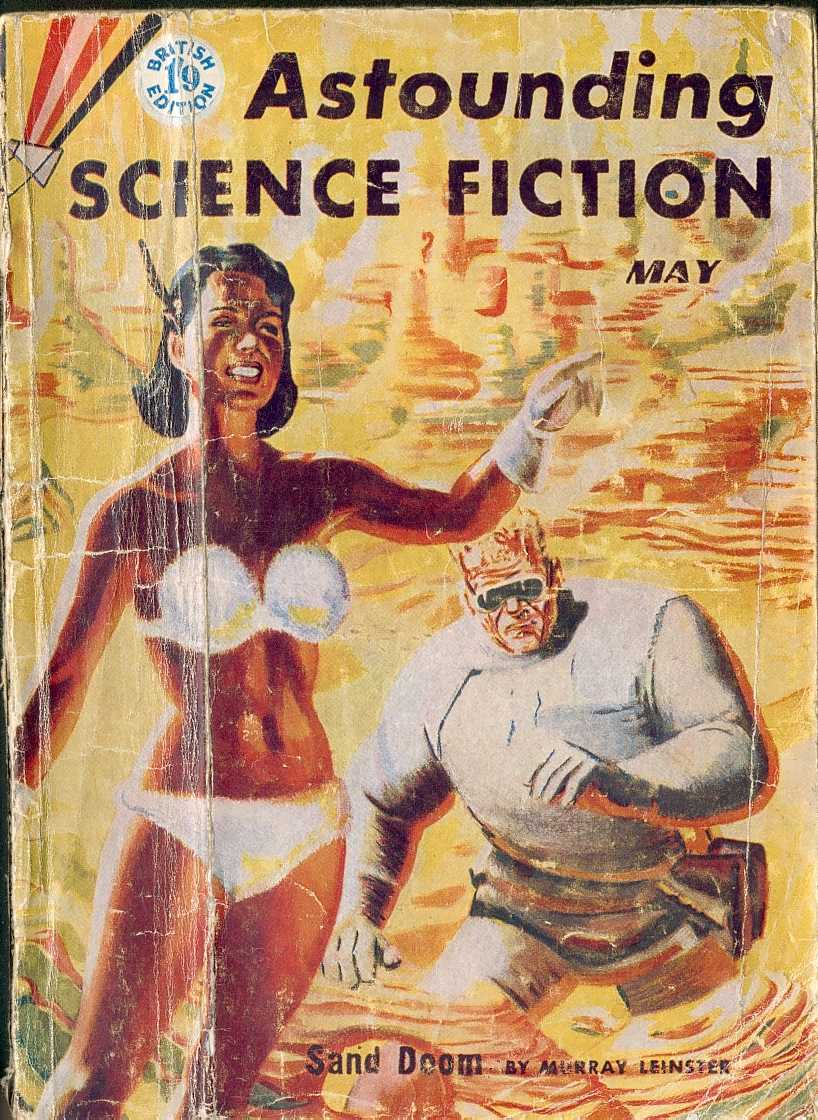
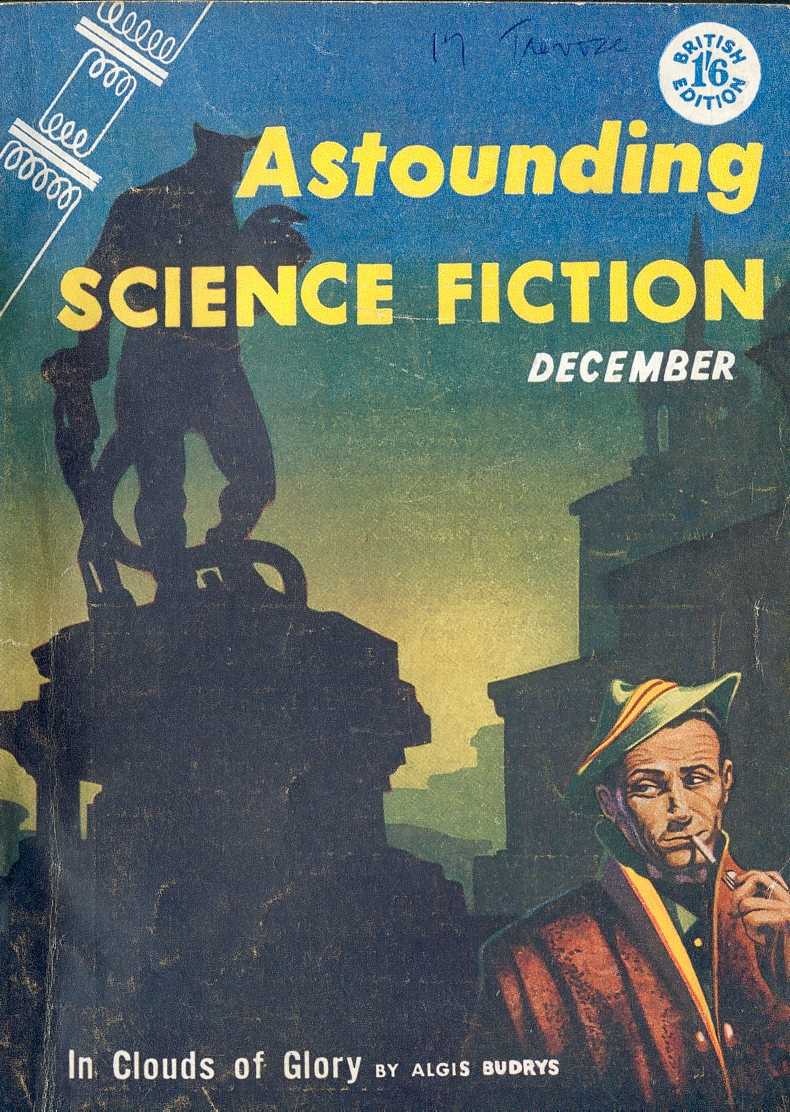
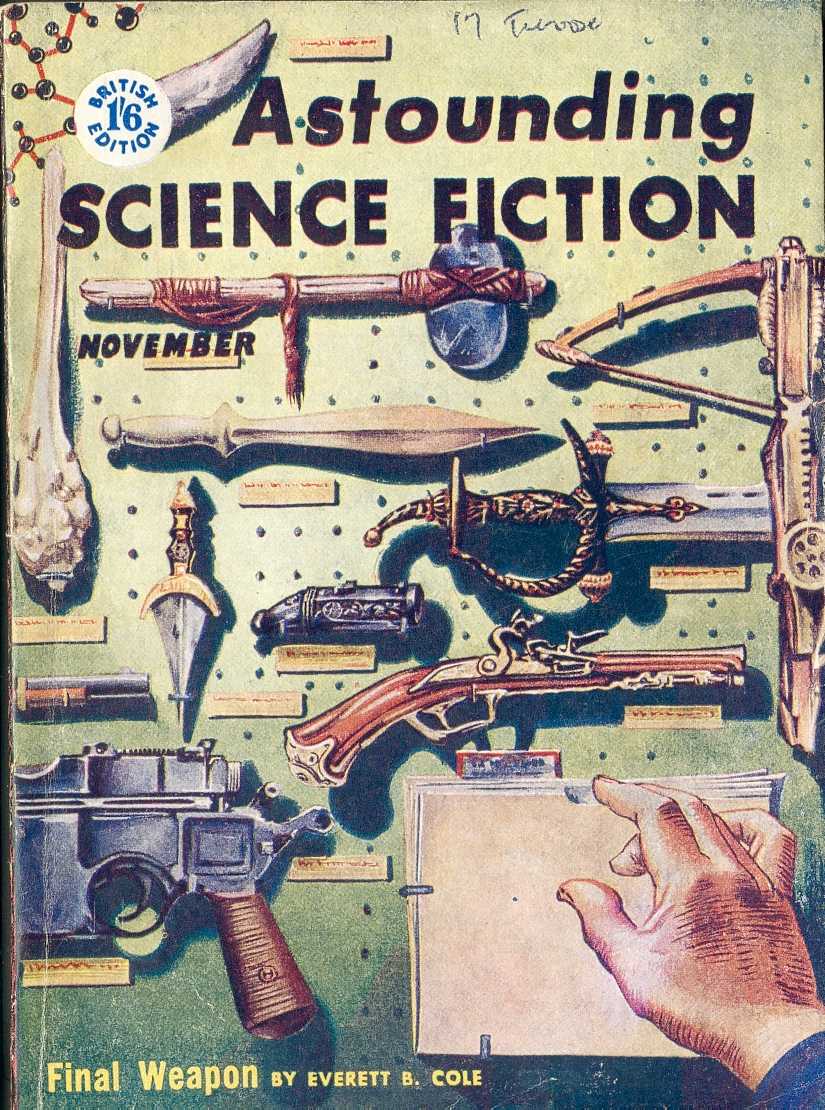
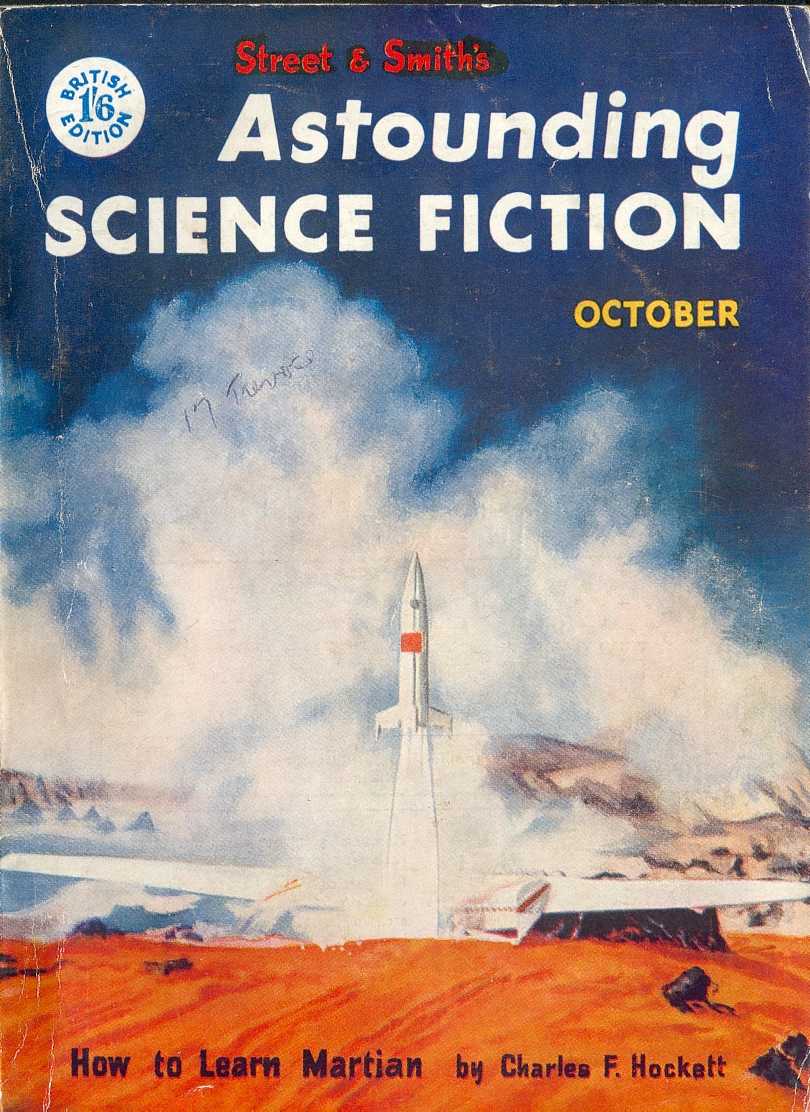
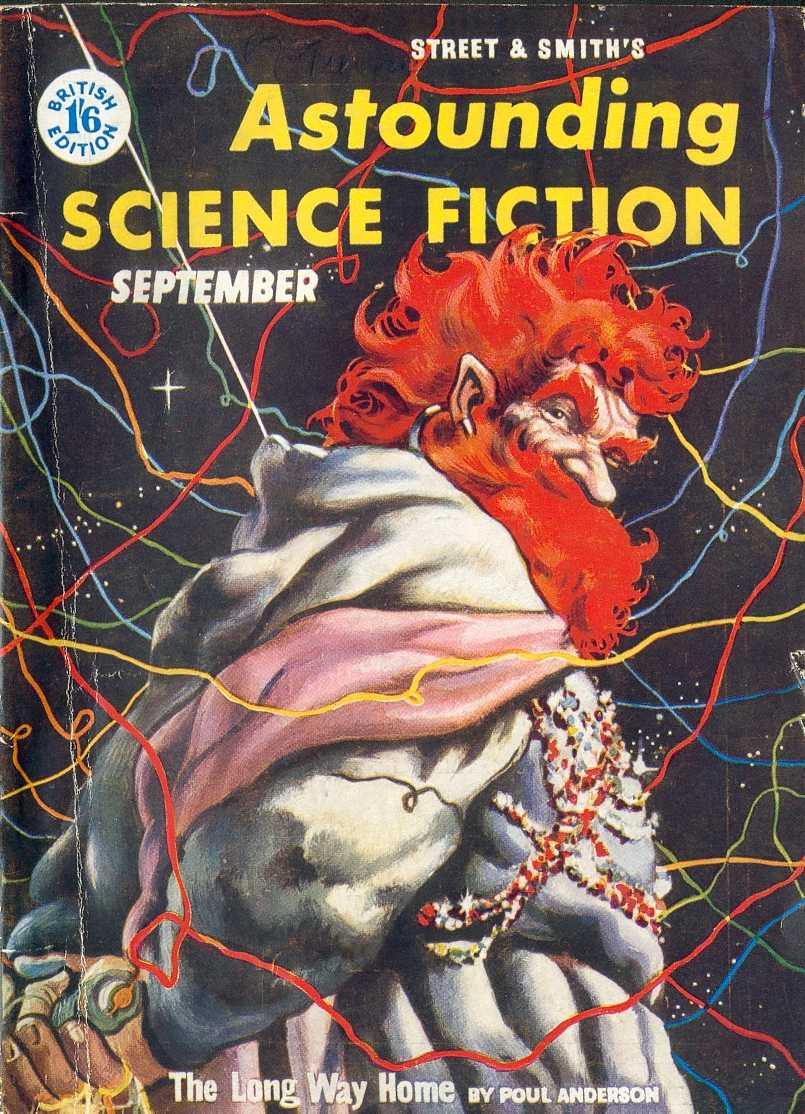
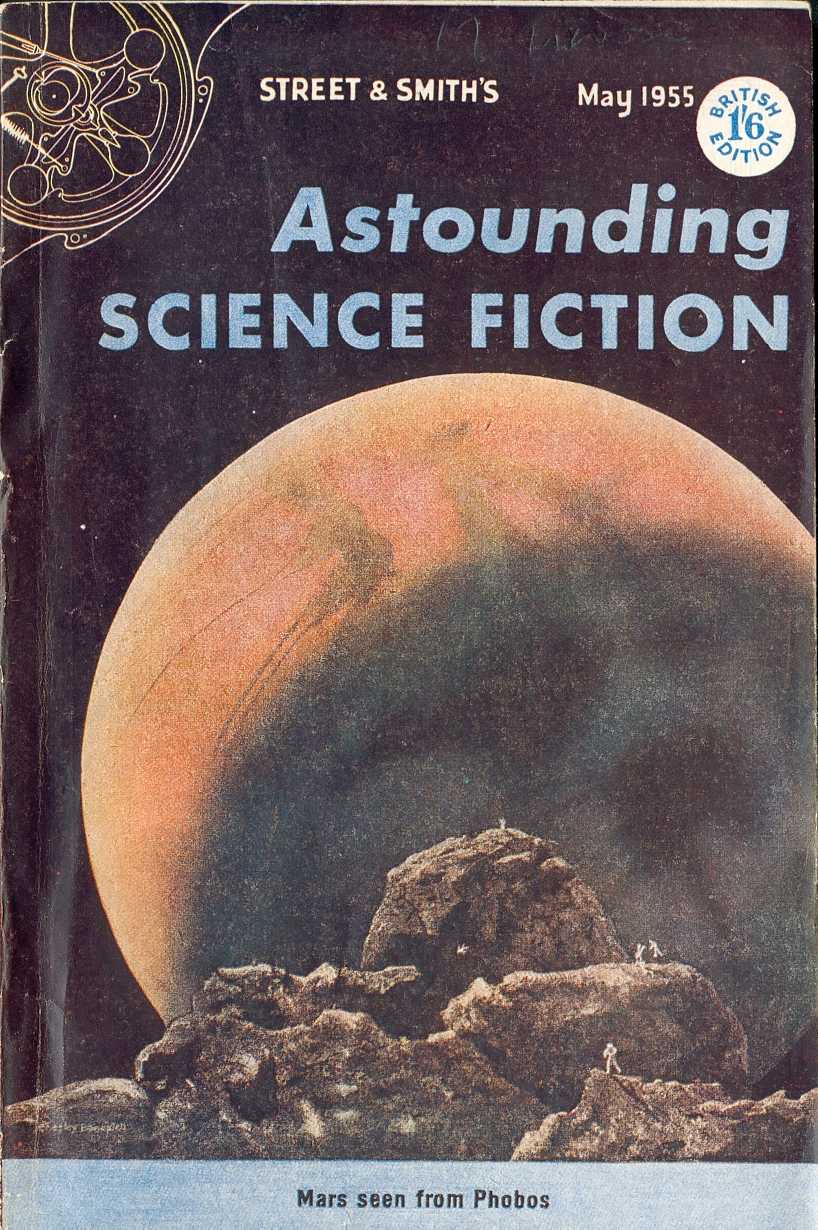
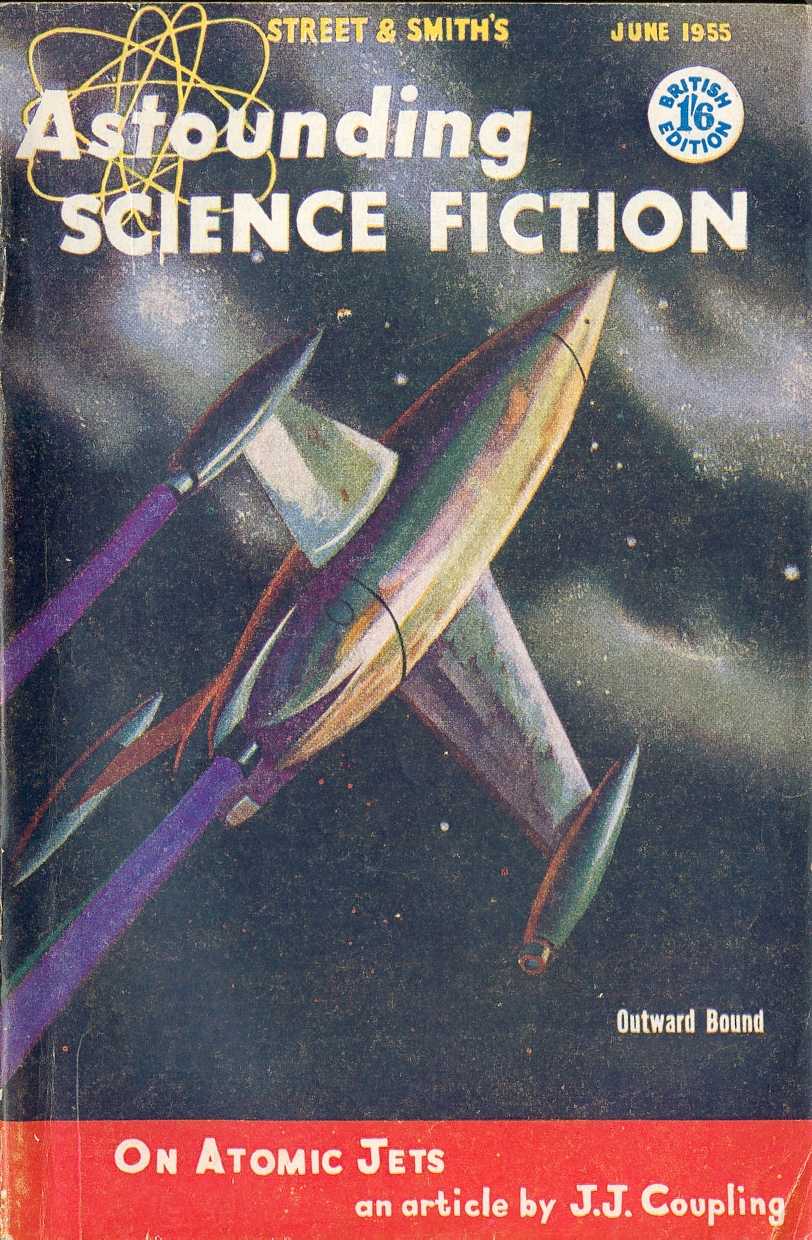
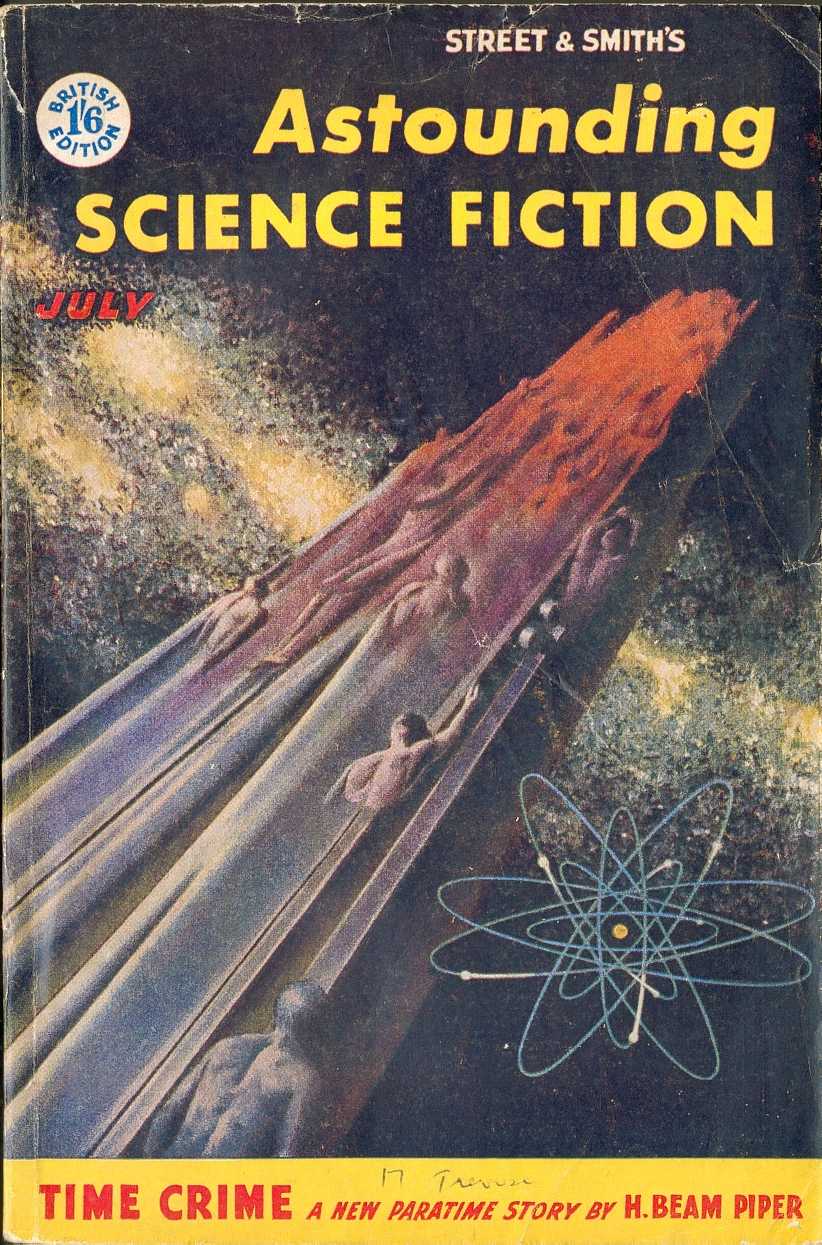
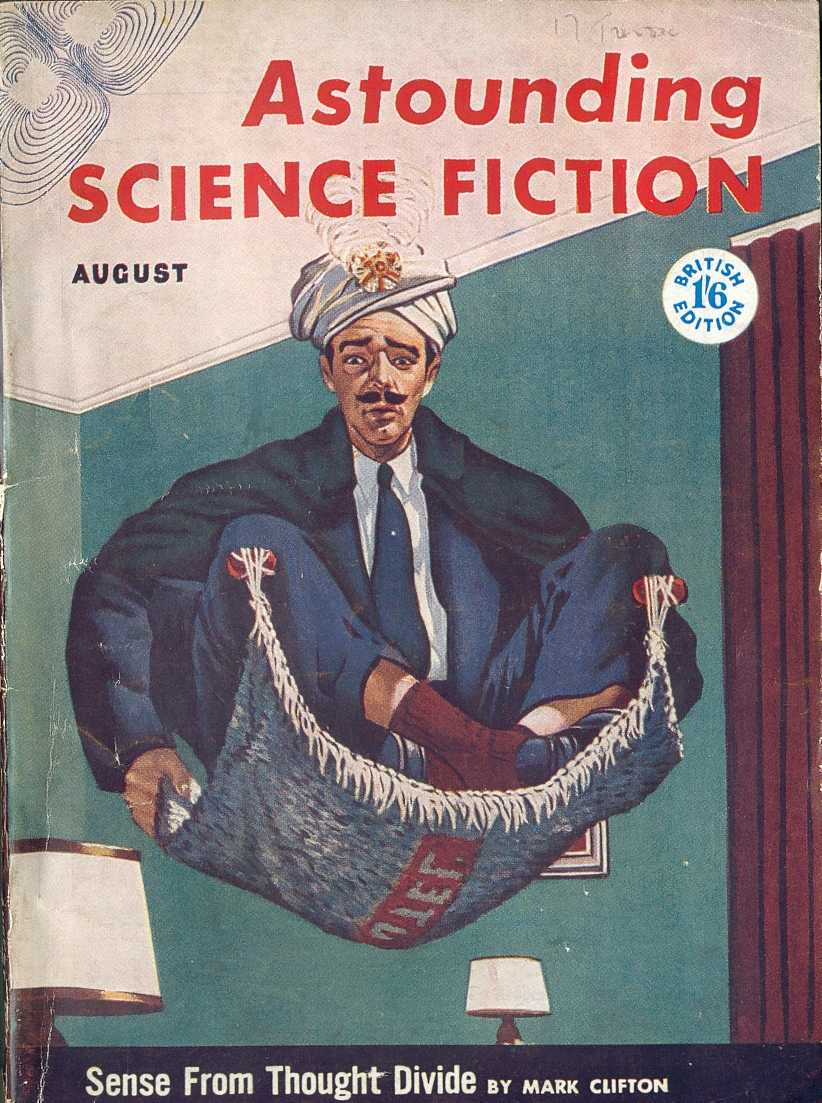
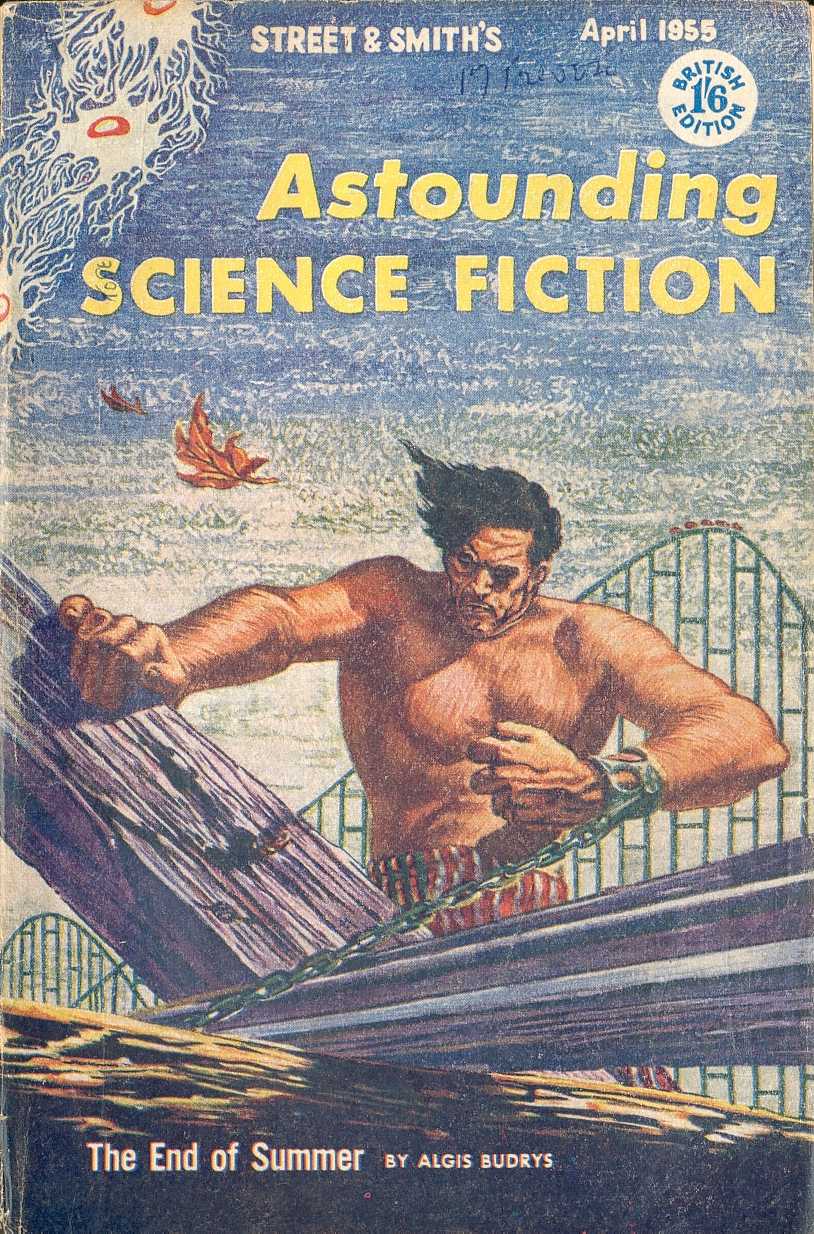
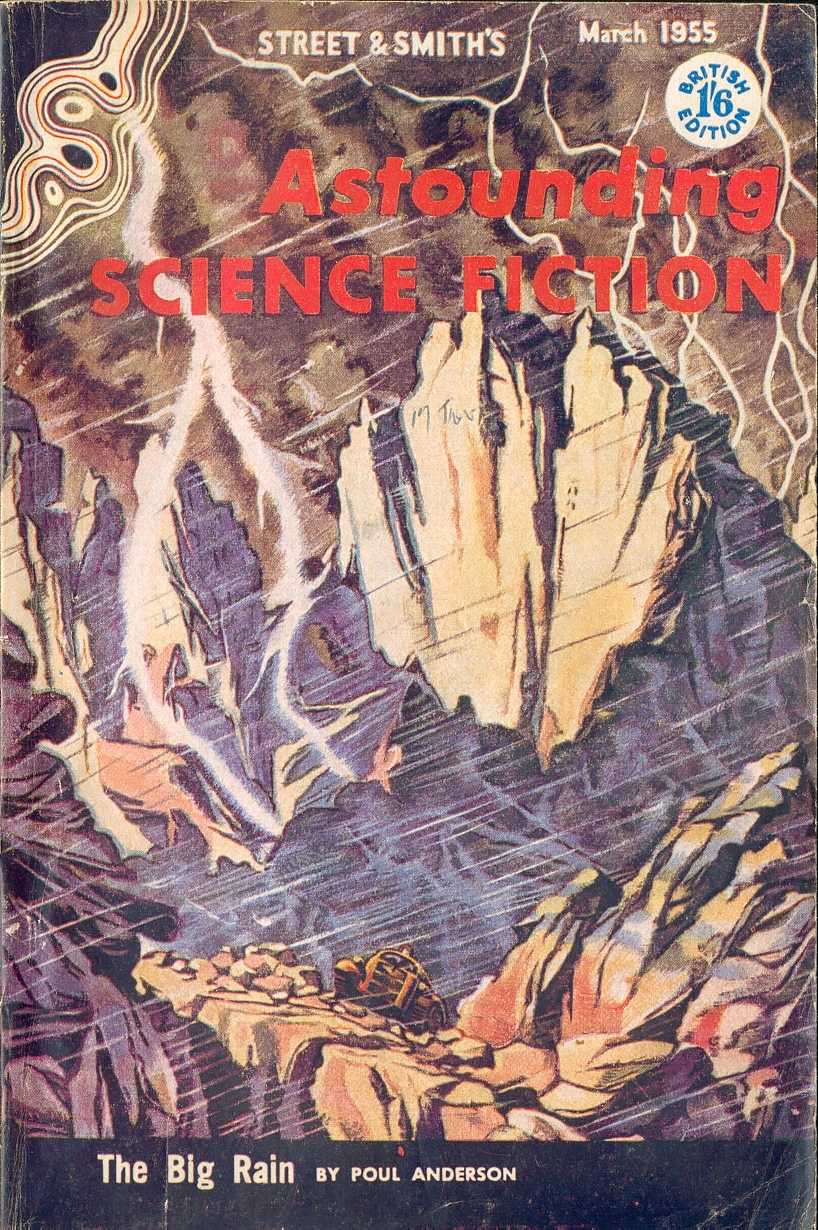
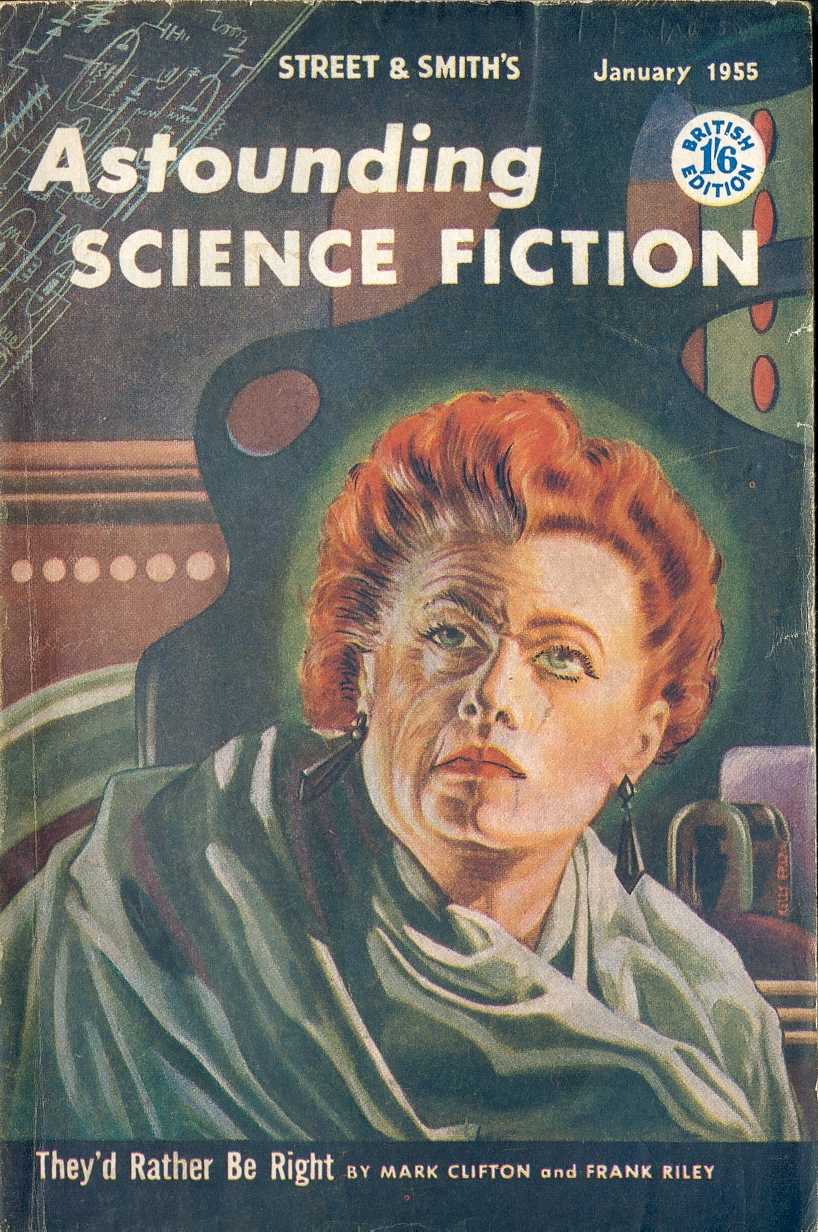
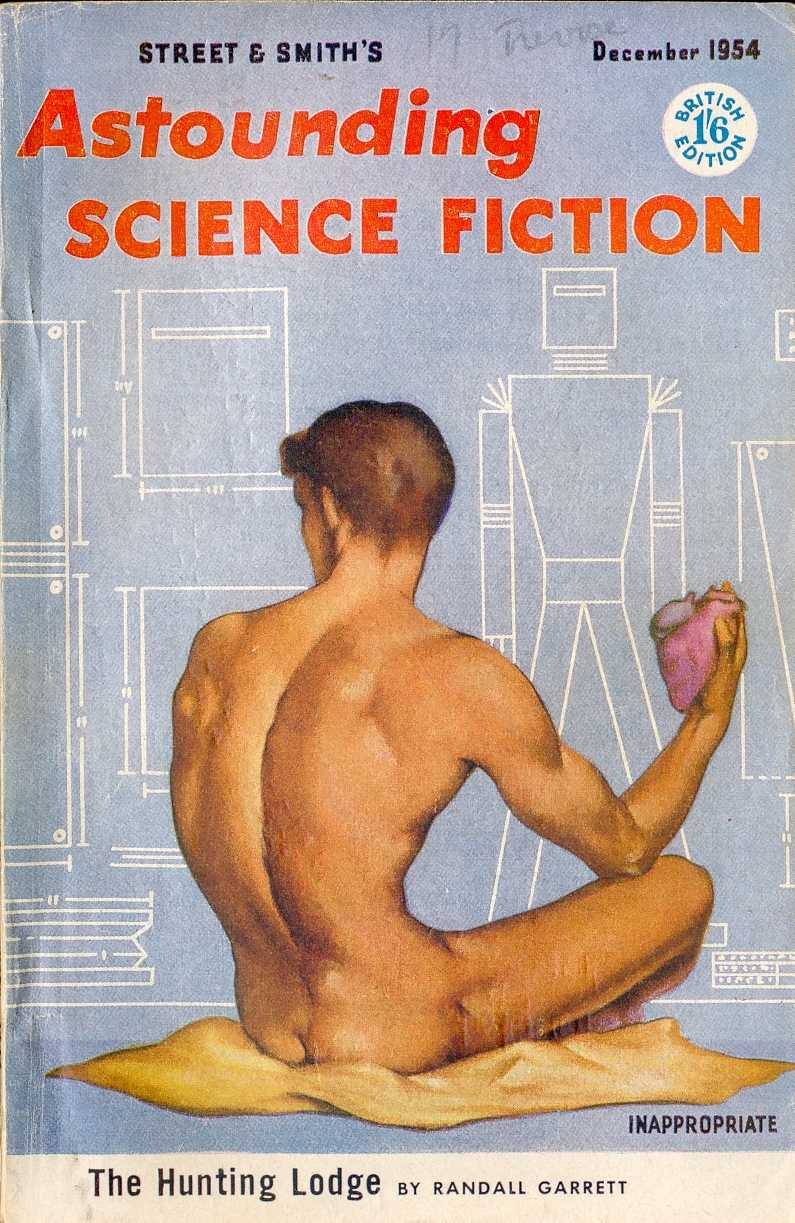
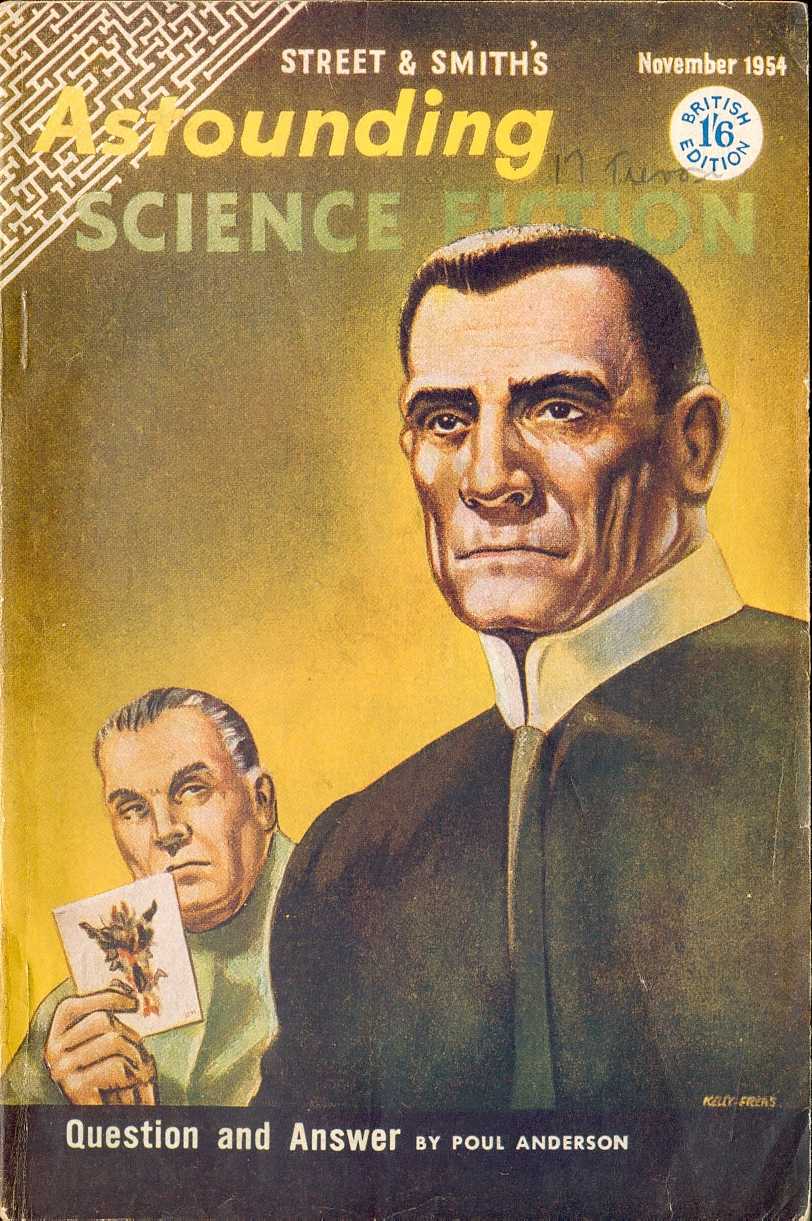
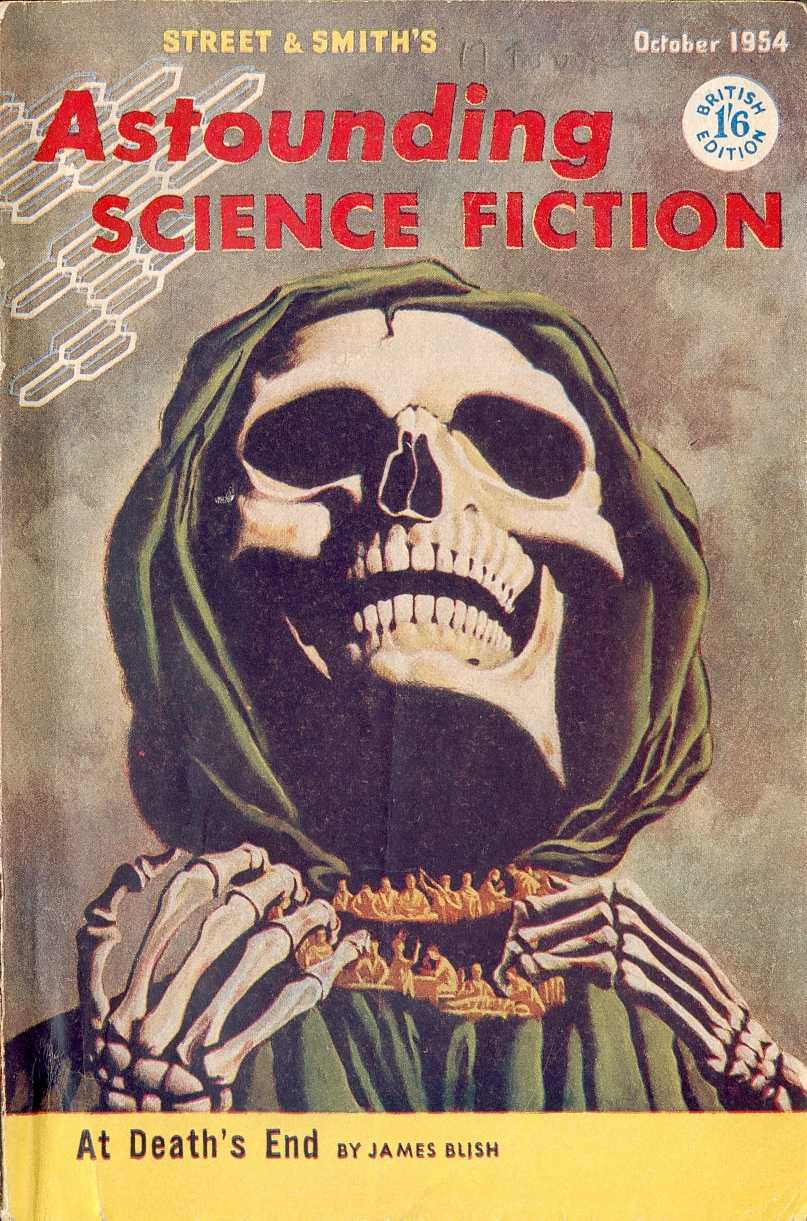
 For a child fascinated by books, my Dad’s bookcase was a thing of wonder. On one side were the more worthy hardbacks behind sliding glass (at least until one of my friends put his head through them during a birthday party game), but on the other, hidden from view by wooden doors which lent their own scent to the heady waft of old paper, were the tatty paperbacks which introduced me to a smorgasbord of literary styles, from war novels, through James Bond, James Thurber, the Monkey’s Paw, Giles annuals and Peanuts cartoons. Behind them, though, making use of the full depth of the bookcase, lay the science fiction magazines, packed in closely together with only the spines visible as one drew out a volume from in front of them. It was years before I dared to remove enough of the paperbacks to get at them properly, and instantly fell in love with the illustrated covers, all in full colour and depicting all kinds of interplanetary subjects, from alien life forms, through space travel, to intriguing set-ups derived from the leading stories within them. These were clearly the staple reading of my dad’s late teens and early 20s, and ran in an almost complete set to a point just after I arrived on the scene (something for which I now feel more than a little guilty).
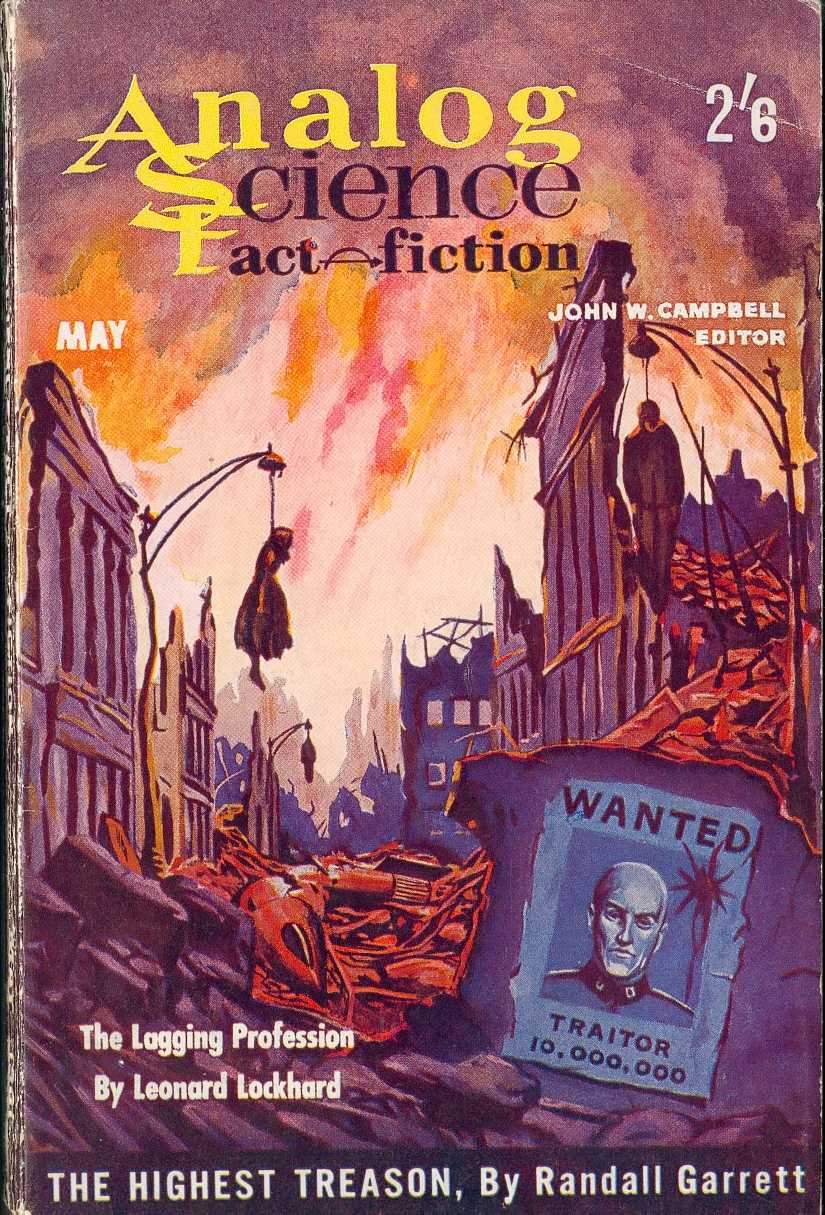
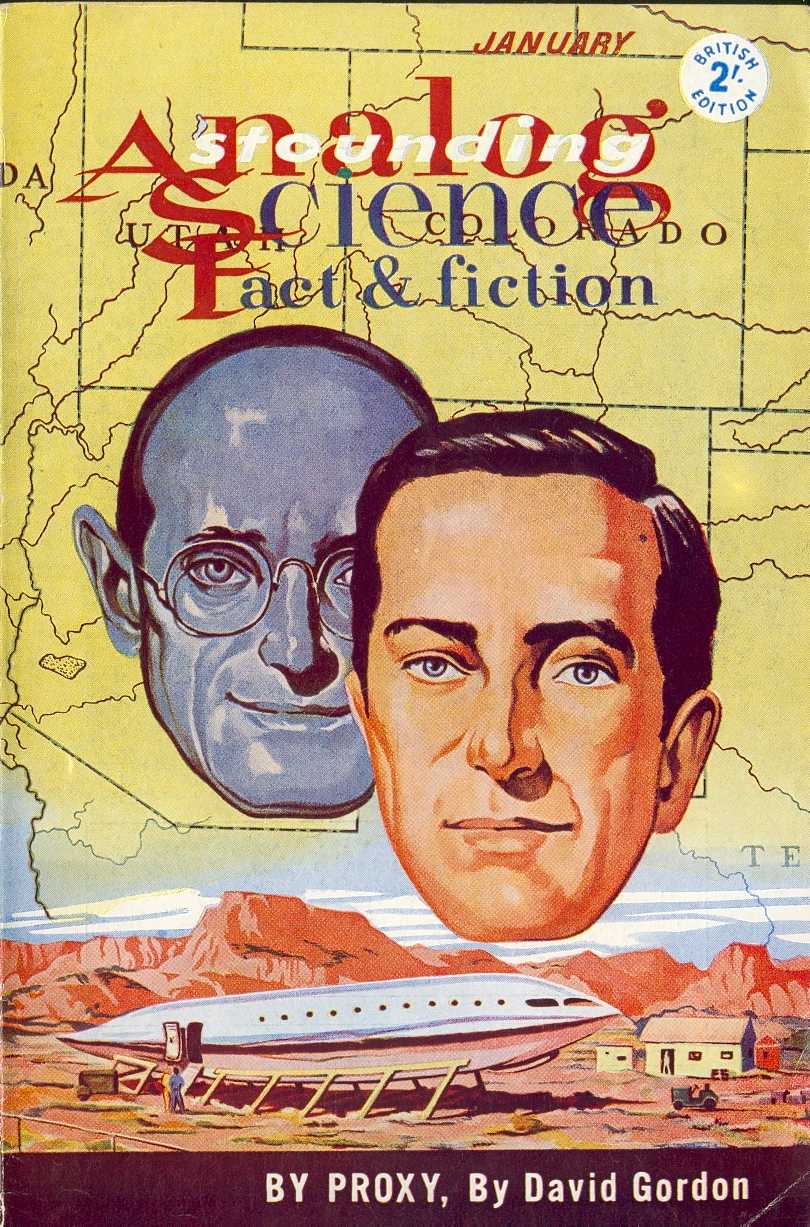
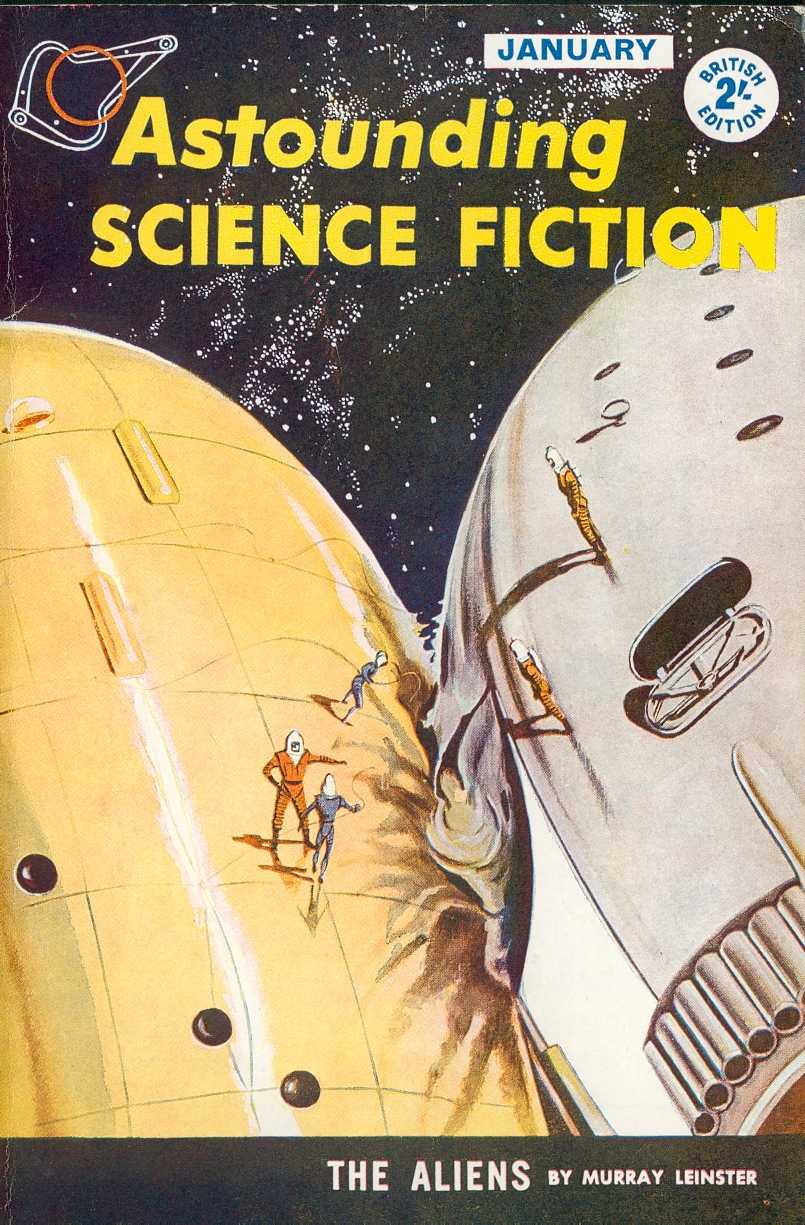
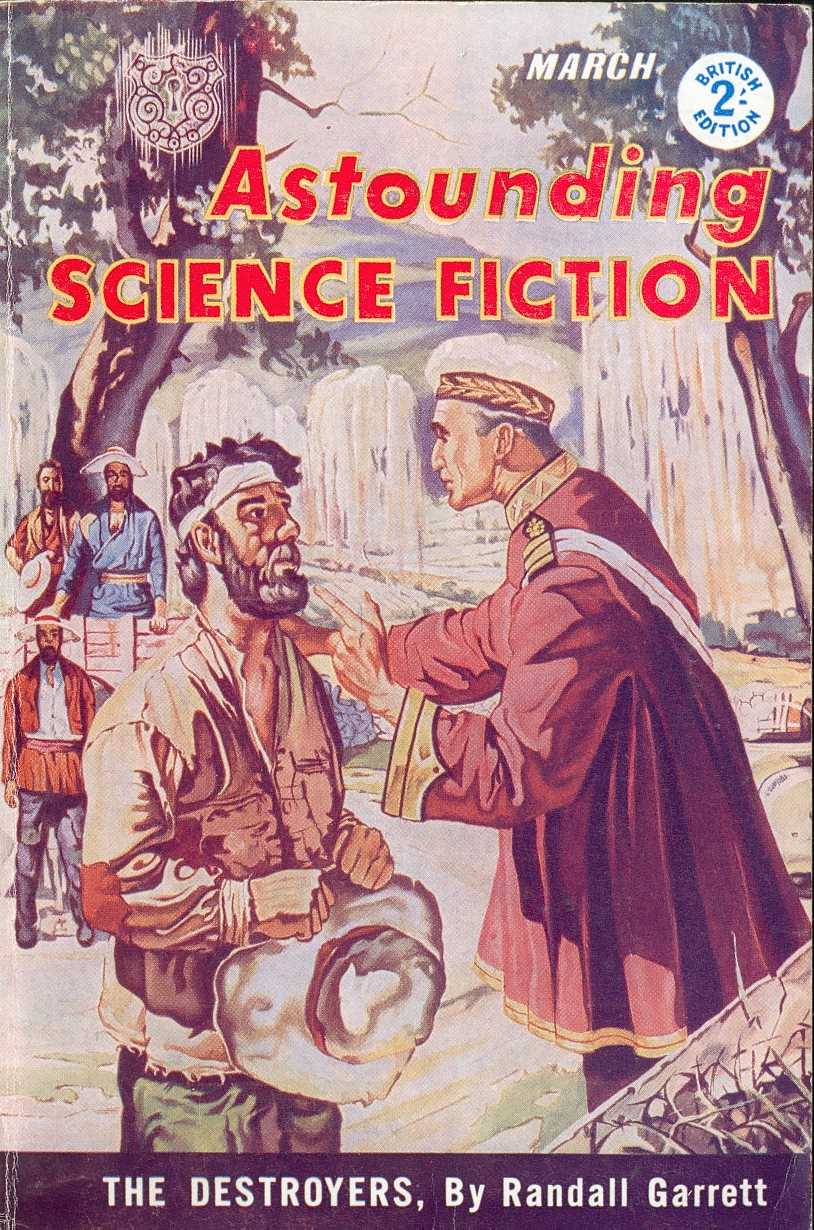
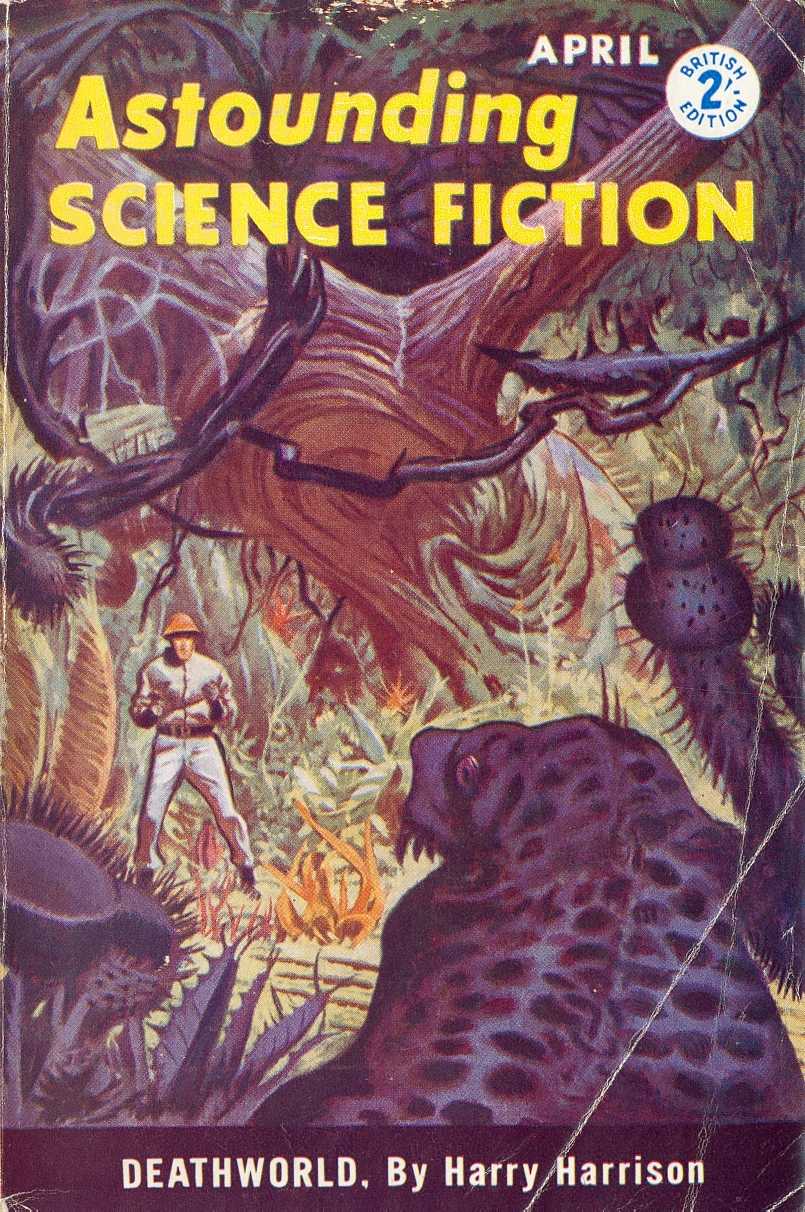
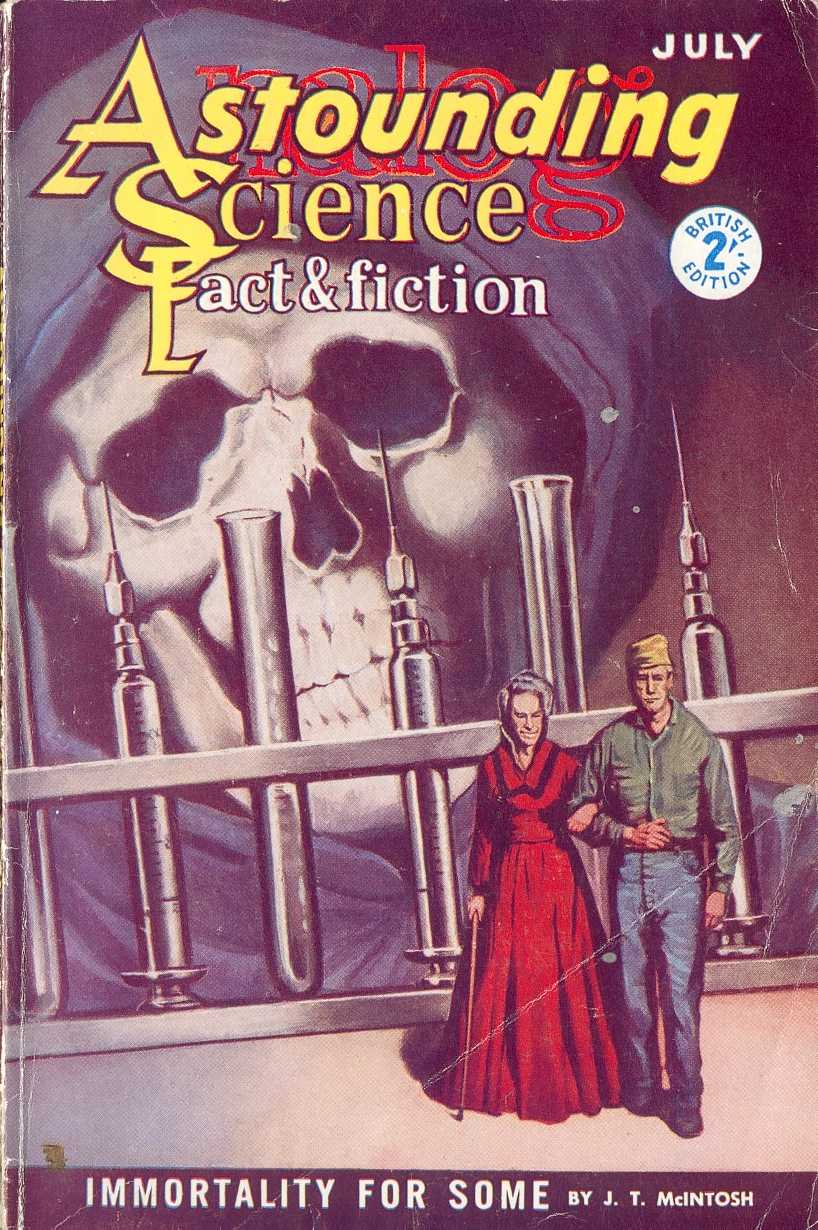
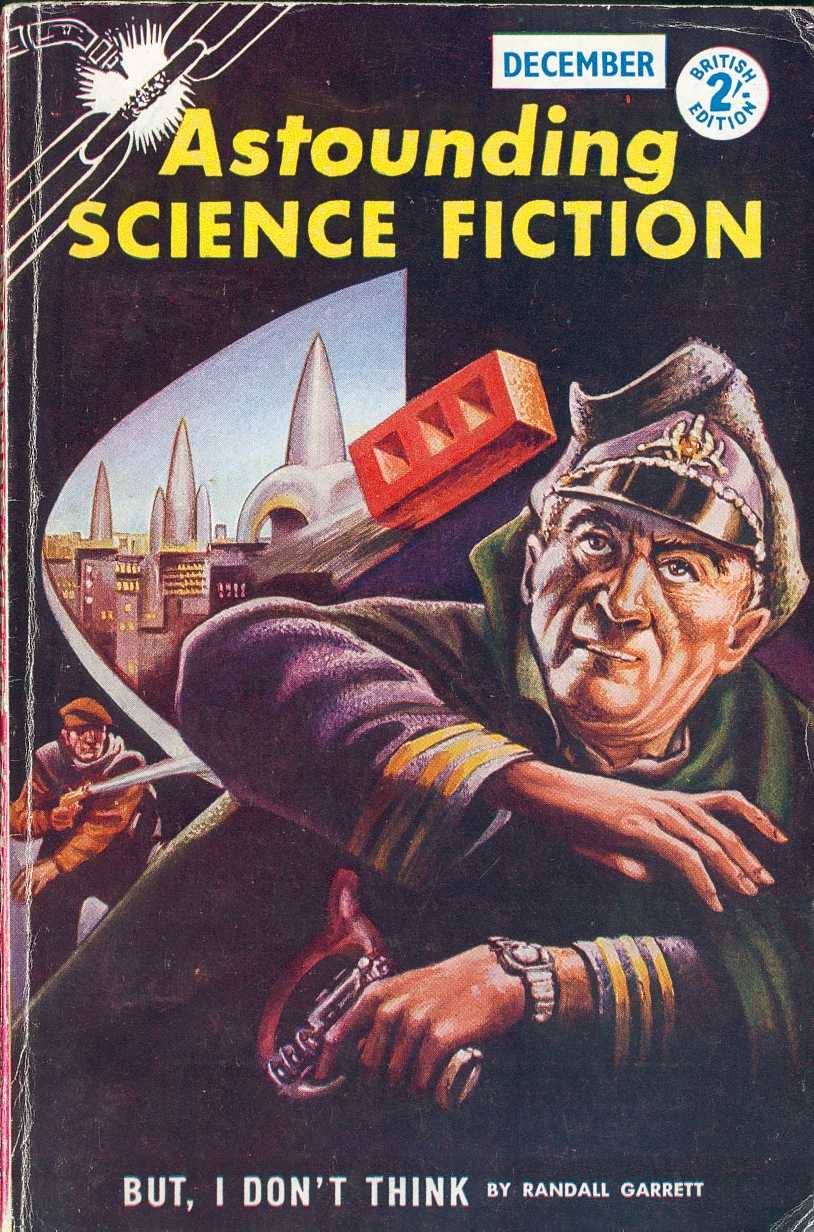
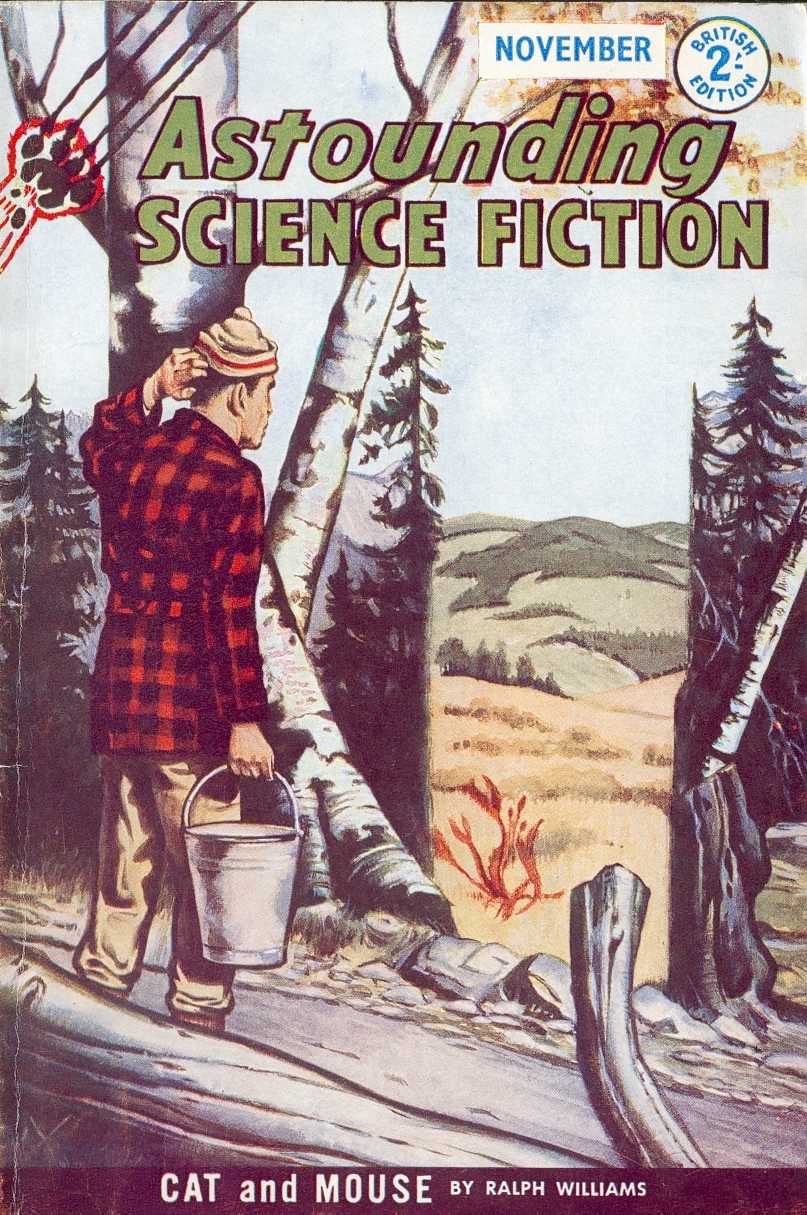
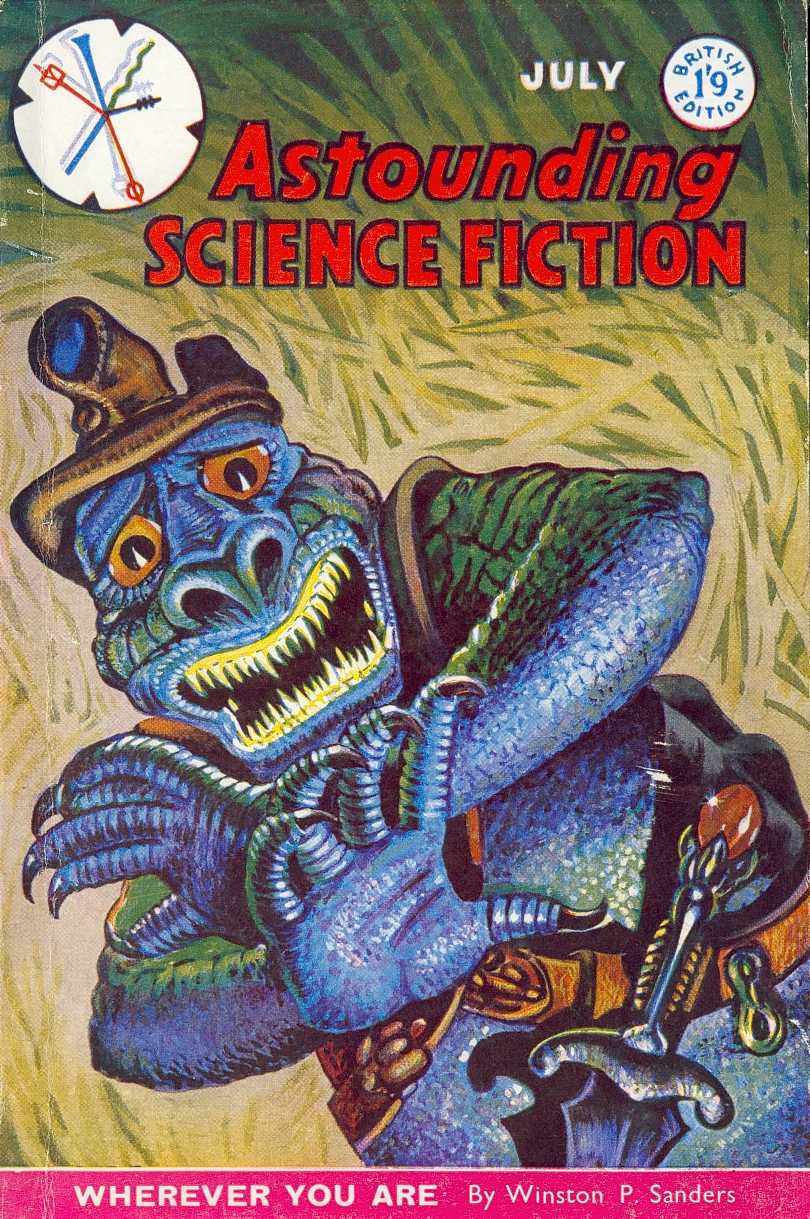
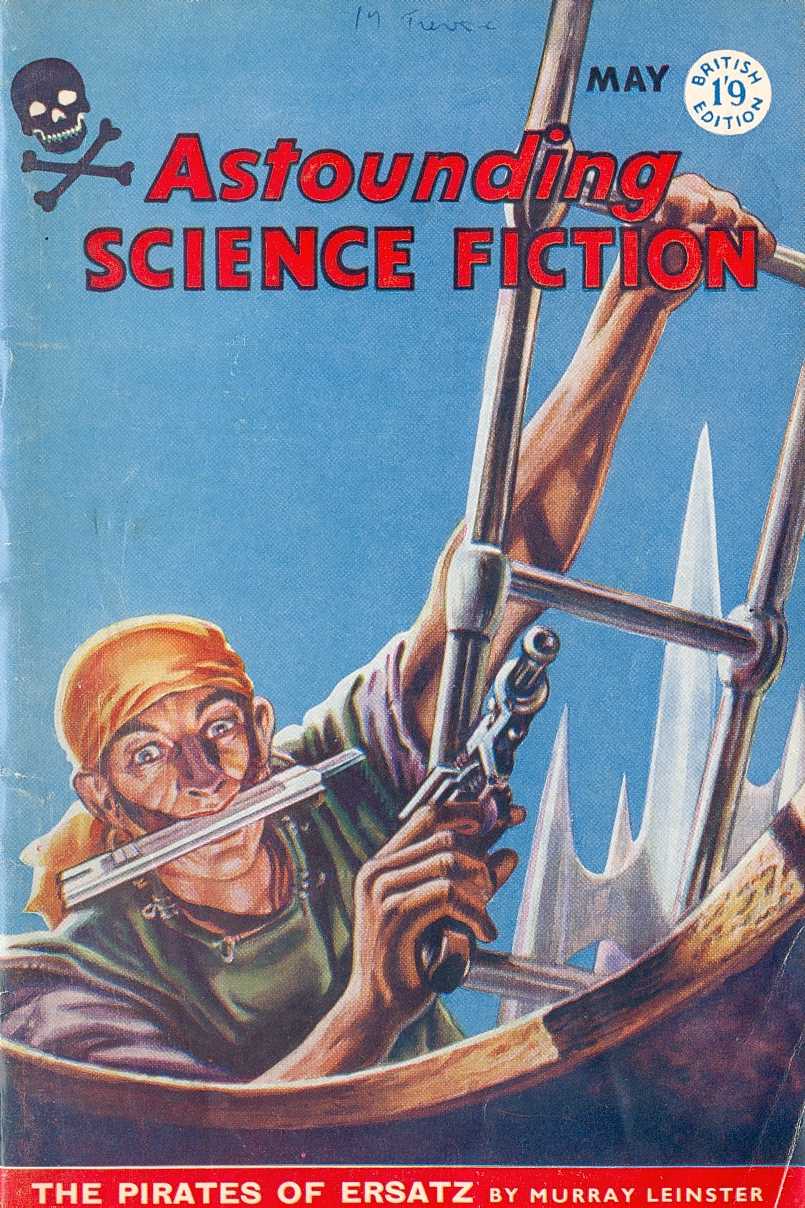
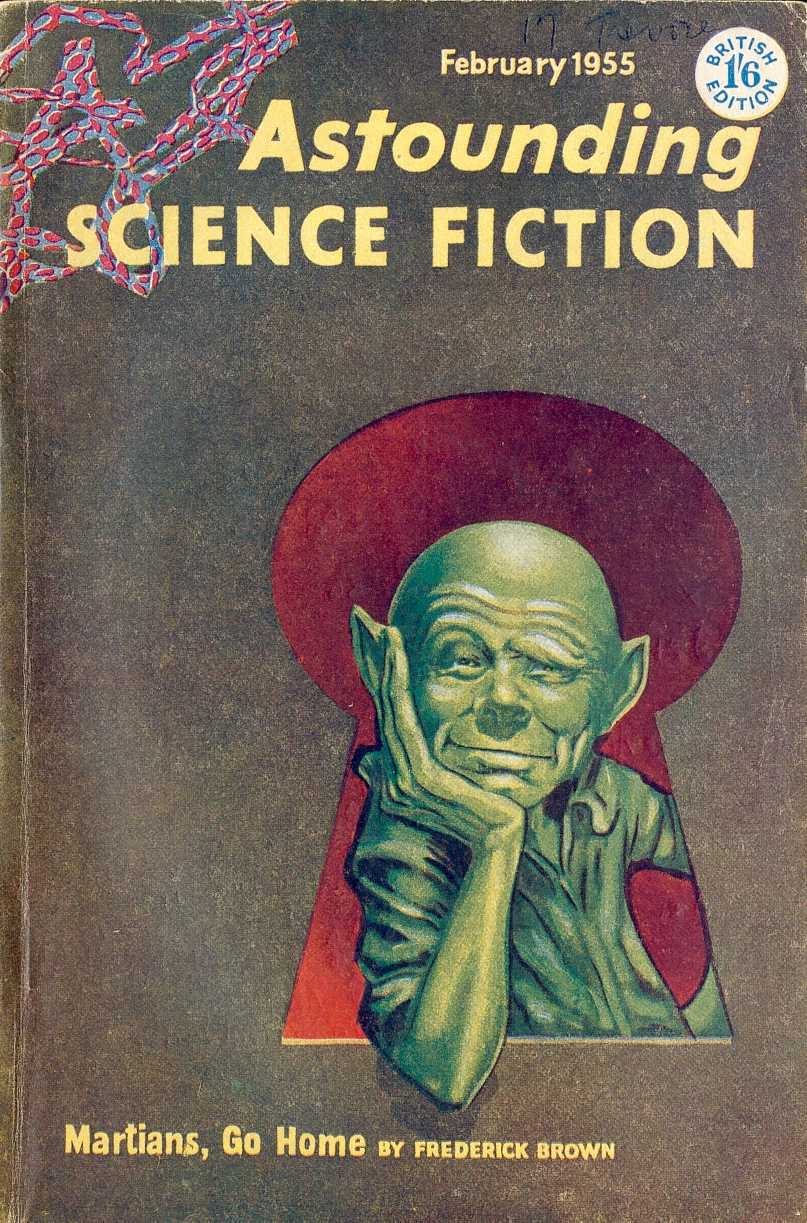
Although there was a variety of titles amongst them, one predominated: Astounding Science Fiction, and by then I’d dipped into enough SF in paperback to recognise many of the authors, including names like Isaac Asimov and Ray Bradbury. What added to the excitement was when Dad explained to me that, in many cases, this would have been the format where their stories first appeared – meaning that these yellowing and fragile pages would have been the medium where they were read for the first time by contemporary SF fans. As my awareness of pulp fiction originating from the USA increased, I came to realize that Astounding and its close relations sat at the more literary end of the scale – hence why the covers were light on bug-eyed monsters and scantily-clad heroines, and leant more heavily on thoughtful graphic interpretations of the content.
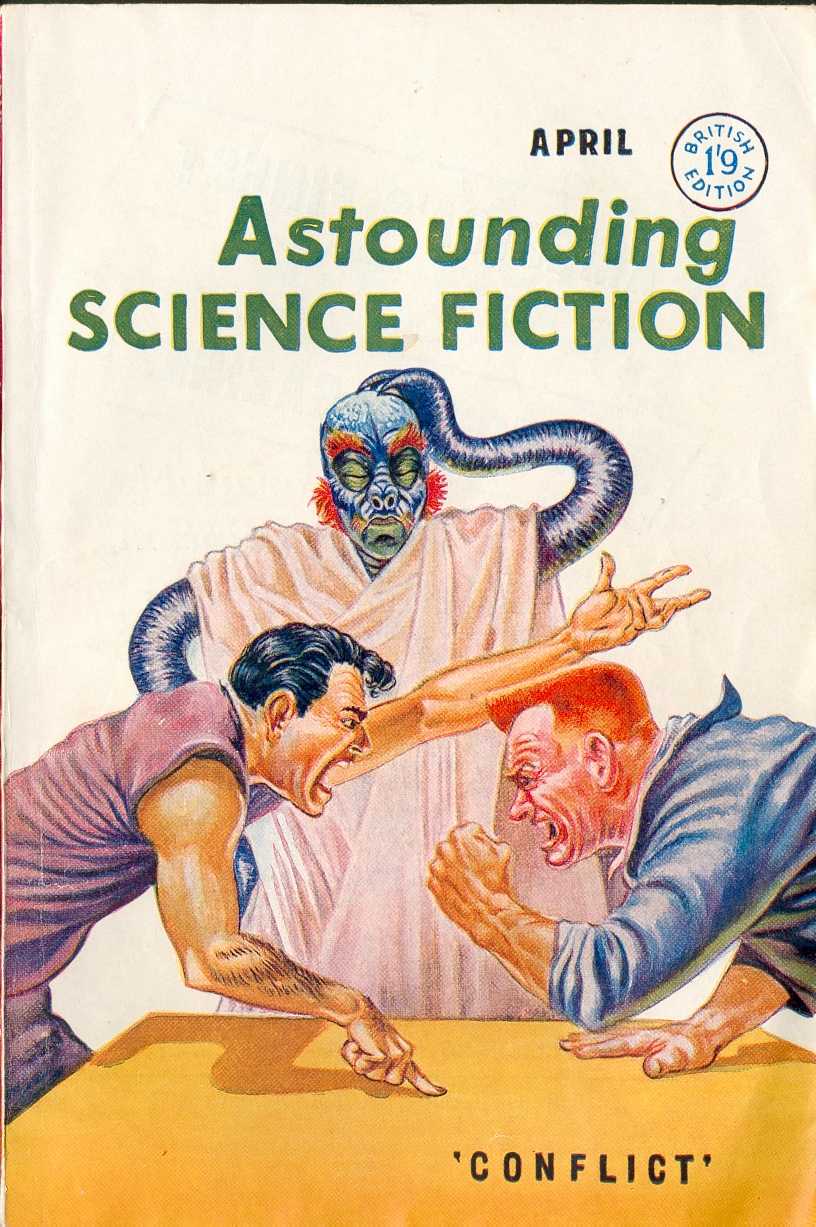
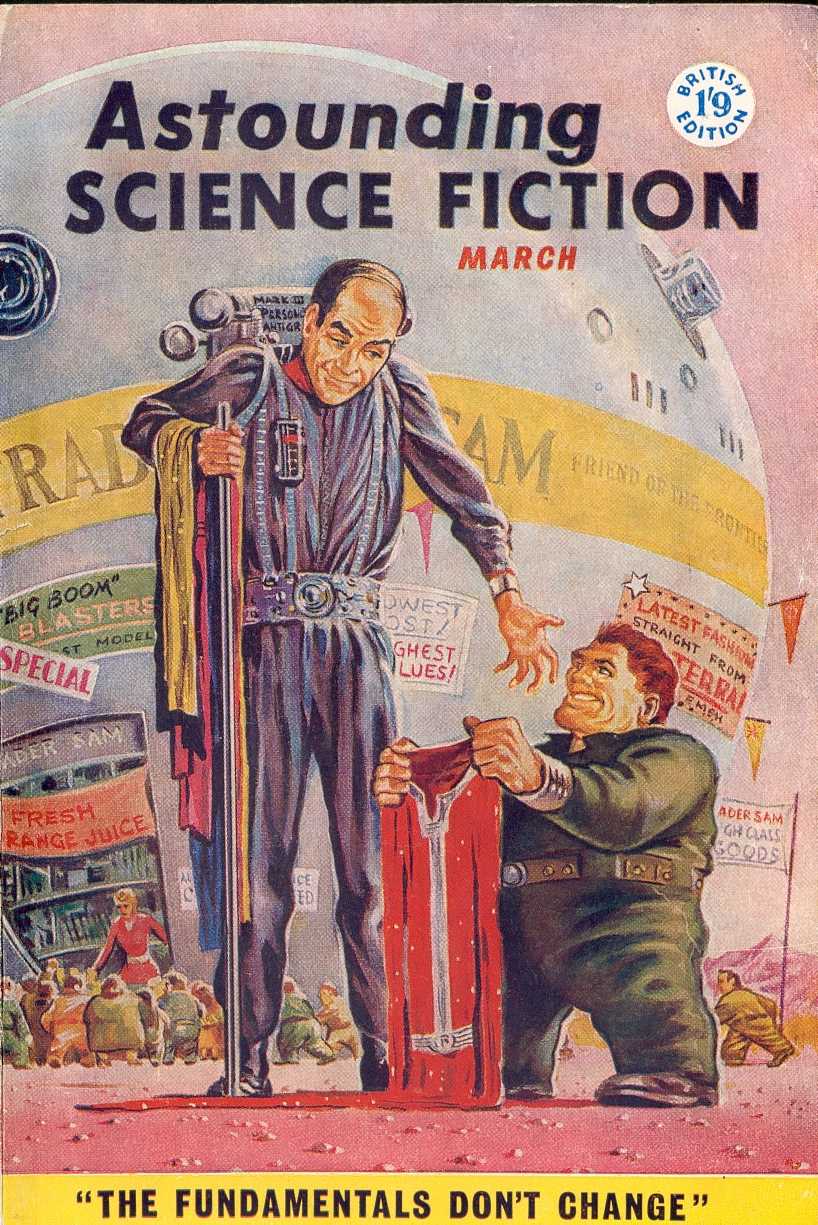
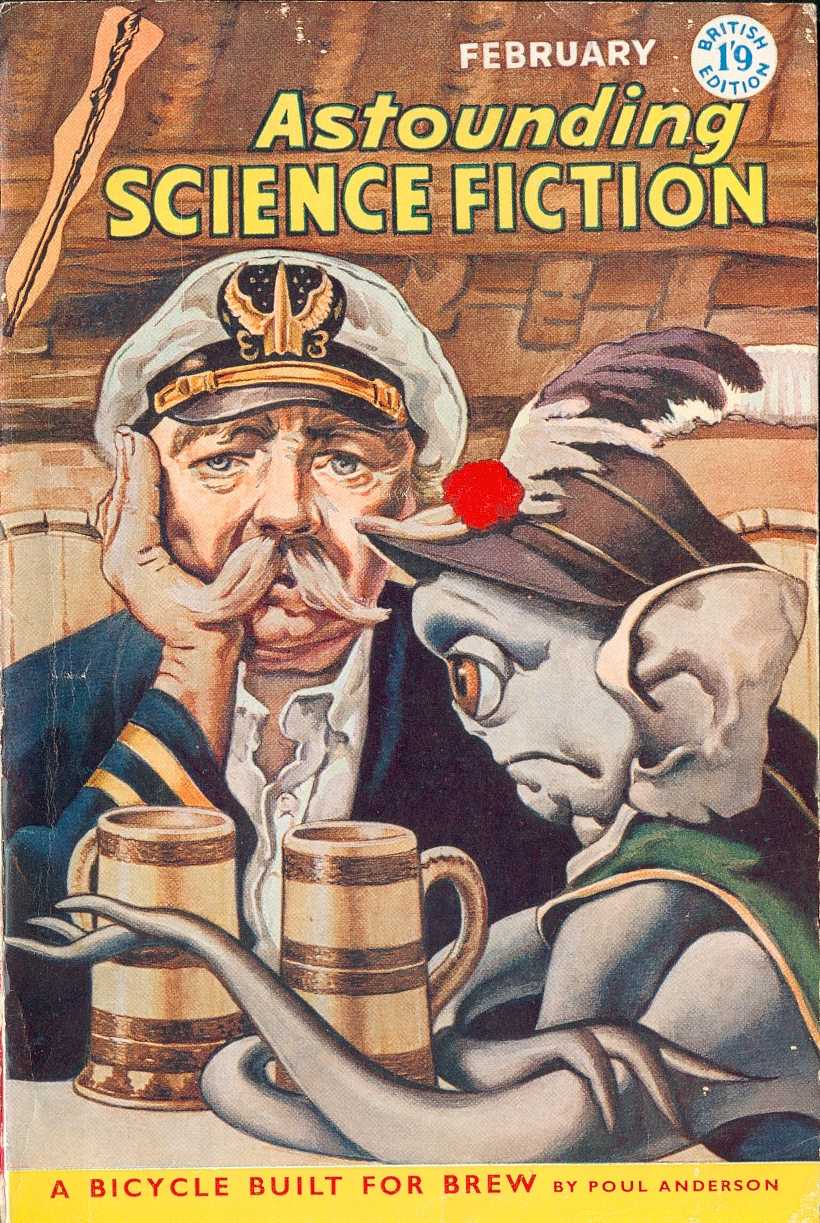
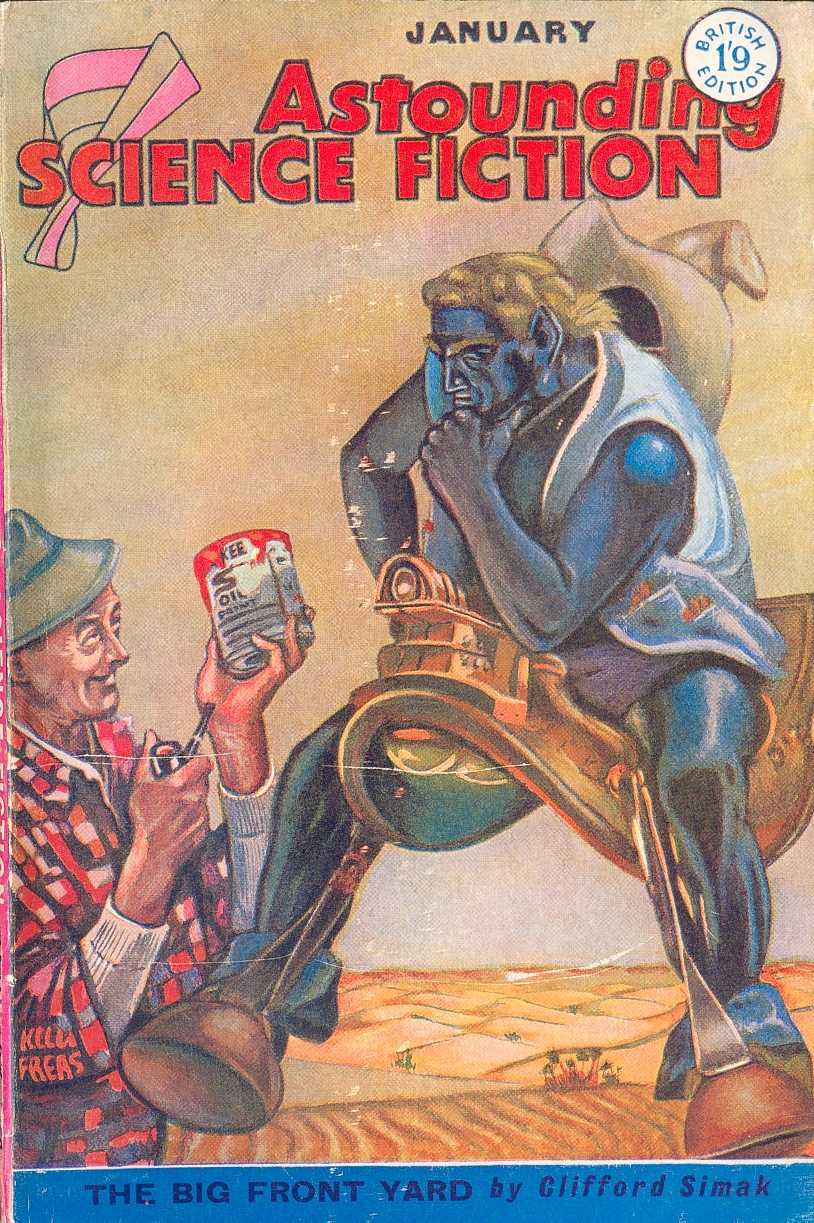
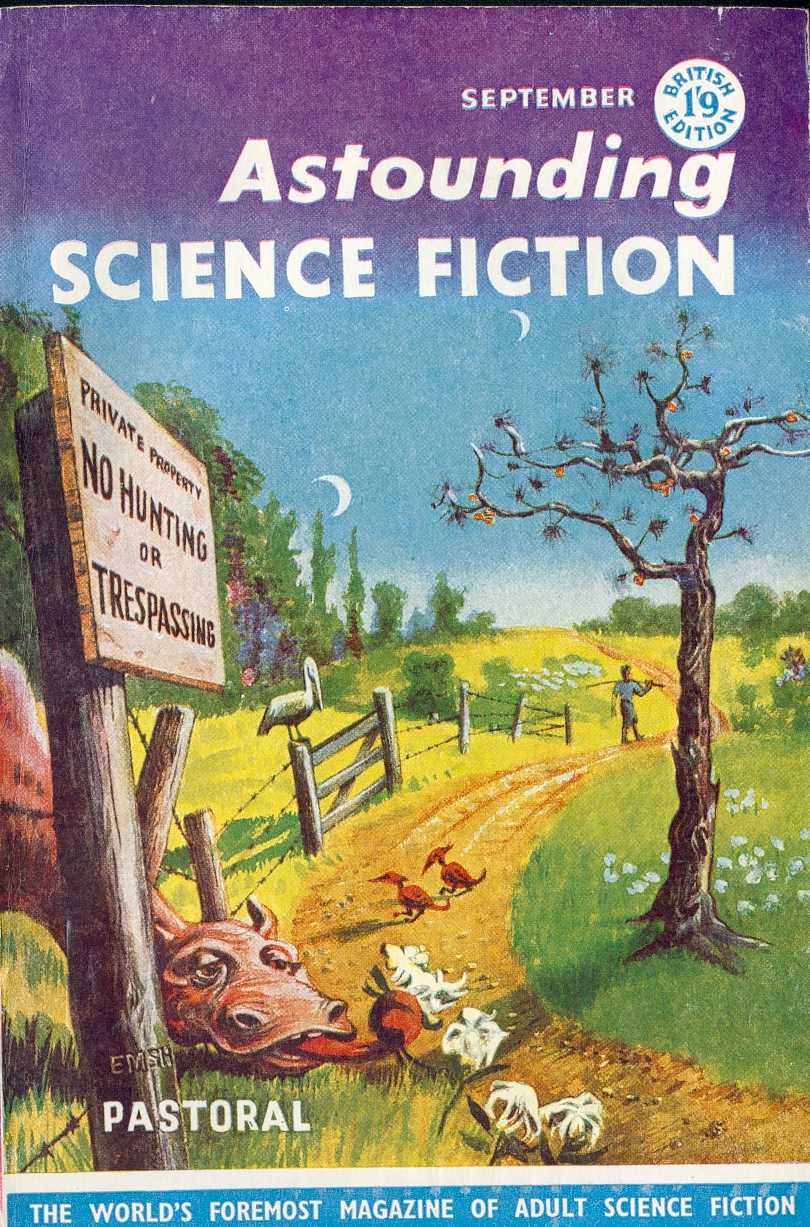
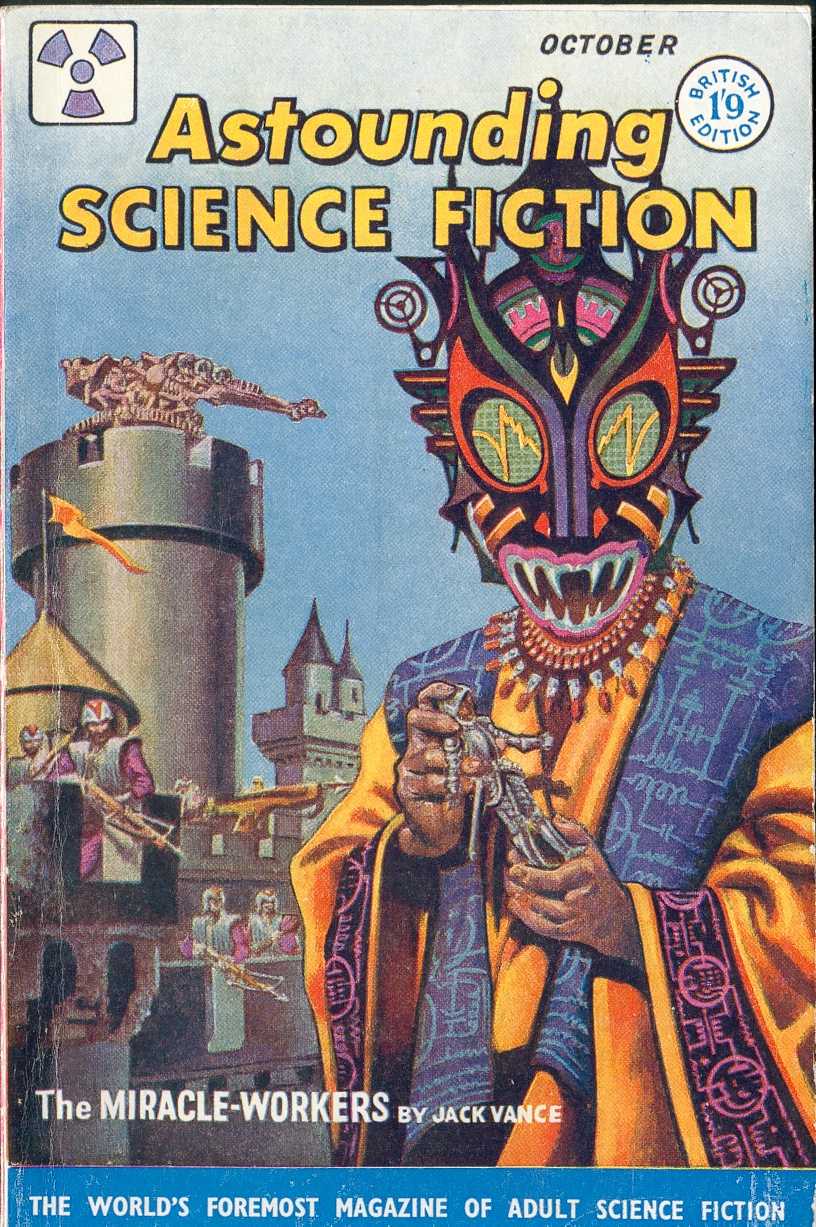
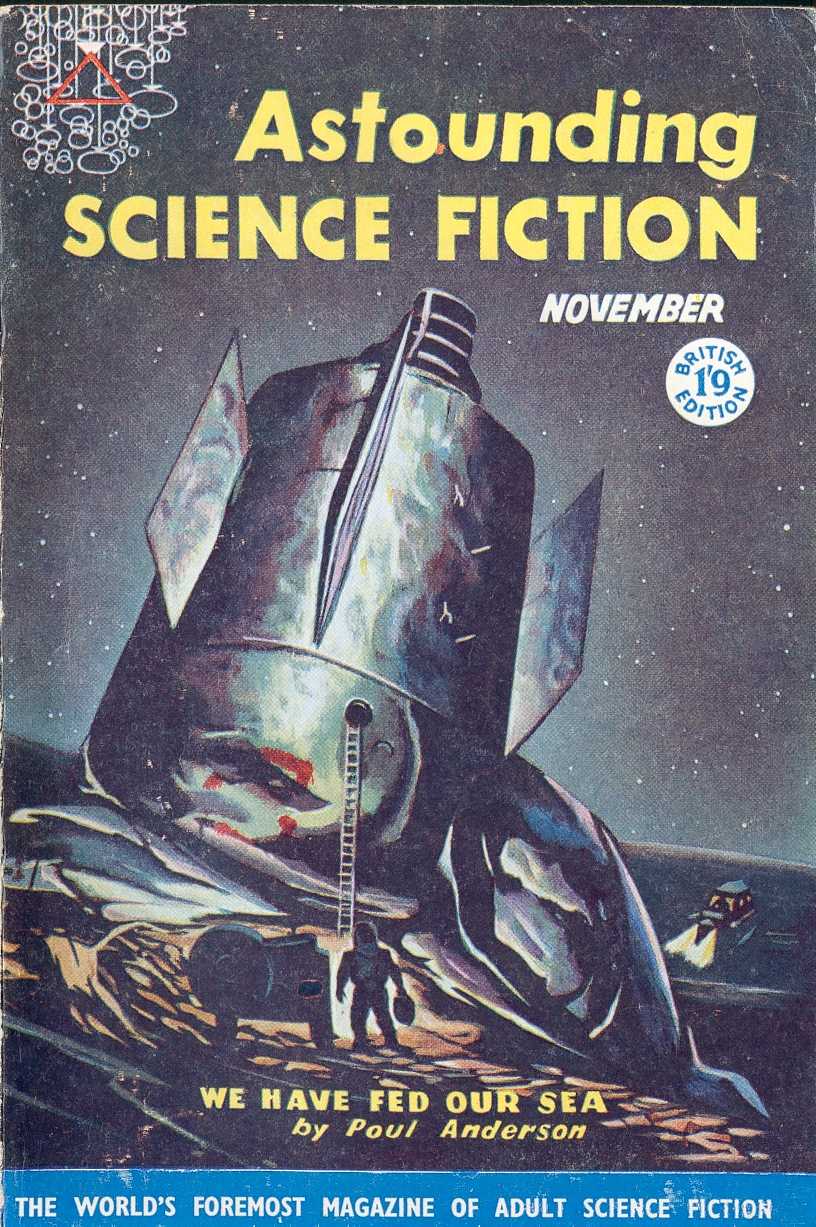
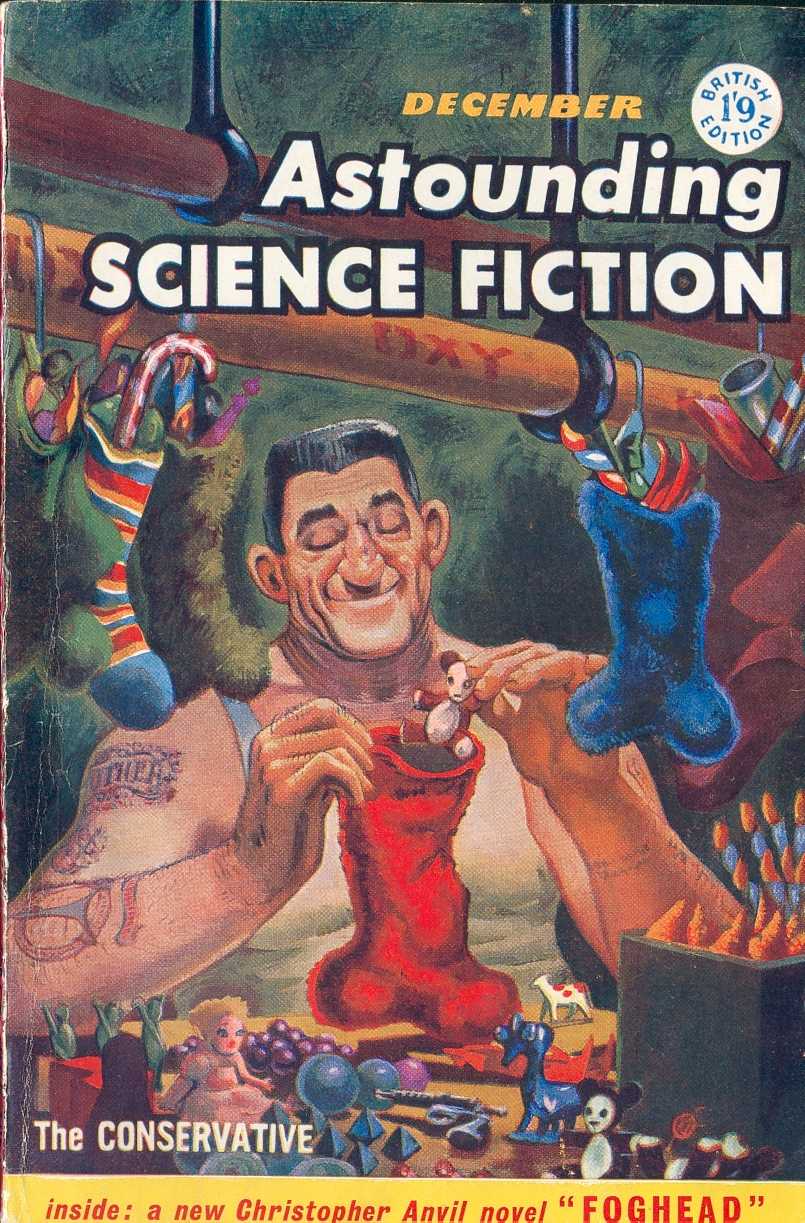
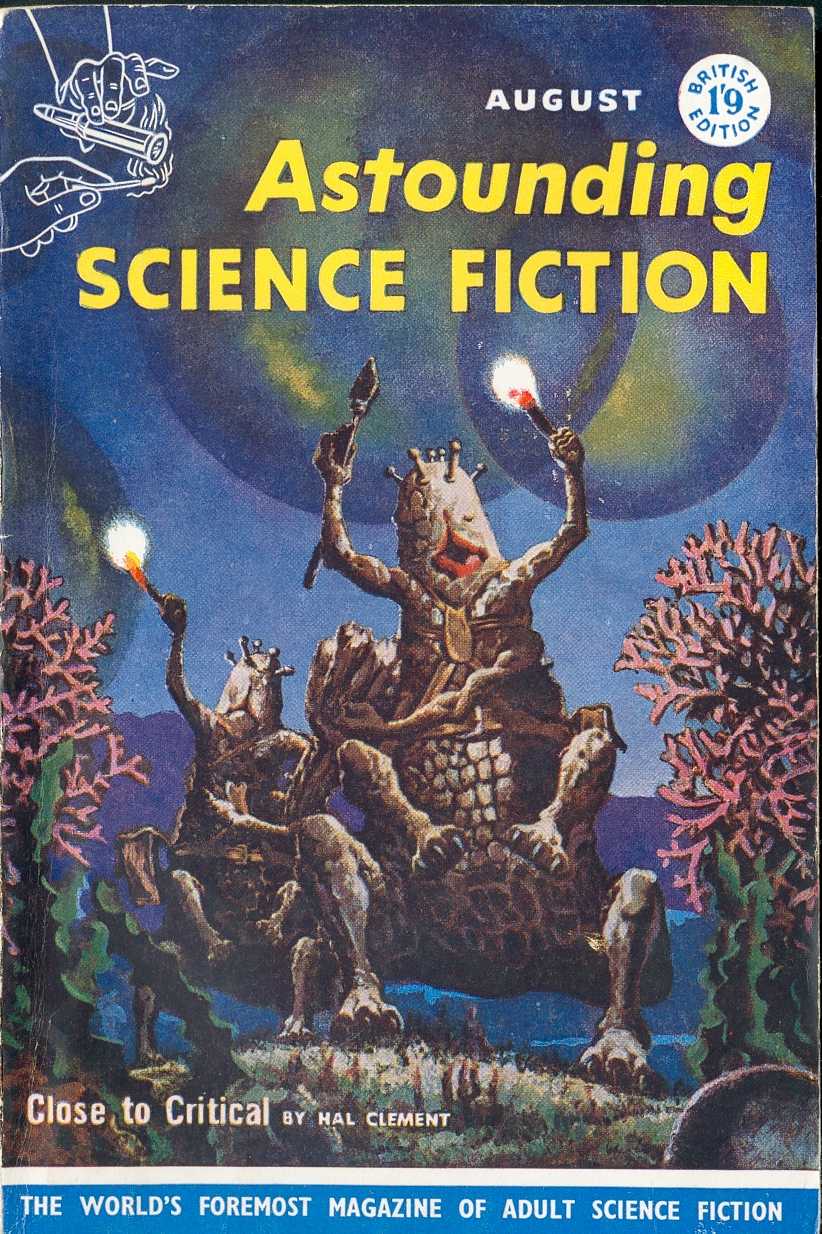
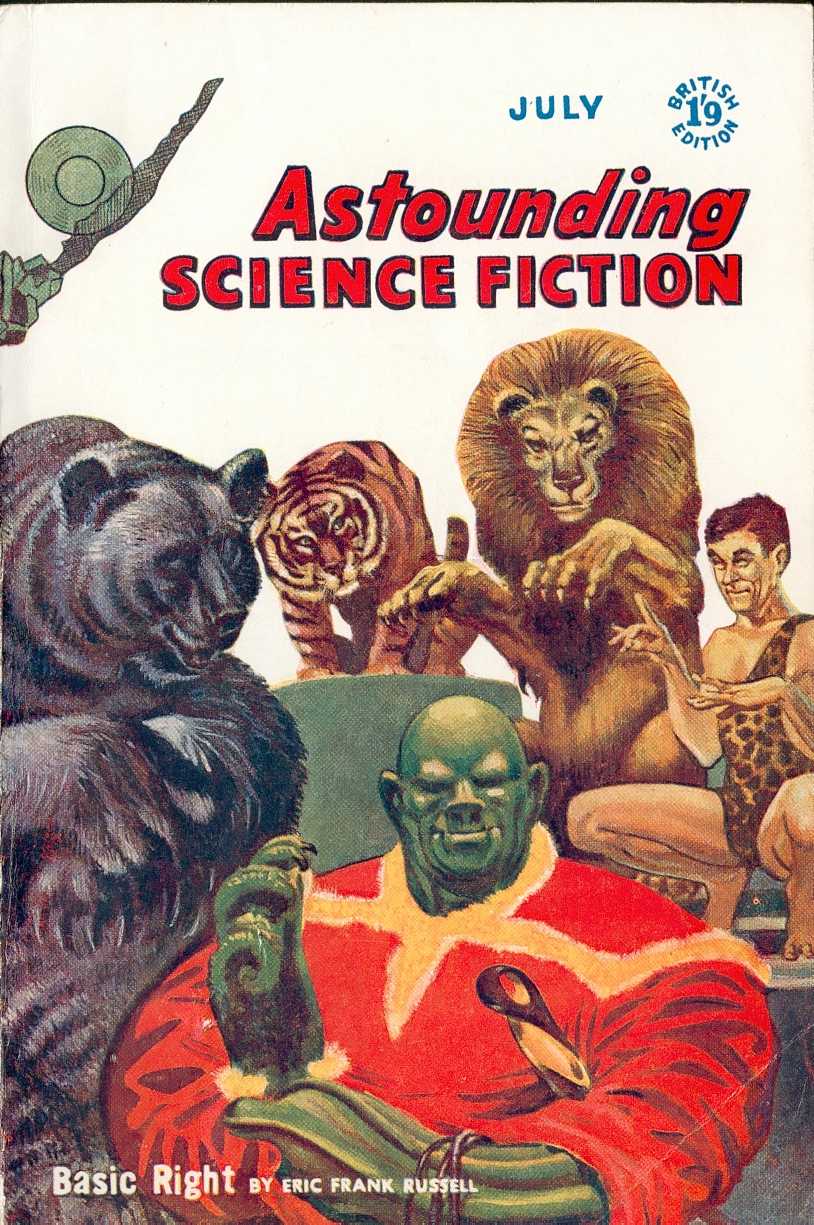
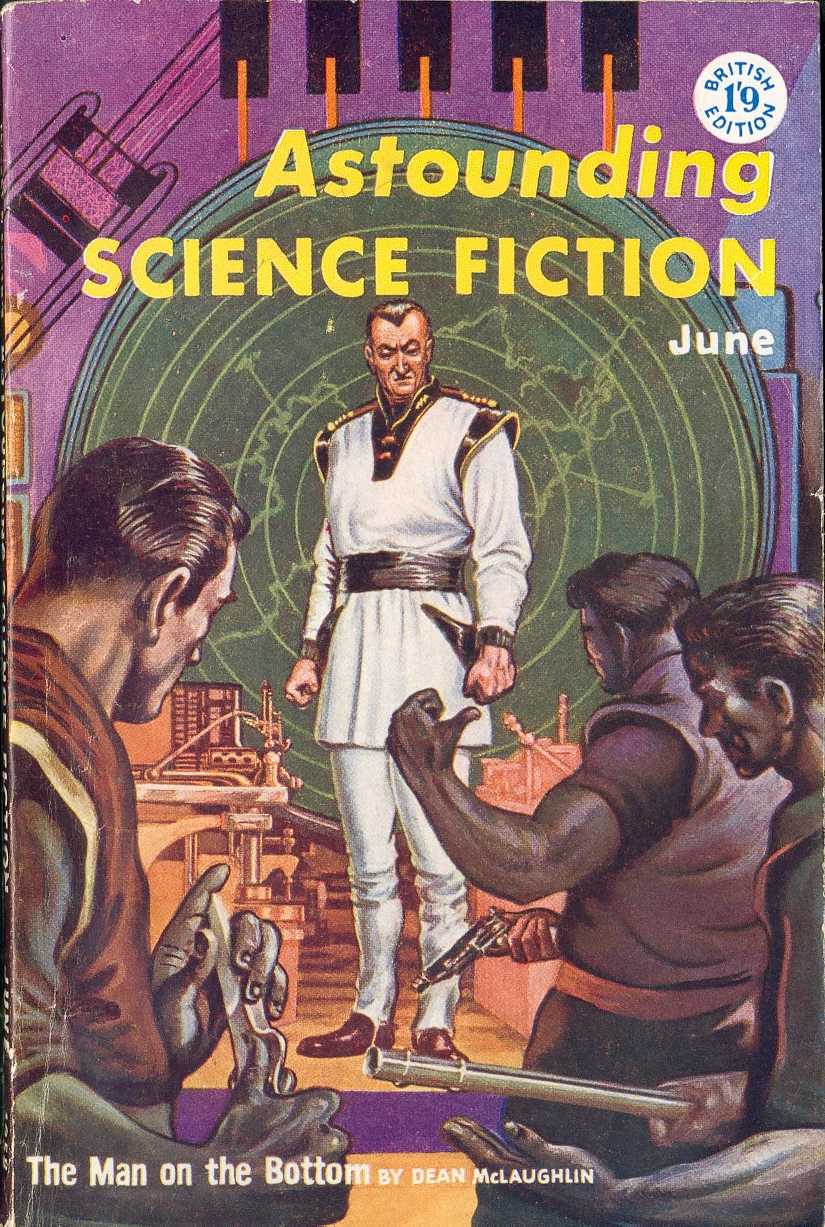
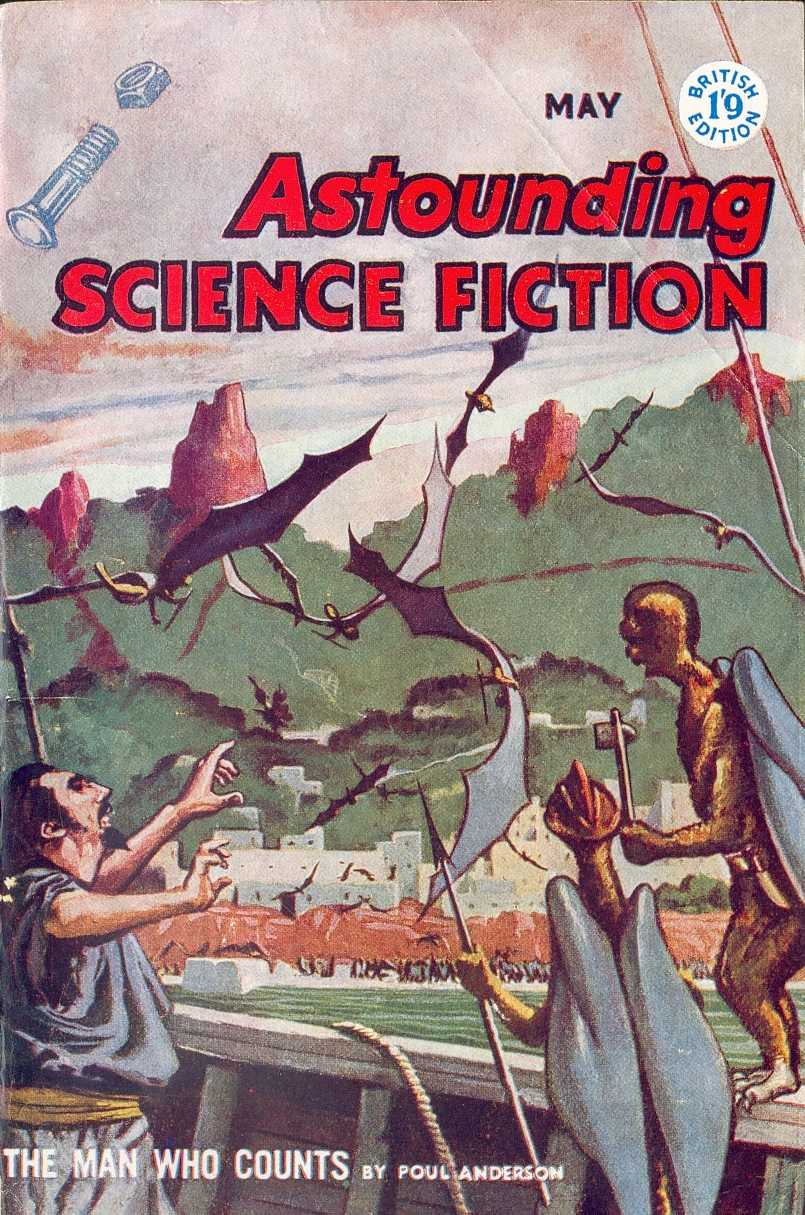
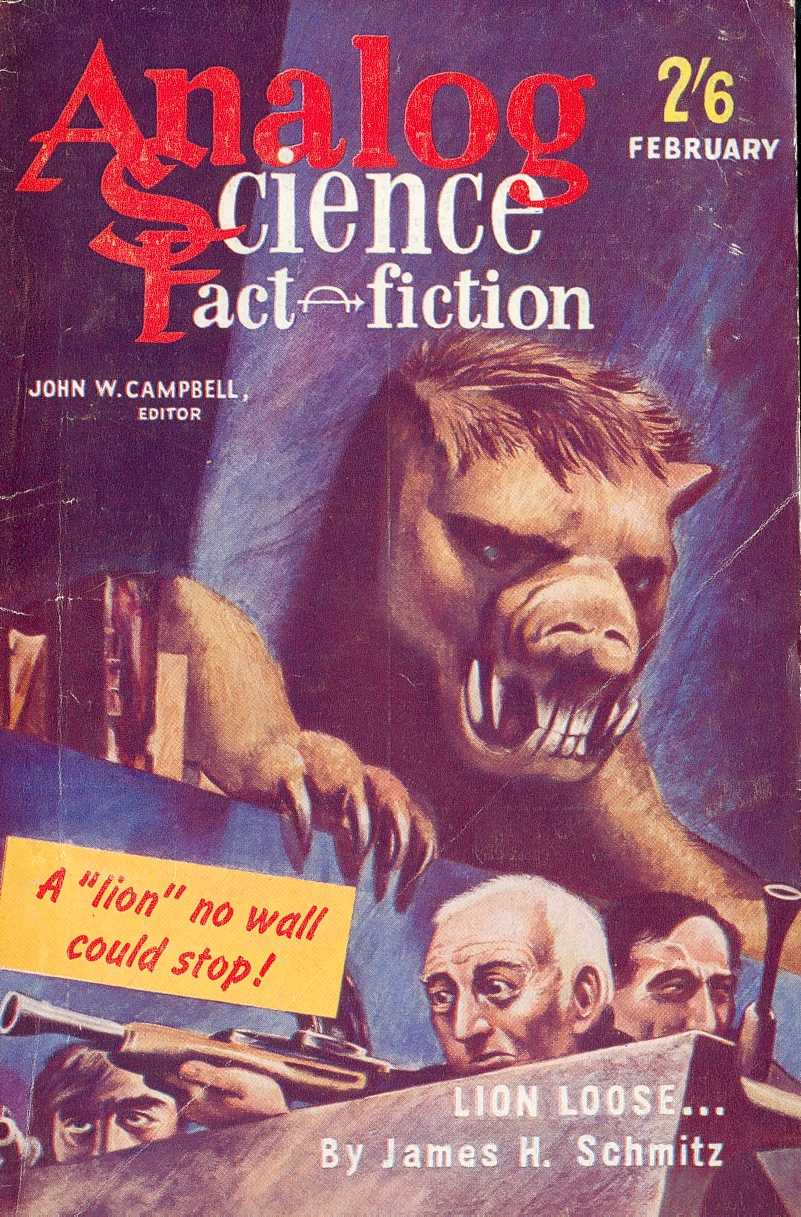
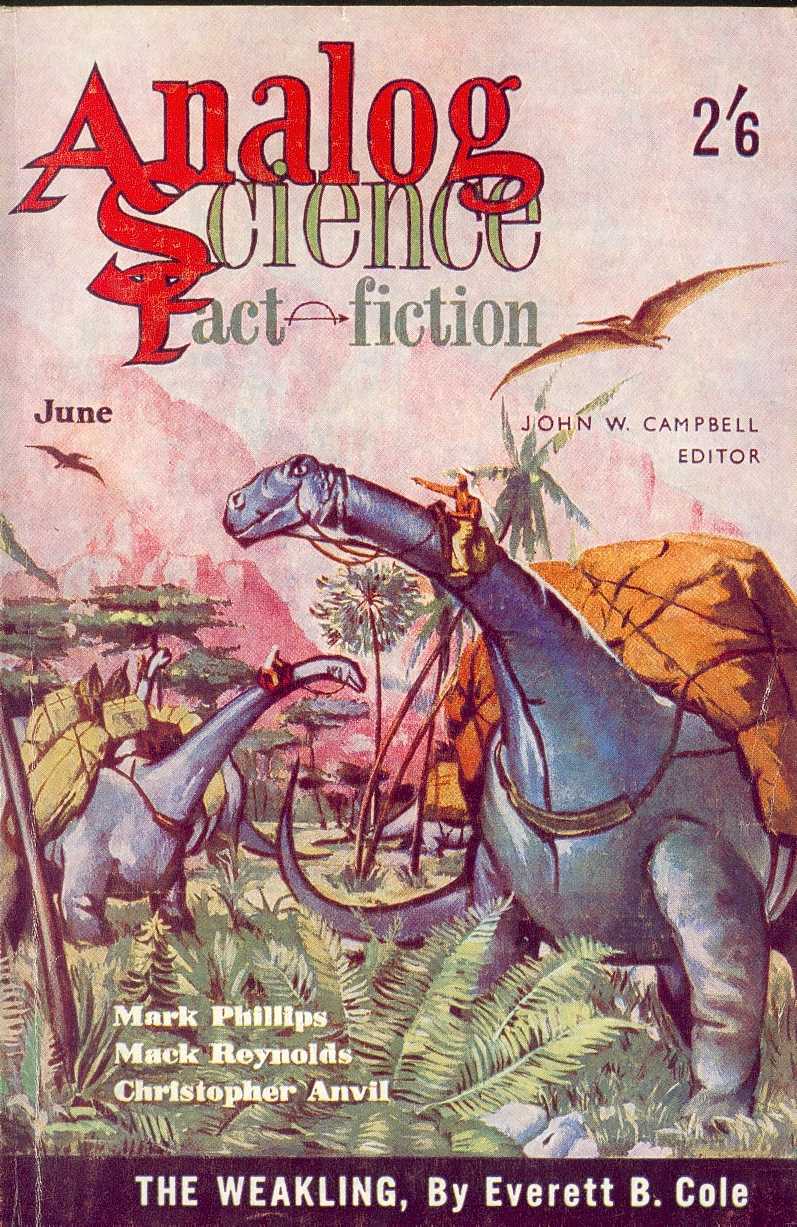
As always, when I started to probe into the story of Astounding to accompany a selection of those covers for a blog post, I found that true aficionados had already done a comprehensive job in collating every cover from the launch of Astounding Stories magazine in January 1930, through a brief pause during the Depression in 1933 and its incarnation as Astounding Science Fiction in 1938, until its rebranding as Analog Science Fact and Fiction in 1960, the title it has carried since. It was the seven-month pause in 1933, though, and purchase by Street and Smith pulp giant Street and Smith Corp, that saw it move from content based on stock adventure yarns against an SF background to genuinely imaginative stories that explored the possibilities of science. This laid the ground for its heyday followed from 1938 under the editorship of John Wood Campbell, who brought on board many of the writers who would become household names (to SF fans, at least) and who in turn led the change to an emphasis on true story-telling rather than simple ‘what if’ extrapolation of technological change.
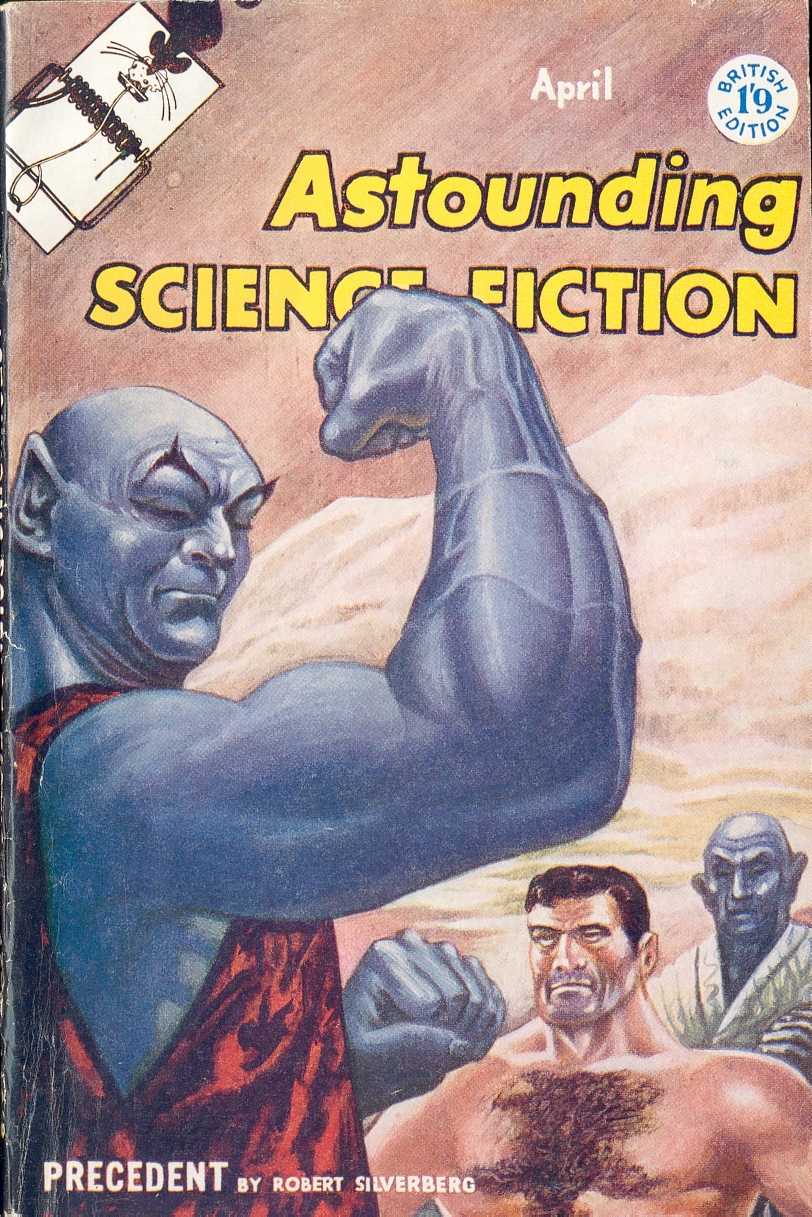
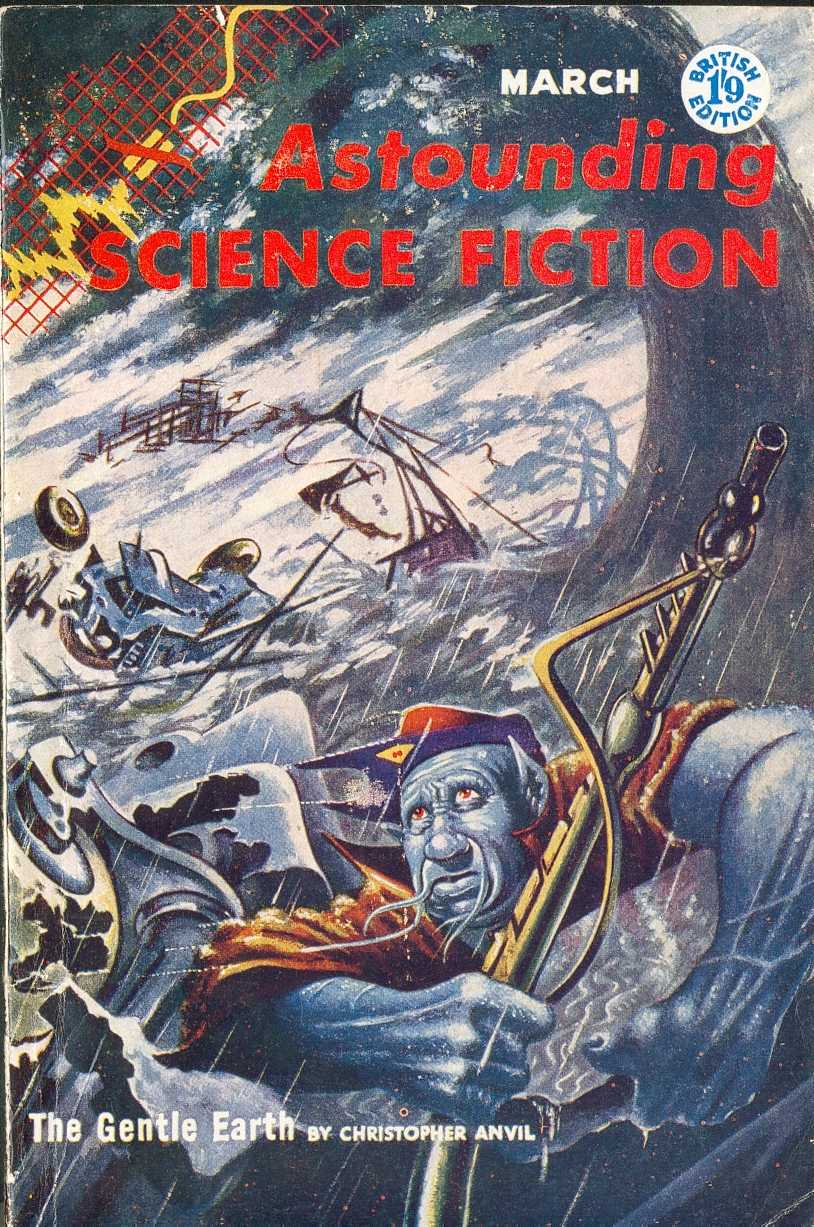
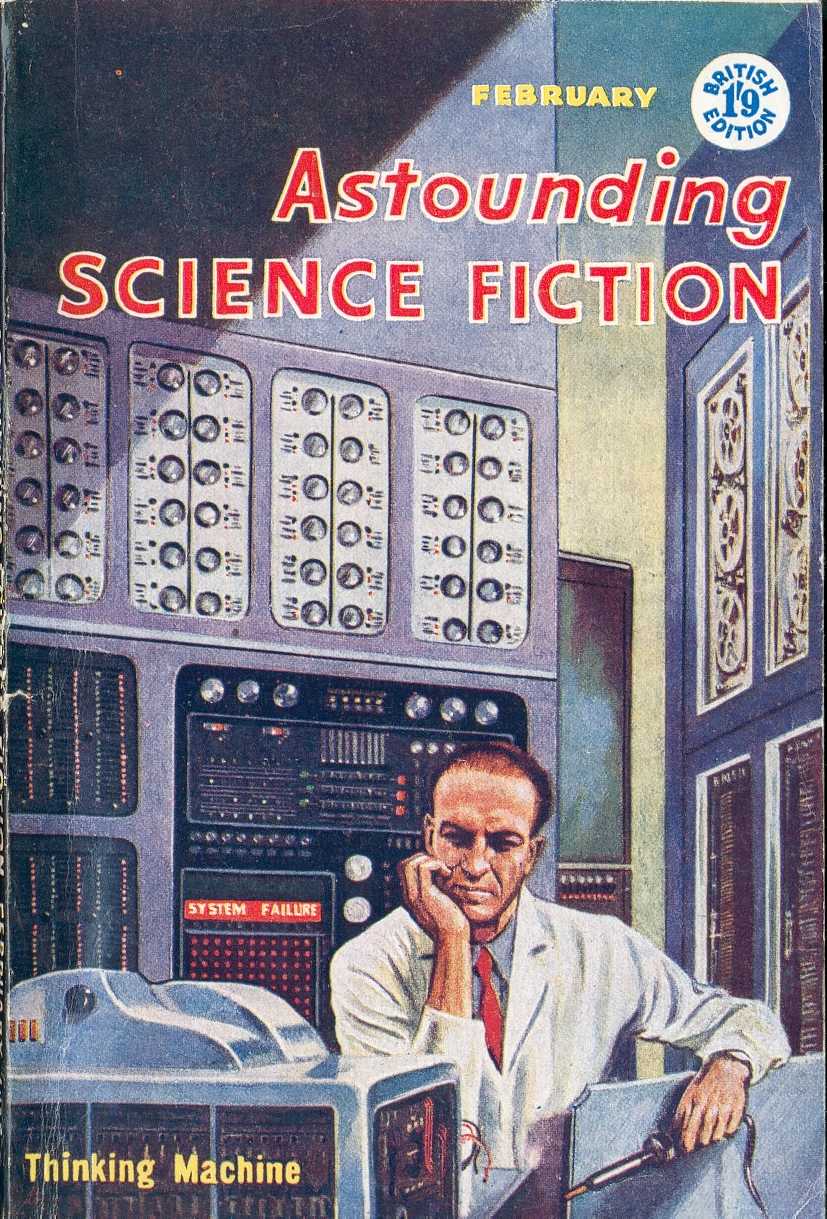
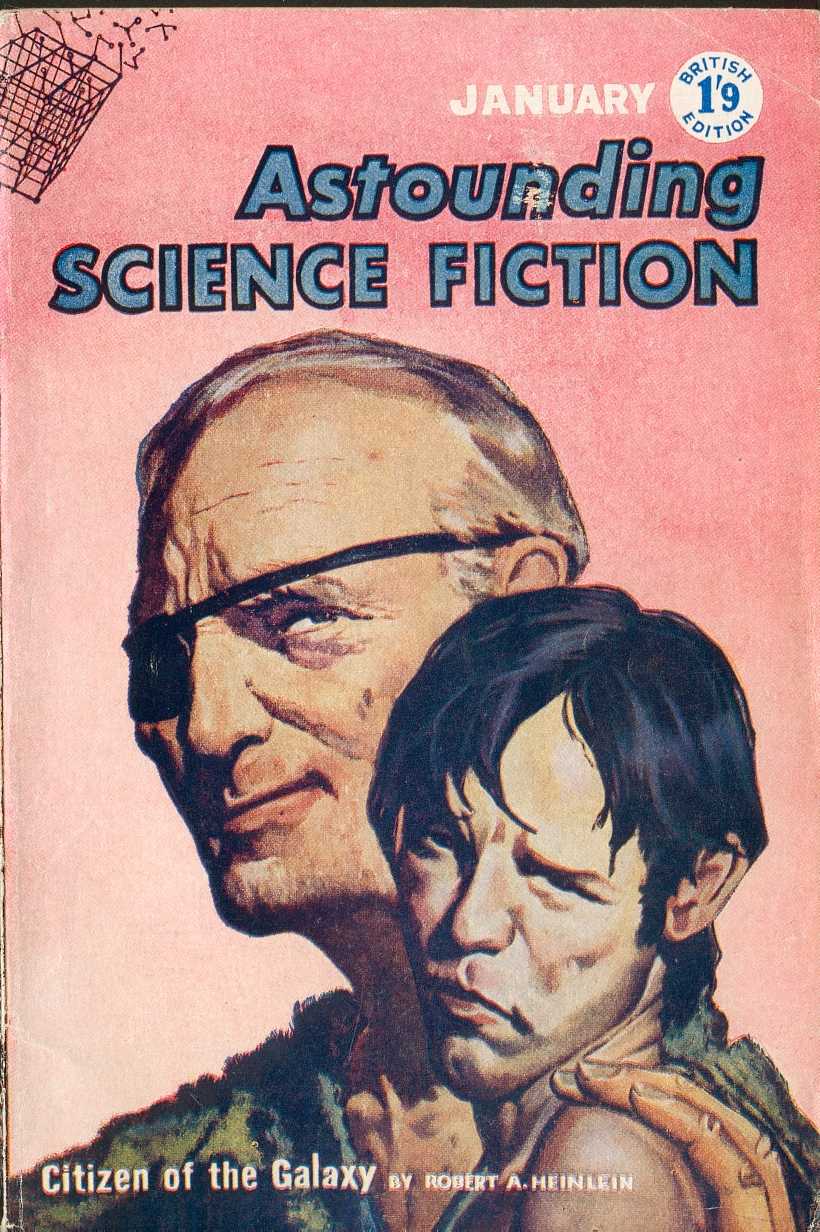
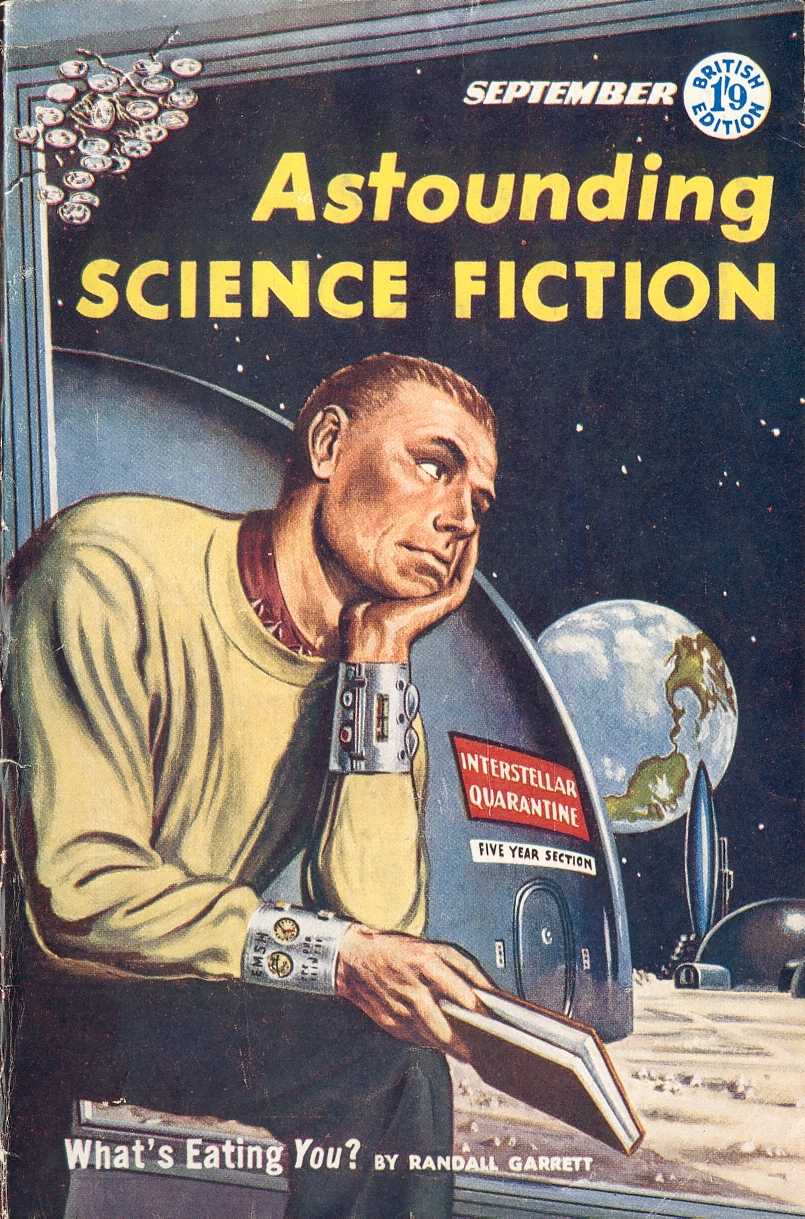
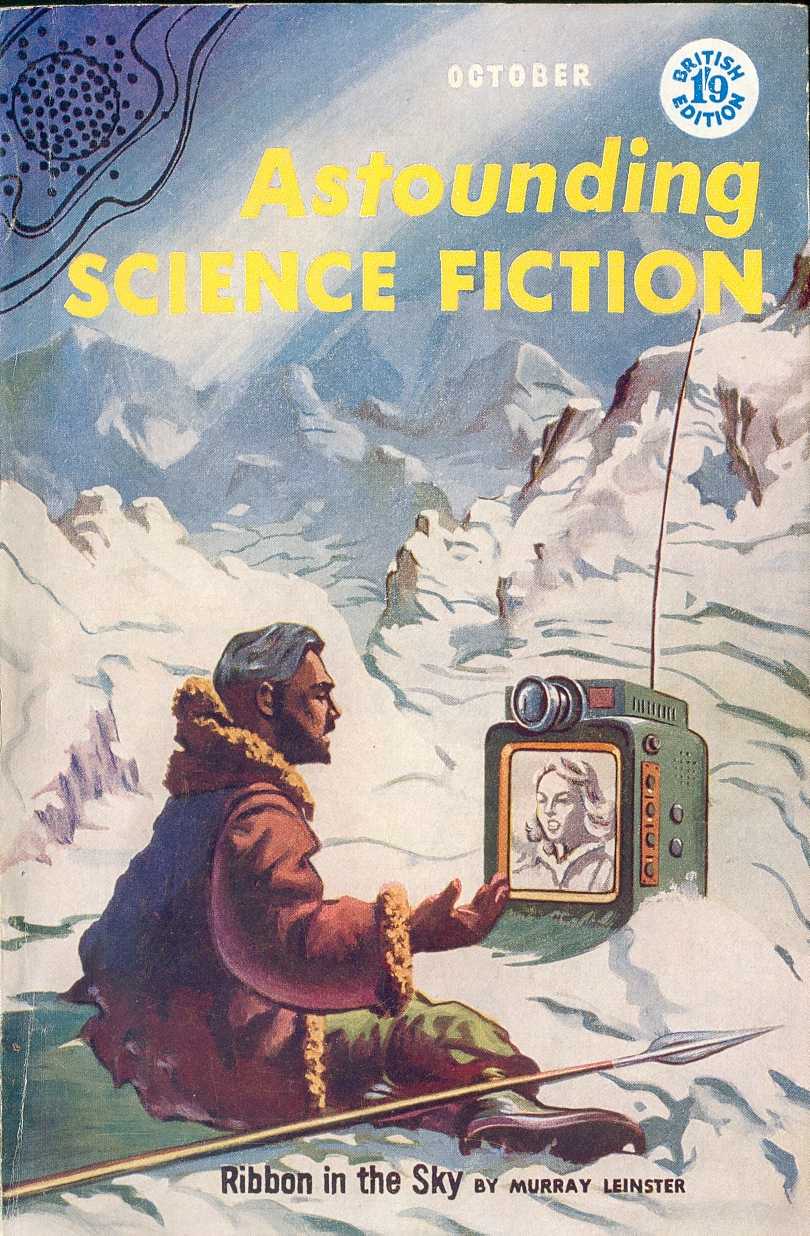
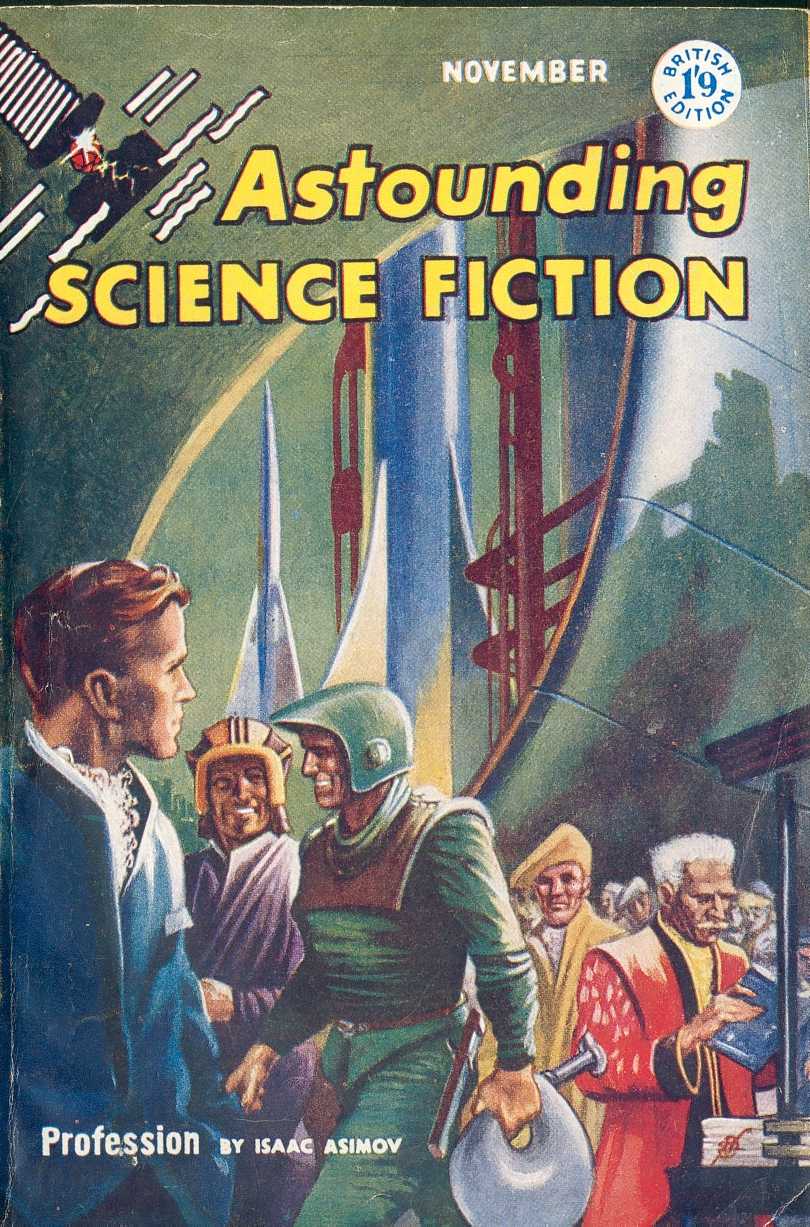
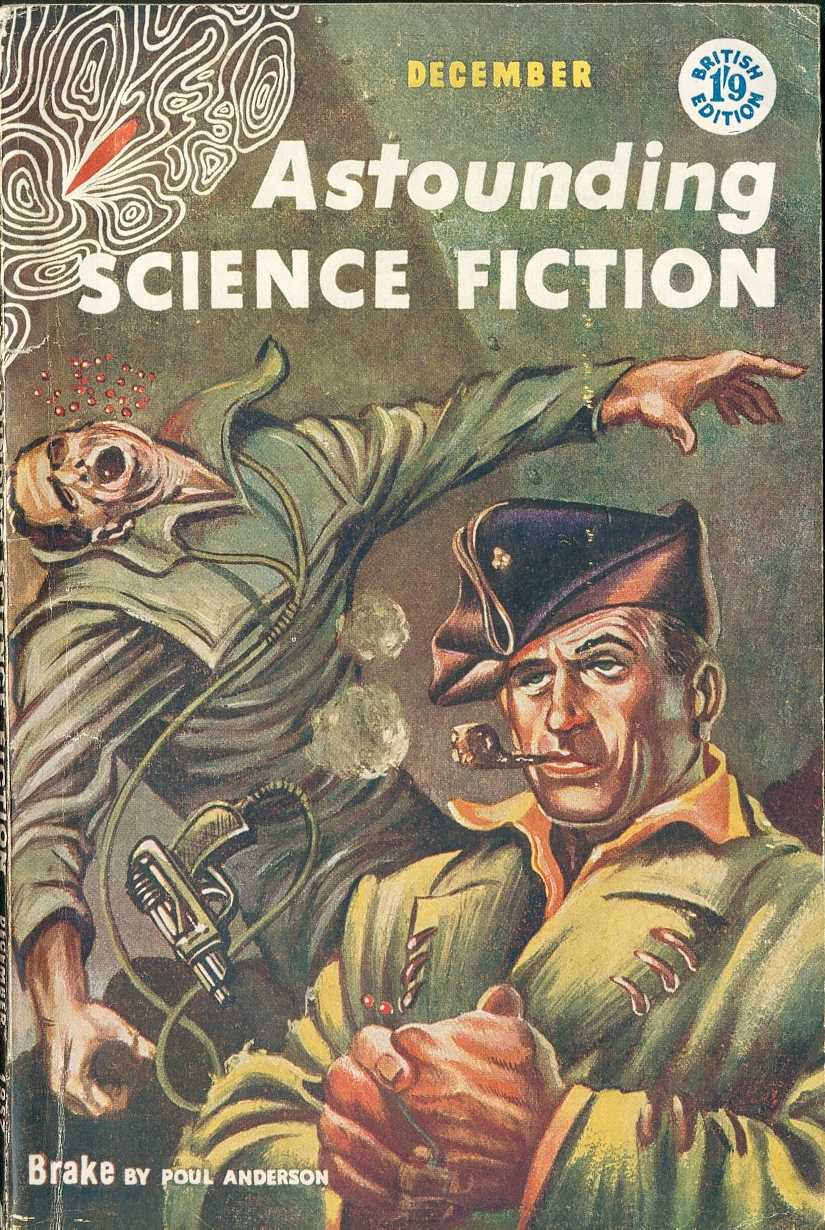
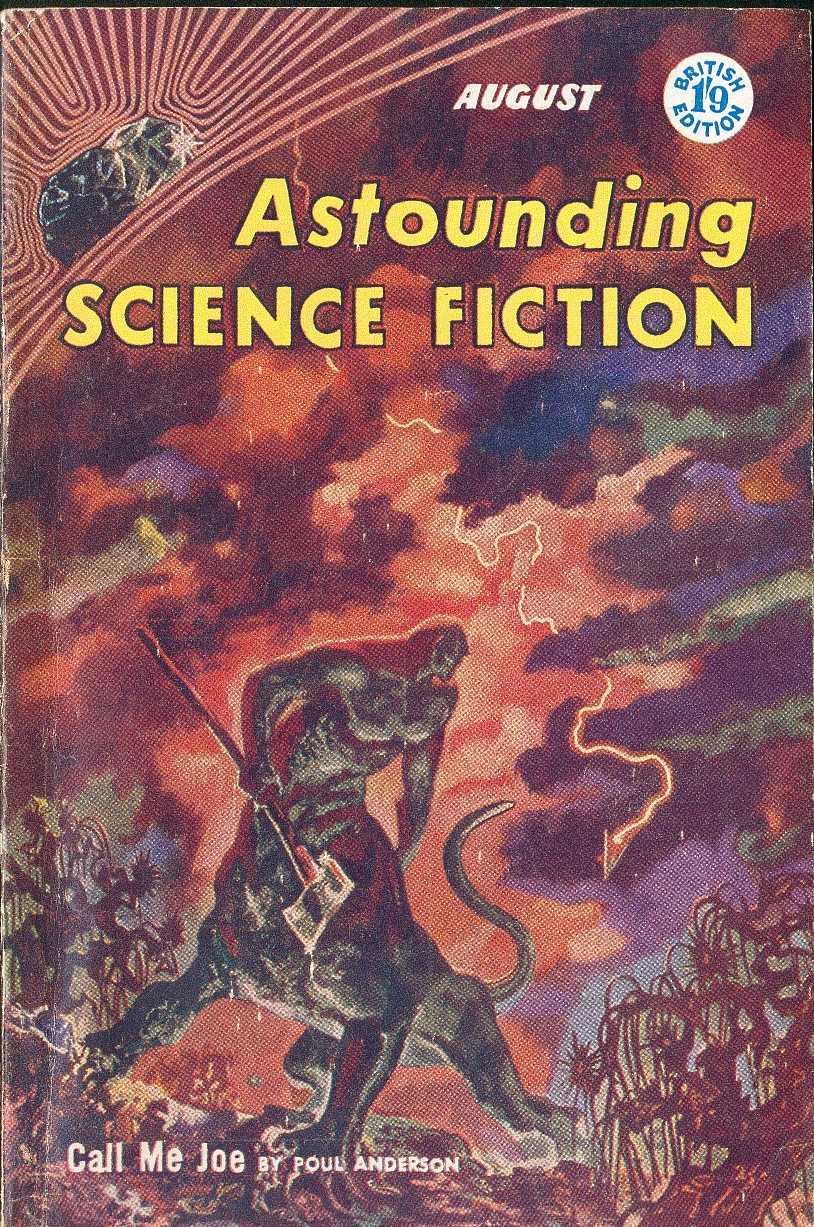
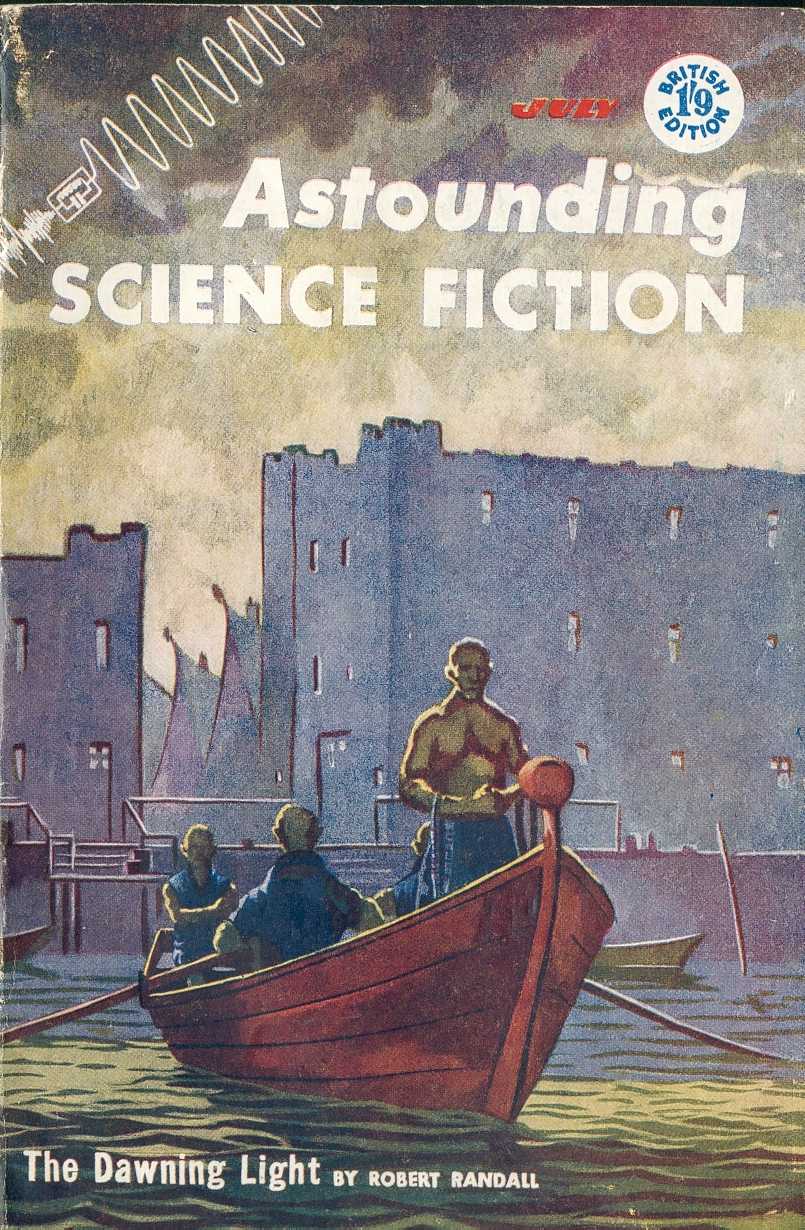
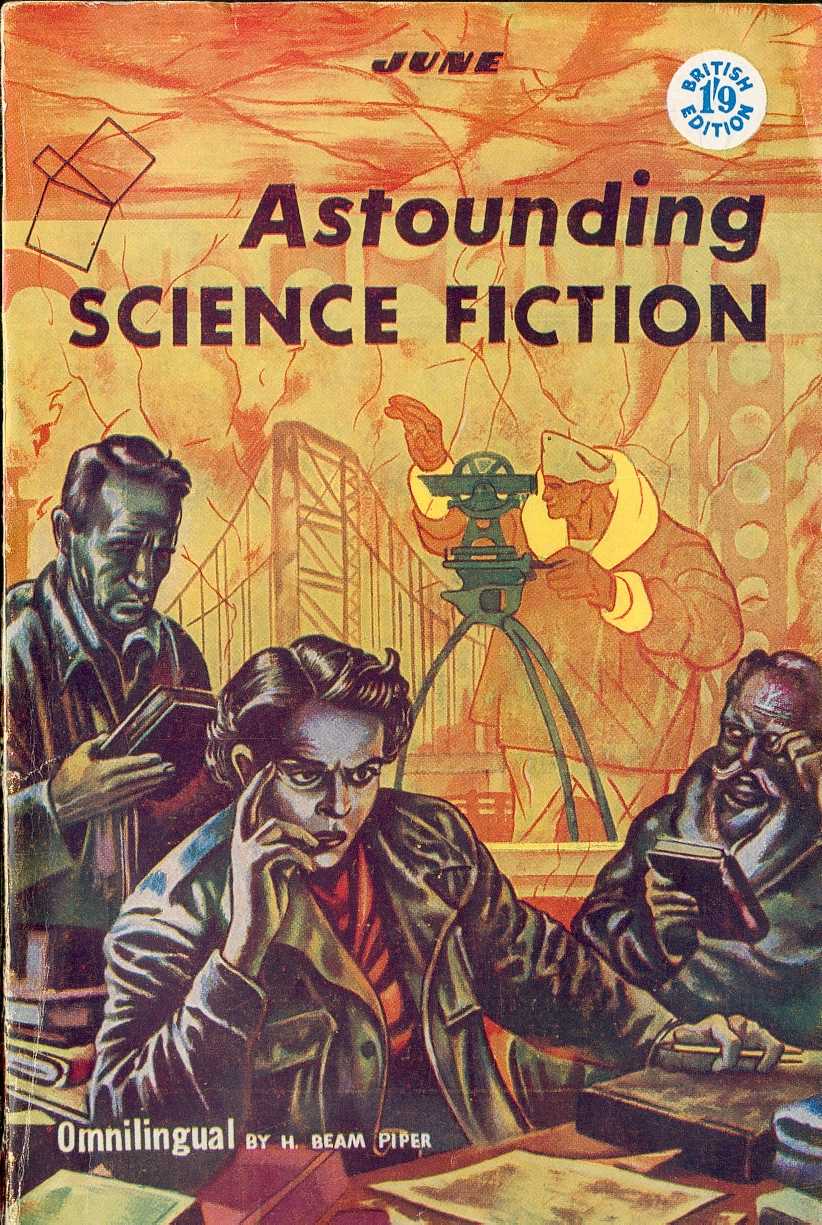
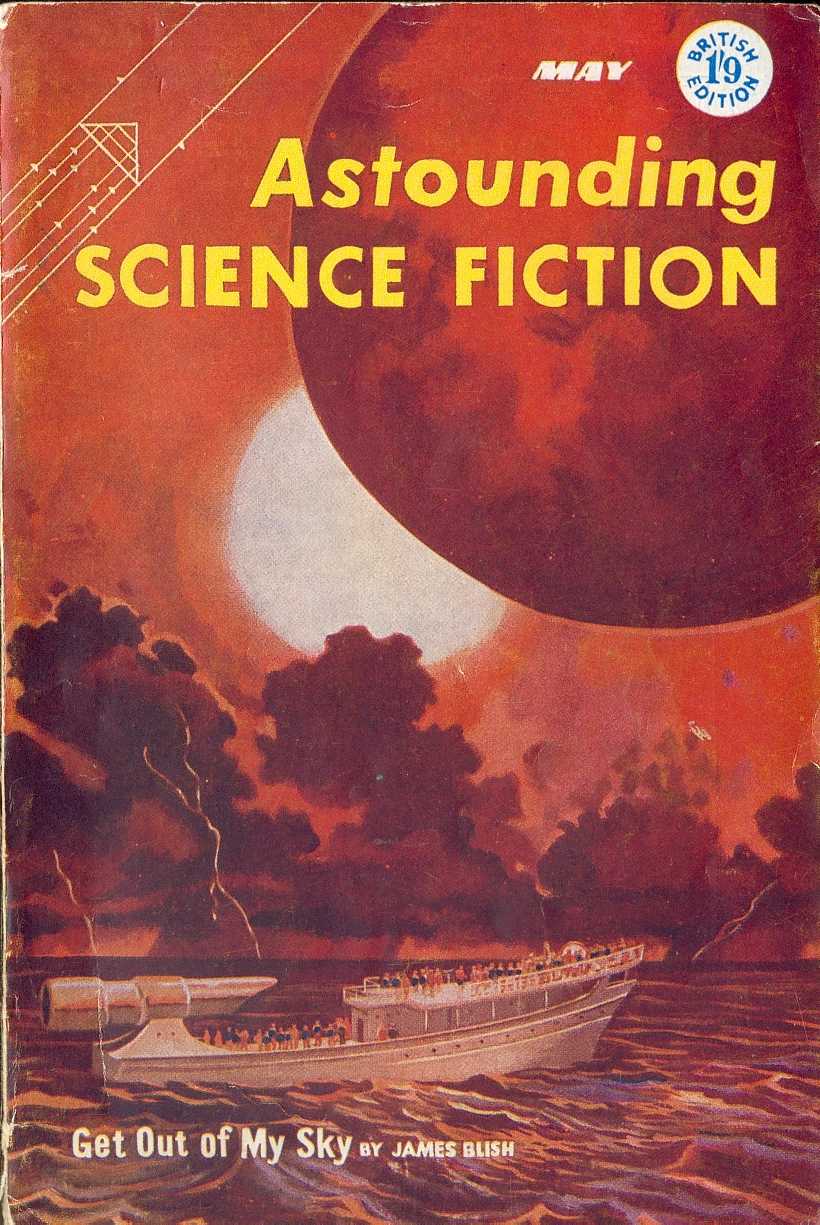
I ought to read more of them. Indeed, I keep promising myself that one dark winter I’ll spend my evenings immersing myself in the world where my father spent his 1950s. Until then, I’ll keep digging them out just to enjoy the look, feel and smell of them. The latter two even the internet can’t help me share with you (now there’s a thought – Kindle with old book ‘smell-o-rama’), but at least I can whet your appetite with a selection of covers. They’re not hard to come by or particularly expensive, and there are some amazing websites where you can wallow in them, including the Pulp Magazine Project site
No bad pun to end this on, just lots of pictures…