Promoting a Wings & Wheels event on an RAF Station
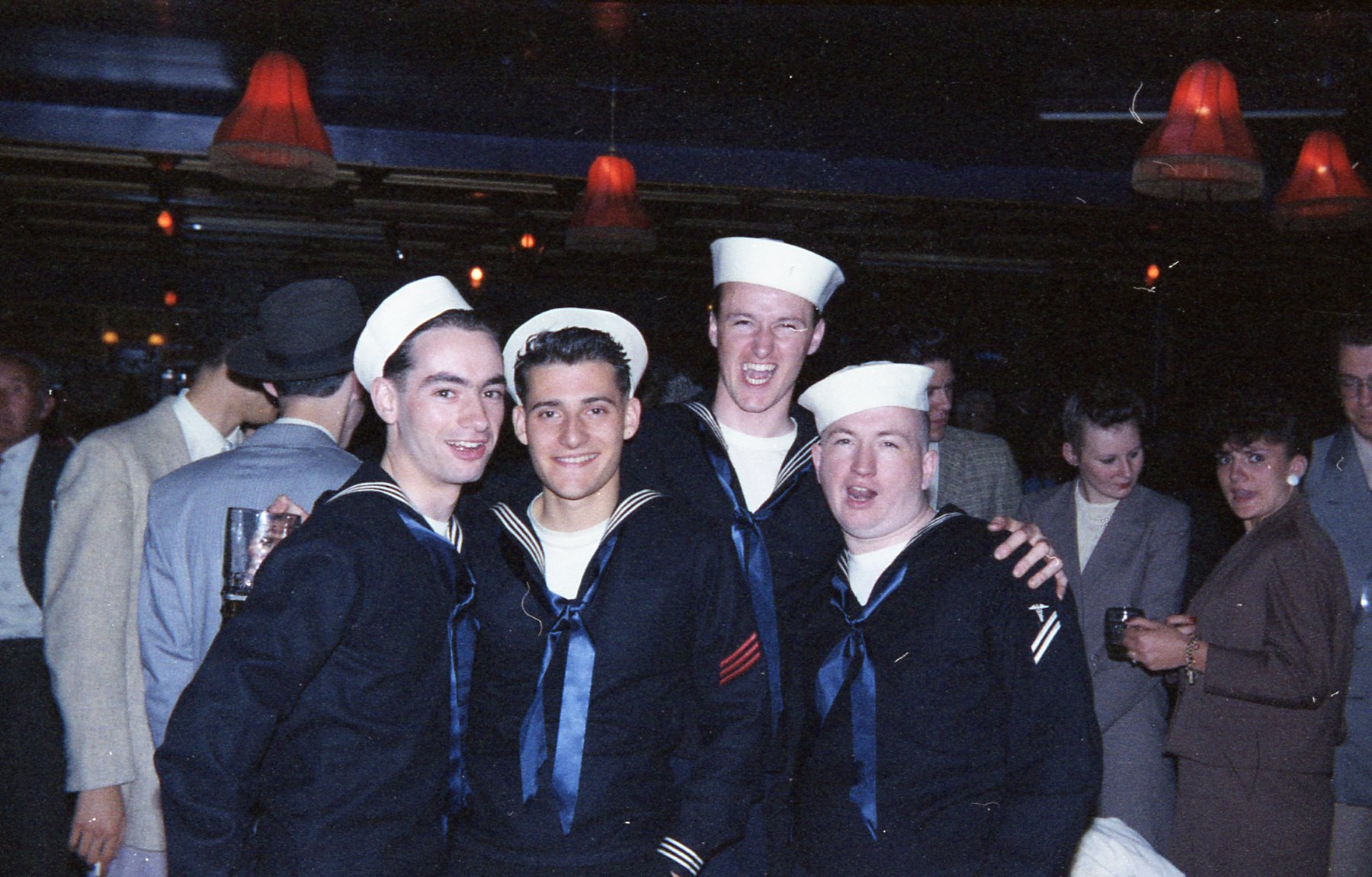
40th Anniversary of D Day at the Lyceum
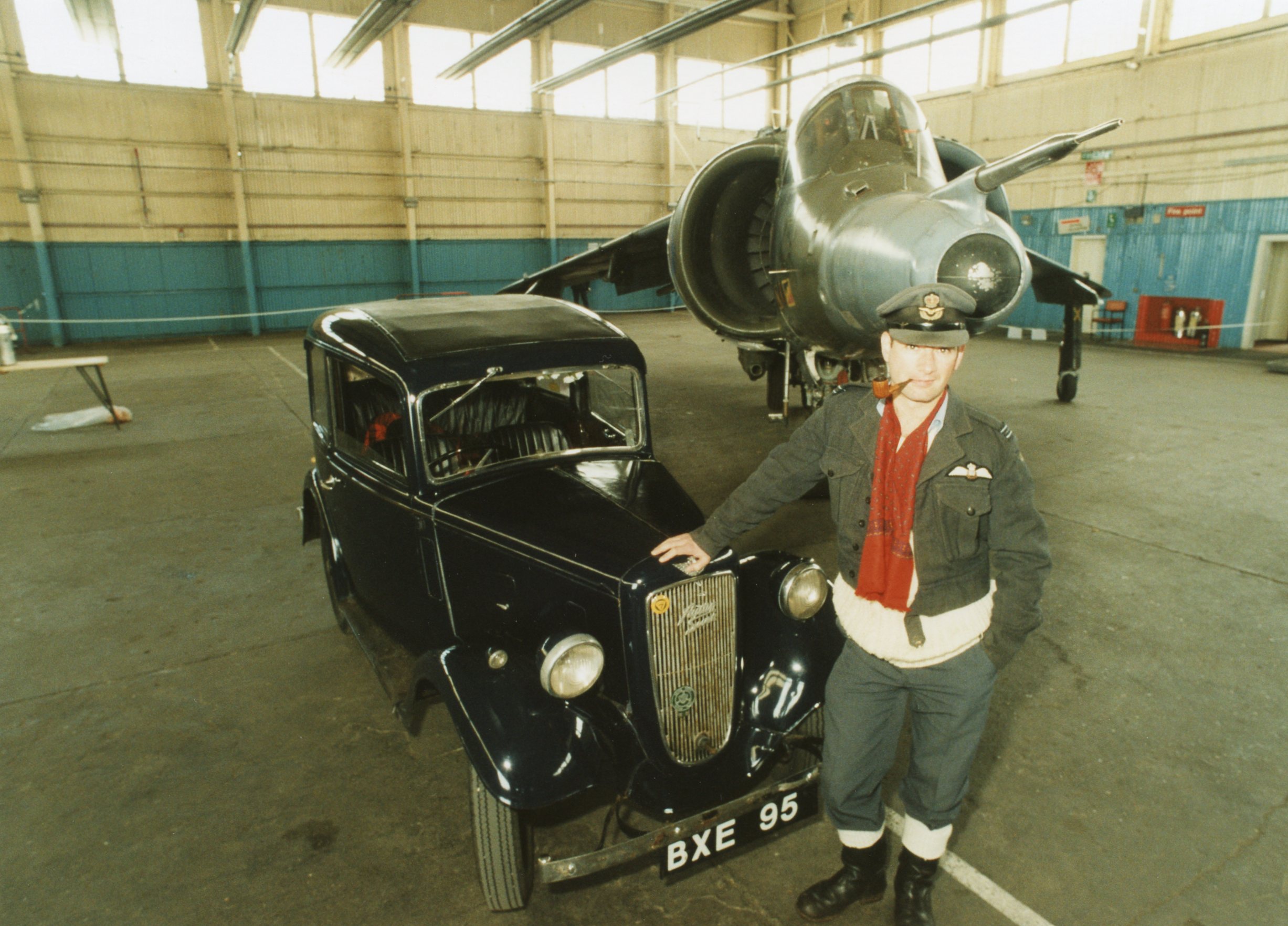
One of the facets of the growth of interest in the ‘vintage’ scene in recent years has been a steady rise in the numbers regularly sporting period military uniforms which, for our particular era of interest, usually translates to the Second World War. It’s not something one often came across previously. Serious re-enactment has traditionally tended to focus on English Civil War or medieval periods, and of course many of those who had fought in WW2 were still with us and active, so if you saw someone in WW2 uniform, chances are it was their own. But as the number of veterans decreases year on year (the fresh-faced 18 year-old of 1945 will hit 91 this year), it’s far more likely that you’ll encounter someone wearing a uniform they’ve never worn for real. I’ll confess, I’ve done it myself in my youth, and commemorated the 40th anniversary of D Day with a bunch of chums doing our best to look like the cast of Anchors Aweigh (which might be more to do with a surfeit of Gene Kelly movies). Since then, I’ve sported period uniform on stage and on odd occasions, so most of the illustrations for this article are from my own album. Now, though, with the benefit of much study of the nature of conflict, there are some aspects of that side of the vintage scene that leave me uncomfortable, and that perhaps should make any of us think twice before we slip on battledress and head off for the next 40s event. It’s a topic that has had a bit of an airing already this year, with a number of venues announcing that those wearing German uniforms would not be welcome. That’s a sensitive issue in its own right, but it could be that a better understanding of what period uniform represents would help both organisers and attendees make the call on what is appropriate, where and when.
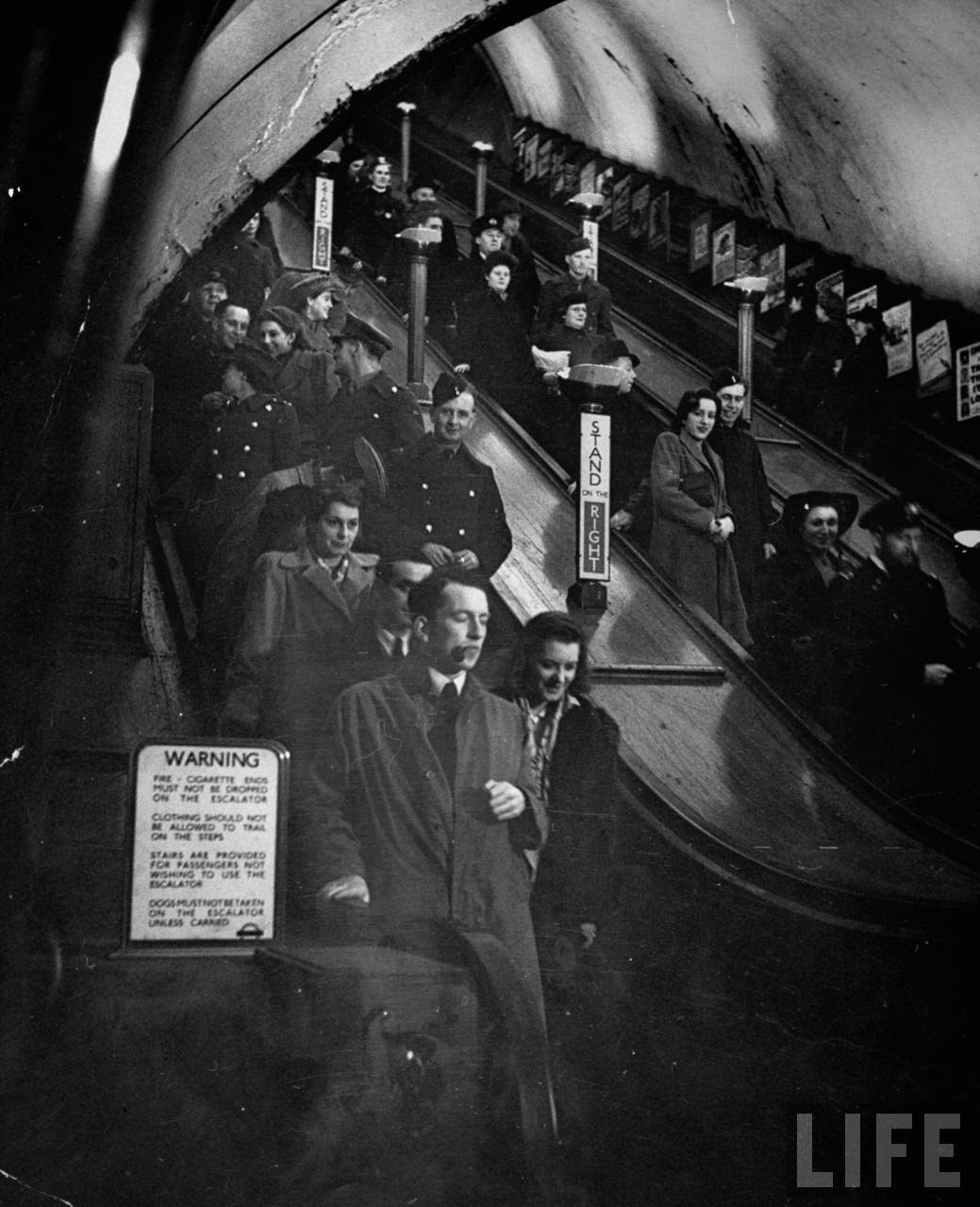
The reality of life in the 1940s – a mixture of uniforms and drab civilian wear on the tube
It would, though, be unreasonable to lump together everyone who has ever worn WW2 uniform. I’d like to suggest that there are three basic types, with very different approaches (but inevitably with some overlap). The first, and potentially the most well-meaning of intent, is the genuine exponent of living history. This is the individual whose principal aim is to educate by bringing to life those who played a part in history – be they the major characters or the (extra)ordinary folk caught up in world events. For them, donning the uniform and equipment is the opportunity to explain what it represents, and even when ‘inhabiting’ the clothing, they’ll maintain a separation that allows them to put it all in context. One of the best examples I’ve seen was a chap, squatting outside a one-man pup tent, talking through the contents of his rucksack. The focus was on the everyday – how he kept clean in the field, how he protected himself from the elements or dealt with minor injuries, the rations he carried (many of them bearing labels with the names of familiar modern-day companies), and the toys and cards he kept to while away the quieter moments. He might have had a replica weapon with him – if he did, it wasn’t part of the story he wanted to dwell on. As it happens, the food companies were German ones, and he was in the uniform of a German infantryman, but the essential premise of his display was the experience of the individual. With folk like these, one gets the feeling that they want more than anything to pay tribute and communicate, which seems like a fair reason for doing it in costume.

On stage as an Int Corps interrogator
At the other end of the scale are those for whom the line between living history and play acting is a blurred, if not invisible one and there is a transparent desire to be perceived as like the person they are portraying, with all the associated values of courage and skill at arms. Perhaps unsurprisingly, the ratio of those in the garb of elite formations to those of the rear echelon far exceeds the reality of wartime armies as the glamour of the paratrooper and his like wins hands down over that of the vehicle mechanic or even line infantryman who made up the bulk of the wartime armies. By the same token, for every fighter pilot, there were dozens of ground tradesmen dedicated to keeping him in the air, but it’s rare you’ll see anyone stepping out as an ‘erk’. Basically, the deciding factor seems to be how cool the uniform looks and how big the gun you get to carry. To be fair, no one could actually accuse these types of claiming to be the individuals they’re dressed as (or they, too, would be nonagenarians), but one often gets an uncomfortable sense that the uniform has been chosen more because of how it makes them look and feel about themselves than through any deep desire to tell the story of that particular unit or individual. What grates most, though, is the focus on the shop window of conflict, treating it rather the way we, as small boys, collected uniforms and equipment to adorn our Action Men. Rank for them is something to be purchased, usually after a bit of wrangling amongst the group as to who’s going to be the Sergeant Major this year – not something earned from years of service or, at the height of the war, from survival as those around you were killed or injured, and representing a weighty responsibility for those under command. Likewise, there’s a world of difference between dressing up for a weekend’s event (no matter how basic the camping facilities) and months, if not years, away from home with food, shelter and rest never guaranteed, and the ever-present smell of other people’s unwashed bodies (on a related note, does anyone ever give any thought to how hungry, dirty and smelly ordinary folk had to get used to being during the ‘Fabulous Forties’?). Oh yes, and there’s one other thing about being in the military for real – there are other people in different uniforms trying to kill you, so you might not go home in one piece or at all, which tends to concentrate the mind rather more than whether that’s the right pattern of buttons for a 1944 scene. Thankfully, those at the extreme are in the minority, and most are sufficiently self-conscious to spot where their passion for the period is leading them into Walter Mitty territory. That said, where the individual display is multiplied up to form a camp or emplacement, and those behind the barrier start to become indistinguishable from the parts they are playing, the effect can be unsettling – especially when the uniforms stay on when the public are all long gone. That’s where, unless there’s some very clear explanation, a preponderance of German uniforms and equipment starts to look less like historical education and more like a particularly unsavoury kind of gang.
-
- 1940s Realities – one of many
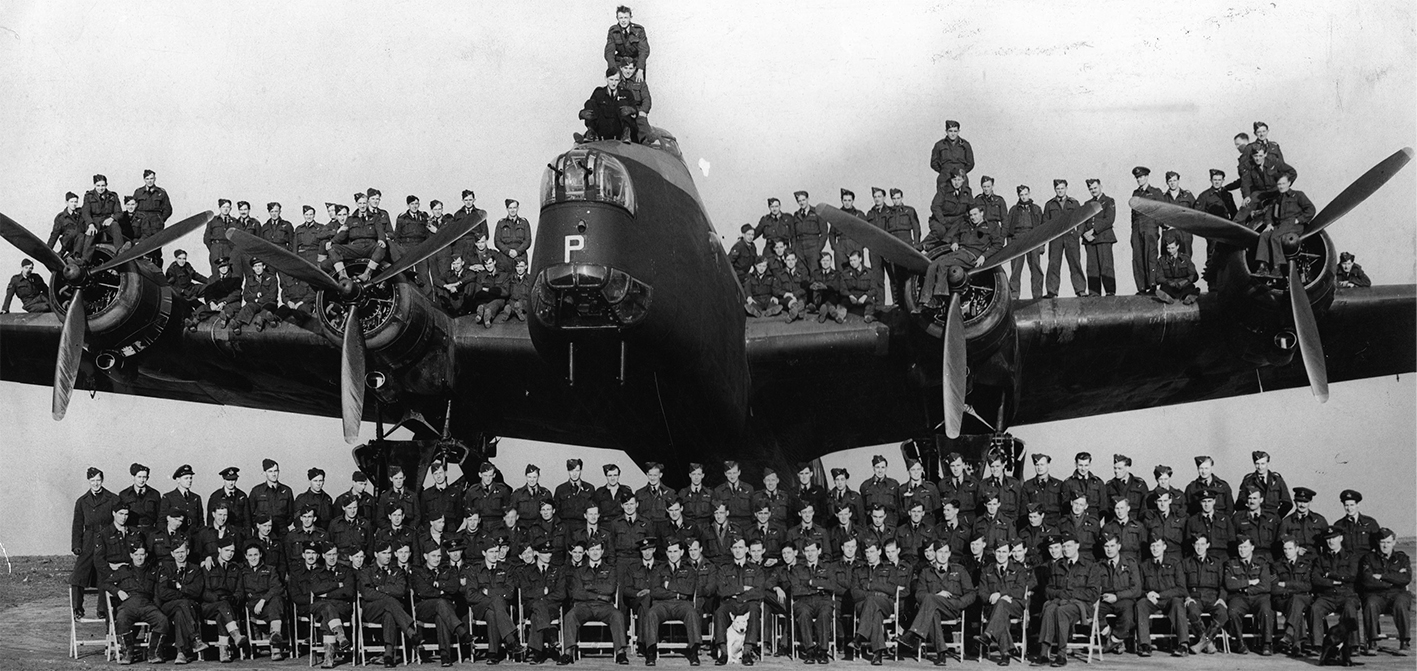
-
- unglamorous
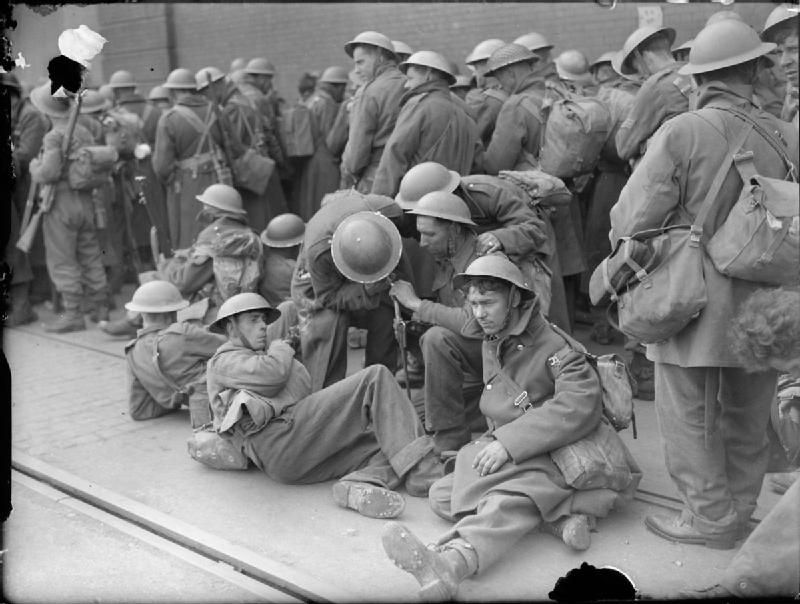
-
- exhausted
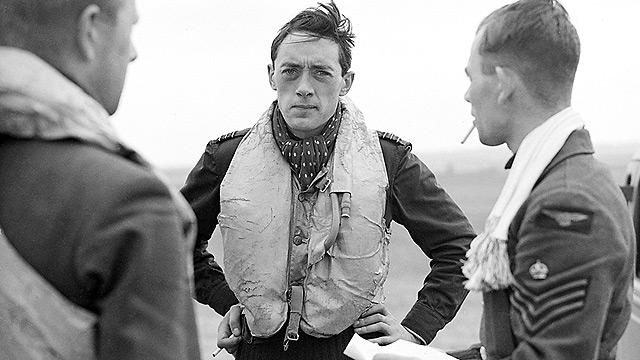
-
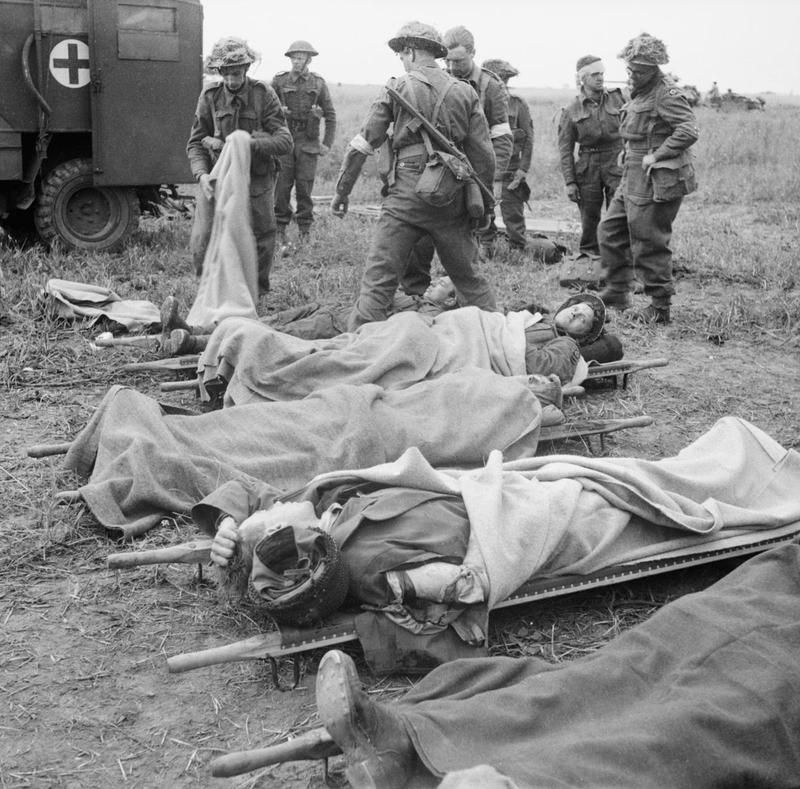
- and at risk of the ultimate price
So where does that leave the bulk of those on the vintage scene and not in pursuit of some kind of macho wish-fulfilment? I suspect that for many, much as for the younger me, there’s something about wanting to look like the people we see in the photos of the period that fascinates us and – no surprise – there are an awful lot of people in photos of the 1940s wearing uniform. Some do it better than others. OK, so we can’t all run to a set of original period uniform and accoutrements, they’re expensive apart from anything else, but a combination of second hand modern cast offs and replica bits, randomly adorned with a selection of rank and badges, just looks like bad fancy dress. Likewise, bearing in mind that war is sadly the province of our youth and demands a degree of fitness, it’s incongruous to see the more mature and well-padded cutting about in front-line combat kit. That’s why I’ve got a deal of respect for those who elect to represent the Home Guard, which is just what people of their age would have been doing and actually gives a far better premise for being seen out and about in everyday life.
I’m not for a minute suggesting that only those who have served for real should be entitled to portray their military predecessors. Nor that anyone wishing to don military uniform for a vintage event should have to undergo some form of authenticity test before being allowed through the gate, and then only allowed to consume greasy brews, nasty fags and the smell of their own feet. But I would urge anyone tempted to go for the period uniform look to take a moment to think about what that uniform represents in terms of the individual who would have worn it in anger (and boredom, loneliness and occasional moments of sheer terror). Think, too, about how the war would have touched someone of your age and background, and how your choice of outfit might pay tribute to their service. Get beyond the stereotypes and the TV extremes of Band of Brothers and Dad’s Army (just for the record, for a middle-aged man, being an Air Raid Warden could be a pretty horrible job – last into the shelter during a raid, and first out to deal with the aftermath). At the very least, doing your homework will leave you with a much deeper understanding of the realities of war and the simple, everyday heroism of all those who lived through it then and carry the memories with them.
Anyone returning from operations feels a mixture of three emotions: relief at having come home in one piece; guilt at those left behind; and disdain for those who have not been – Richard Holmes